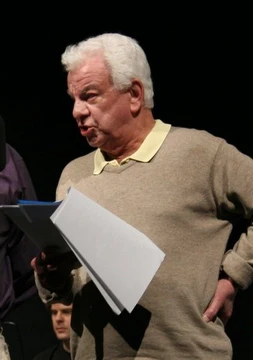
Roscoe Arbuckle
Silent comedy star whose career was overshadowed by scandal.

Roscoe Conkling "Fatty" Arbuckle was an American silent film actor, director, and screenwriter who became one of the most popular and highest-paid stars of the 1910s. He began his career at the Selig Polyscope Company before moving to Keystone Studios, where he worked alongside Mabel Normand, Harold Lloyd, and his nephew Al St. John. Arbuckle also mentored Charlie Chaplin, Monty Banks, and Bob Hope, and brought vaudeville star Buster Keaton into film. By 1920, he had signed a contract with Paramount Pictures worth one million dollars annually. Despite his fame, Arbuckle’s legacy was overshadowed by a scandal in 1921, when a woman named Virginia Rappe fell ill at a party he hosted at San Francisco’s St. Francis Hotel and died four days later. A friend of Rappe accused Arbuckle of rape and manslaughter. He faced three widely publicized trials between November 1921 and April 1922; the first two ended in hung juries, and the third acquitted him, with the jury issuing an unusual written apology for his treatment by the justice system. Nevertheless, at the urging of Adolph Zukor, film censor Will H. Hays banned Arbuckle’s films, and he was publicly ostracized. Zukor faced pressure from groups like the Lord’s Day Alliance and the Federation of Women’s Clubs to curb Hollywood debauchery. Though the ban was lifted within a year, Arbuckle worked only sparingly in the 1920s, directing under the pseudonym William Goodrich. He returned to acting in short comedies for Warner Bros. in 1932–33. Arbuckle died in his sleep of a heart attack at age 46, reportedly on the day he signed a contract to make a feature film.
- field
- Silent film actor, director, screenwriter
- nationality
- American
- known_for
- Pioneering silent comedy; mentor to Charlie Chaplin, Buster Keaton, Bob Hope; su
Lore & Background
Despite his immense size—he weighed approximately 300 pounds—Roscoe Arbuckle was remarkably agile and acrobatic, a quality that defined his fast-paced comedies. His films were built around chase scenes and elaborate sight gags, and he refused to rely on his weight for easy, "cheap" laughs, such as getting stuck in a doorway. He was also a talented singer; after hearing him perform, the famed operatic tenor Enrico Caruso urged Arbuckle to abandon comedy and train to become the second greatest singer in the world. Arbuckle strongly disliked his nickname "Fatty" and discouraged its use off-screen. He began his film career in July 1909 with the Selig Polyscope Company, appearing in one-reelers before moving to Keystone Studios, where he became a star in Mack Sennett's Keystone Cops comedies. He worked alongside Mabel Normand, Harold Lloyd, and his nephew Al St. John, and mentored Charlie Chaplin, Monty Banks, and Bob Hope, while also bringing Buster Keaton into the film business. By 1920, he was one of the highest-paid actors in Hollywood, signing a $1 million annual contract with Paramount Pictures. His career was derailed by three widely publicized trials for the rape and manslaughter of Virginia Rappe, who fell ill at a party he hosted at San Francisco's St. Francis Hotel in September 1921 and died four days later. The first two trials ended in hung juries; the third acquitted him, with the jury issuing a rare written apology for his treatment by the justice system. Despite the acquittal, his films were banned by censor Will H. Hays at the behest of Adolph Zukor, who sacrificed Arbuckle to appease moral outrage from groups like the Federation of Women's Clubs and the Federal Trade Commission. The ban was lifted within a year, but Arbuckle worked only sparingly through the 1920s, eventually directing under the pseudonym William Goodrich. He returned to acting in short two-reel comedies for Warner Bros. in 1932–33, and died in his sleep of a heart attack at age 46, reportedly on the day he signed a contract to make a feature film.
Reader's Guide
Roscoe Arbuckle's legacy is a complex one: he was a pioneering comedian whose physical agility and inventive gags helped define silent film comedy, yet his name is often remembered primarily for the scandal that ended his stardom. The trials and subsequent ban of his films, despite his acquittal, illustrate the power of moral outrage and industry censorship in early Hollywood. Arbuckle's mentorship of major talents like Chaplin, Keaton, and Hope underscores his influence on comedy. His story remains a cautionary tale about the intersection of celebrity, justice, and public perception, and his work continues to be studied for its technical and comedic innovations.
Did You Know?
- Arbuckle mentored Charlie Chaplin, Monty Banks, and Bob Hope, and brought Buster Keaton into movies.
- Despite his acquittal, his films were banned by censor Will H. Hays at the behest of Adolph Zukor.
- After the scandal, he directed under the pseudonym William Goodrich.
- He died in his sleep of a heart attack at age 46, reportedly on the day he signed a contract to make a feature film.
- The jury in his third trial issued a written apology for his treatment.
More in Comedy Legends 1-24
Related in Comedy Legends
Links follow this subject's own source article.
Spotted an error? Know more?
This is a living reference — every entry is fact-audited, and reader corrections feed straight into our audit queue. Suggest an edit · See this site's audit record