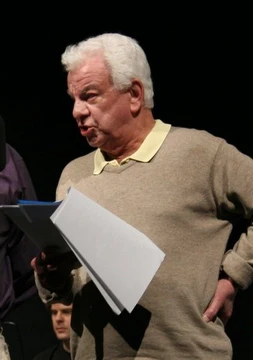
Norman Wisdom
English comedian known for his Gump character and global appeal.

via Wikipedia: Norman Wisdom · see source
Sir Norman Joseph Wisdom (4 February 1915 – 4 October 2010) was an English entertainer—actor, comedian, musician, and singer—whose fame rested largely on a string of comedy films from 1953 to 1966. In these, he played the lovably clumsy character Norman Pitkin. His big break came with his first lead role in *Trouble in Store* (1953), which won him a BAFTA for Most Promising Newcomer to Leading Film Roles. Though British, his appeal stretched well beyond the UK, finding audiences in South America, Iran, and many countries of the former Eastern Bloc. He was especially popular in Albania, where, under Enver Hoxha’s dictatorship, his films were among the few Western productions permitted. Charlie Chaplin once called him his "favourite clown".
Later in his career, Wisdom moved into stage and television work. He appeared on Broadway in New York with stars like Mandy Patinkin, and earned critical praise for his dramatic role as a terminally ill cancer patient in the 1981 TV play *Going Gently*. He also toured internationally, performing in Australia and South Africa.
Wisdom was born on 4 February 1915 at 91 Fernhead Road, Maida Vale, London. His father Frederick was a chauffeur; his mother Maud (née Targett) was a dressmaker who often worked for West End theatres and once made a dress for Queen Mary. They had married in Marylebone on 15 July 1912. Norman had an older brother, Frederick Thomas "Fred" Wisdom (13 December 1912 – 1 July 1971). The family of four shared a single room at the same address. Both boys grew up in extreme poverty and were regularly beaten by their alcoholic father, who would sometimes pick them up and hurl them across the room.
After their parents separated, the boys were placed with paid guardians, but their father stopped paying, and they were eventually turned out. When their father expelled them from the home entirely, Norman became homeless and slept rough on London’s streets. Following several failed foster placements, a kind couple took him in. He then found work as an errand boy at a grocer’s shop, even though he did not yet know how to ride a bicycle. By age 13, he was working long shifts at a hotel. A fellow boy worker persuaded him to walk to Cardiff to try becoming a miner, but that family could not house him, and he was homeless again.
He joined the Merchant Navy as a cabin boy and sailed to Argentina, learning to box during the voyage. In Argentina, he entered a prize fight, lasting three rounds before being badly beaten. While in the Merchant Navy, he also had to fend off unwanted sexual advances from another sailor. Back in Cardiff and out of work, he returned to London. There, someone advised him to join the British Army, which accepted band recruits from age 14. Despite having no musical training, he tearfully convinced the recruiting officer to let him in.
In 1930, Wisdom was posted to Lucknow, in British India, as a band boy. There he learned to ride horses, became the flyweight boxing champion of the British Army in India, and taught himself piano, trumpet, saxophone, flute, drums, bugle, and clarinet. When the Second World War broke out, he worked in a London command bunker, handling telephone connections between war leaders and the prime minister. He met Winston Churchill several times while delivering updates on incoming calls. Later, he joined the Royal Corps of Signals, doing similar work at unit headquarters in Cheltenham, Gloucestershire.
While shadow boxing in an army gym, Wisdom discovered his talent for entertaining. He began developing his skills as a musician and stage performer. In 1940, at age 25, during a NAAFI entertainment night, he stepped out of the orchestra pit during a dance routine to perform shadow boxing. Hearing laughter from soldiers and officers, he added a duck waddle and comic facial expressions. He later recalled: "They were in hysterics. All the officers were falling about laughing." Wisdom said this was where he first created his trademark persona, "The Successful Failure". Over the next few years, until his demobilisation in 1945, his act grew to include singing, pratfalls, and stumbling routines. After a charity concert at Cheltenham Town Hall on 31 August 1944, actor Rex Harrison came backstage and urged him to become a professional entertainer.
After demobilisation, Wisdom drove a private hire car and, having improved his diction in the army, also worked as a night telephone operator. At age 31, he made his professional debut as an entertainer, still calling himself "The Successful Failure". Performing in small suburban music halls, he built an act around his natural shyness, slapstick falls, musical versatility, and singing. A regular routine had him struggling to keep up with a theatre band that kept changing key—until he outplayed them, showing off his skill. A review from August 1946 noted: "An unusual and most versatile comedian, Norman Wisdom, contributes two remarkable turns. He is an accomplished pianist, a pleasing singer, a talented instrumentalist, a clever mimer, and withal, a true humourist."
- born
- 4 February 1915
- died
- 4 October 2010
- nationality
- English
- known_for
- Portraying the inept character Norman Pitkin in a series of comedy films (1953–1
Verified Timeline
Lore & Background
Norman Wisdom was born on 4 February 1915 at 91 Fernhead Road, Maida Vale, London, into extreme poverty. His father, Frederick, was a chauffeur and an alcoholic who subjected Norman and his elder brother Frederick Thomas to violence, sometimes picking them up and throwing them across the room. After their parents separated, the boys were placed with paid guardians, but their father failed to pay, and they were eventually turned out. Expelled from home entirely, Norman became homeless and slept rough on the streets of London. After a series of unsuccessful foster placements, a generous couple took him in. He found work as an errand boy in a grocer's shop, despite not knowing how to ride a bicycle. By age 13, he was working long shifts in a hotel. A fellow boy worker persuaded him to walk to Cardiff to become a miner, but the boy's family couldn't house him, and Norman was homeless again. He joined the Merchant Navy as a cabin boy, sailing to Argentina, where he learned to box and entered a prize fight, lasting three rounds before being badly beaten. He also had to fend off unwanted sexual advances from a fellow sailor. Returning to Cardiff and out of work, he made his way back to London, where he was advised to join the British Army. Though he had no musical training, he tearfully persuaded the recruiting officer to let him join as a band recruit at age 14. In 1930, Wisdom was posted to Lucknow, British India, as a band boy. He learned to ride horses, became flyweight boxing champion of the British Army in India, and taught himself piano, trumpet, saxophone, flute, drums, bugle, and clarinet. At the outbreak of the Second World War, he was assigned to a communications centre in a London command bunker, handling telephone connections between war leaders and the prime minister, meeting Winston Churchill several times. He later joined the Royal Corps of Signals in Cheltenham. In 1940, while shadow boxing in an army gym, he spontaneously stepped out of an orchestra pit during a NAAFI entertainment night, adding a duck waddle and comic facial expressions. He recalled: 'They were in hysterics. All the officers were falling about laughing.' This was where he first developed his trademark persona as 'The Successful Failure'. After a performance at Cheltenham Town Hall on 31 August 1944, actor Rex Harrison came backstage and encouraged him to pursue professional entertainment. Demobilised in 1945, Wisdom worked as a private hire car driver and night telephone operator before making his professional debut at age 31. A review from August 1946 praised his 'unusual and most versatile' act. A successful run at the London Casino in April 1948 led to a summer season in Scarborough, sharing the stage with magician David Nixon. By then, he had adopted his trademark costume: an askew tweed flat cap, a suit two sizes too small, a crumpled collar, and a mangled tie—the 'Gump' persona that defined his film career.
Reader's Guide
Norman Wisdom's significance rests on his series of low-budget comedies for the Rank Organisation, beginning with Trouble in Store (1953), which earned him a BAFTA Award for Most Promising Newcomer to Leading Film Roles and became the second most popular film at the British box office that year. Exhibitors ranked him the tenth biggest box-office star in Britain in 1954. His screen persona—lighthearted and physical—made his films natural successors to George Formby's. While never critically acclaimed, Wisdom's comedies were popular with domestic audiences and represented some of Britain's most successful box-office draws of the era. They found unexpected success overseas, helping sustain Rank financially when its costlier productions faltered. Most films featured his Gump character—usually named Norman—in manual jobs, subordinate to straight men like Edward Chapman (as Mr Grimsdale) or Jerry Desmonde. His second film, One Good Turn (1955), ranked seventh most popular British film that year. He was named the sixth most popular British film star of 1955. The Square Peg (1959), an army-themed comedy, reversed a dip in box-office returns, finishing seventh at the British box office. A young Michael Caine co-starred in The Bulldog Breed (1960) and later said Wisdom 'wasn't very nice to support-part actors'. Wisdom retained his position as the tenth most popular star at the British box office. In later years, he performed on Broadway in New York City alongside Mandy Patinkin and won critical acclaim for his dramatic performance as a terminally ill cancer patient in the 1981 television play Going Gently. He also toured internationally, including performances in Australia and South Africa. Charlie Chaplin once described Wisdom as his 'favourite clown'.
Did You Know?
- Wisdom's films were among the few Western productions allowed in Albania during the dictatorship of Enver Hoxha.
- Charlie Chaplin described Wisdom as his 'favourite clown'.
- Wisdom taught himself to play piano, trumpet, saxophone, flute, drums, bugle, and clarinet while serving in the British Army in India.
- He became flyweight boxing champion of the British Army in India during his military service.
- Actor Rex Harrison encouraged Wisdom to pursue professional entertainment after a charity concert in Cheltenham on 31 August 1944.
Frequently Asked Questions
Who is Norman Wisdom?
Norman Wisdom was a British actor, comedian, and musician who entertained audiences across the mid-twentieth century. He is remembered primarily for his string of lighthearted comedy movies made in the 1950s and early 1960s.
What character made Norman Wisdom famous?
He became a household name by playing the clumsy, good-natured everyman Norman Pitkin in a run of comedy features spanning 1953 to 1966. The character's constant misadventures and gentle humor became a signature of British cinema from that era.
What was Norman Wisdom's breakthrough film?
Trouble in Store (1953) marked his first leading role and launched his film career. The picture earned him a BAFTA for Most Promising Newcomer to Leading Film Roles, setting the stage for his subsequent string of hits.
Was Norman Wisdom popular outside the UK?
Absolutely—his films found devoted audiences in South America, Iran, and numerous former Eastern Bloc countries. Albania in particular developed a notably strong following for his work.
When was Norman Wisdom born and when did he pass away?
He was born on 4 February 1915 in England and died on 4 October 2010, living to the age of 95. His career spanned film, television, and stage throughout much of the twentieth century.
More in Comedy Legends 1-24
Spotted an error? Know more?
This is a living reference — every entry is fact-audited, and reader corrections feed straight into our audit queue. Suggest an edit · See this site's audit record