Sea
The sea is Earth's interconnected body of salt water.

The sea is a vast expanse of saltwater, and the term can refer to two different things. One meaning is the single, connected body of saltwater that covers most of Earth, also called the ocean. The other meaning is a specific, named body of water, such as a marginal sea like the Mediterranean, which is a secondary section of the ocean, or a large, nearly enclosed body of water. Earth is the only known planet with liquid seas on its surface, though Mars has ice caps and other solar systems may have similar oceans. The sea holds about 1.335 billion cubic kilometers of water, making up roughly 97.2 percent of all known water on the planet and covering about 71 percent of its surface. Another 2.15 percent of Earth’s water is frozen, found in Arctic sea ice, the Antarctic ice cap and its surrounding seas, and various glaciers. The remaining 0.65 percent exists as underground water or in stages of the water cycle, including vapor, clouds, rain, lakes, and rivers.
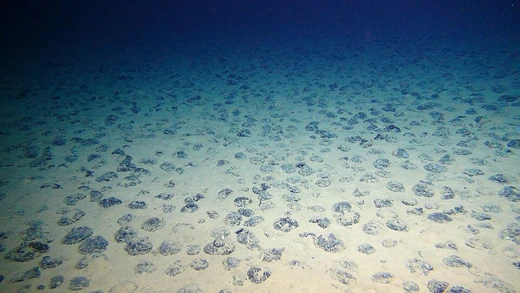
Salinity varies widely across water bodies, with lower salt levels near the surface and at the mouths of large rivers, and higher levels in the deep ocean, though the relative proportions of dissolved salts remain fairly constant. The most common solid dissolved in seawater is sodium chloride. Other dissolved elements include salts of magnesium, calcium, potassium, and mercury, some in very tiny amounts. A huge range of organisms—bacteria, protists, algae, plants, fungi, and animals—live in marine habitats and ecosystems throughout the seas. These habitats stretch from the sunlit surface and shoreline down to the cold, dark, high-pressure abyssal zone, and from polar ice caps to warm tropical coral reefs. Many major groups of organisms evolved in the sea, and life may have originated there.
The ocean moderates Earth’s climate and plays key roles in the water, carbon, and nitrogen cycles. The sea surface interacts with the atmosphere, exchanging particles and temperature, and creating currents. Surface currents are driven by winds blowing over the water, producing wind waves and setting up slow, stable water circulations. Deep-sea currents, collectively called the global conveyor belt, carry cold water from near the poles to every ocean, greatly influencing climate. Tides, the roughly twice-daily rise and fall of sea levels, are caused by Earth’s rotation and the gravitational pull of the Moon and, to a lesser extent, the Sun. Tides can be very high in bays or estuaries. Submarine earthquakes from tectonic plate movements can trigger destructive tsunamis, as can volcanoes, large landslides, or large meteorite impacts.
The seas have been essential to humans throughout history and culture. People have studied and used the seas since ancient times and even prehistory. The modern scientific study of the sea is oceanography, while maritime space is governed by the law of the sea, and admiralty law regulates human activities at sea. The seas provide substantial food, mainly fish, but also shellfish, mammals, and seaweed, caught by fishermen or farmed underwater. Other human uses include trade, travel, mineral extraction, power generation, warfare, and leisure activities like swimming, sailing, and scuba diving. Many of these activities cause marine pollution.
- type
- Geographic feature
- composition
- Salt water, primarily sodium chloride
- surface_coverage
- Approximately 71% of Earth's surface
- salinity_range
- 35‰ in open ocean to 41‰ in northern Red Sea
- freezing_point
- About -1.8°C for typical salinity of 35‰
Lore & Background
The sea has two distinct meanings: the interconnected body of seawater spanning most of Earth, and named bodies of water such as marginal seas or nearly landlocked bodies. Salinity varies widely, being lower near the surface and river mouths and higher in ocean depths, but the relative proportions of dissolved salts remain stable across oceans. The most abundant dissolved solid is sodium chloride, with other elements including magnesium, calcium, potassium, and mercury present in minute concentrations. The sea hosts a wide variety of organisms—bacteria, protists, algae, plants, fungi, and animals—in habitats ranging from the sunlit surface to the cold, dark abyssal zone, and from polar ice caps to tropical coral reefs. Many major groups of organisms evolved in the sea, and life may have started there. The ocean moderates Earth's climate and plays important roles in the water, carbon, and nitrogen cycles. Surface currents are produced by atmospheric winds, while deep-sea currents, known as the global conveyor belt, carry cold water from near the poles to every ocean. Tides, caused by Earth's rotation and the gravitational effects of the Moon and Sun, rise and fall generally twice daily. Submarine earthquakes, volcanoes, landslides, or meteorite impacts can lead to destructive tsunamis.
Reader's Guide
The sea has been an integral element for humans throughout history and culture, with its study and use recorded since ancient times and evidenced in prehistory. Modern scientific study is called oceanography, and maritime space is governed by the law of the sea, with admiralty law regulating human interactions at sea. The seas provide substantial food supplies—mainly fish, shellfish, mammals, and seaweed—caught by fishermen or farmed underwater. Other human uses include trade, travel, mineral extraction, power generation, warfare, and leisure activities such as swimming, sailing, and scuba diving. Many of these activities create marine pollution. The sea's significance extends to its role in Earth's physical processes: it moderates climate, drives the water cycle, and influences carbon and nitrogen cycles. Its study has expanded into a multidisciplinary field encompassing physical oceanography, marine biology, chemical oceanography, and marine geology, which has provided evidence of continental drift and clarified sedimentation, volcanism, and earthquakes. The United Nations Convention on the Law of the Sea states that all of the ocean is 'sea,' underscoring its unified legal and scientific importance.
Did You Know?
- The sea covers approximately 71 percent of Earth's surface and contains about 97.2 percent of its known water.
- The most abundant solid dissolved in seawater is sodium chloride, making up about 85 percent of the solids in solution.
- Deep-sea currents, known together as the global conveyor belt, carry cold water from near the poles to every ocean.
- The Sargasso Sea has no coastline and lies within a circular current, the North Atlantic Gyre.
More in Coastal & Marine Geology 1-21
Spotted an error? Know more?
This is a living reference — every entry is fact-audited, and reader corrections feed straight into our audit queue. Suggest an edit · See this site's audit record