
Imperium Romanum
A Roman city-building game with historical scenarios and RTS elements.

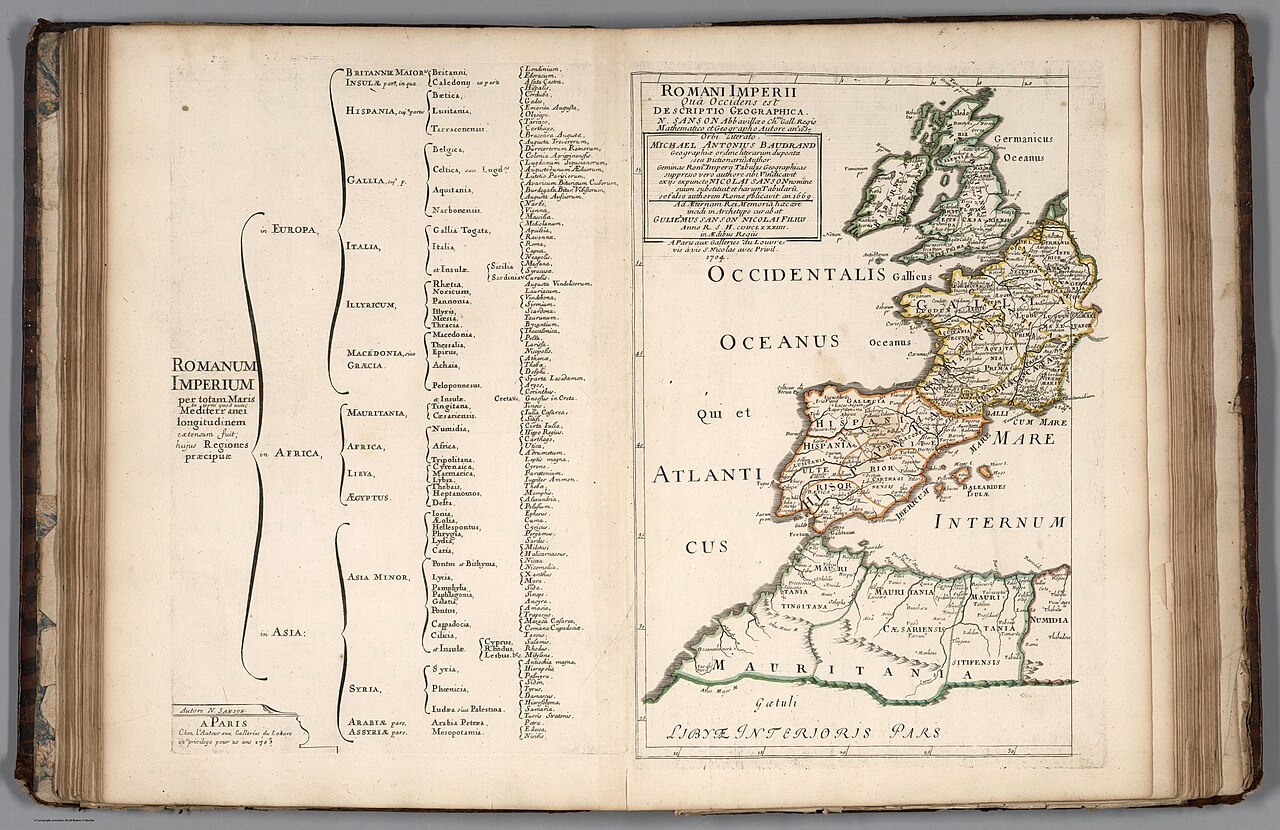
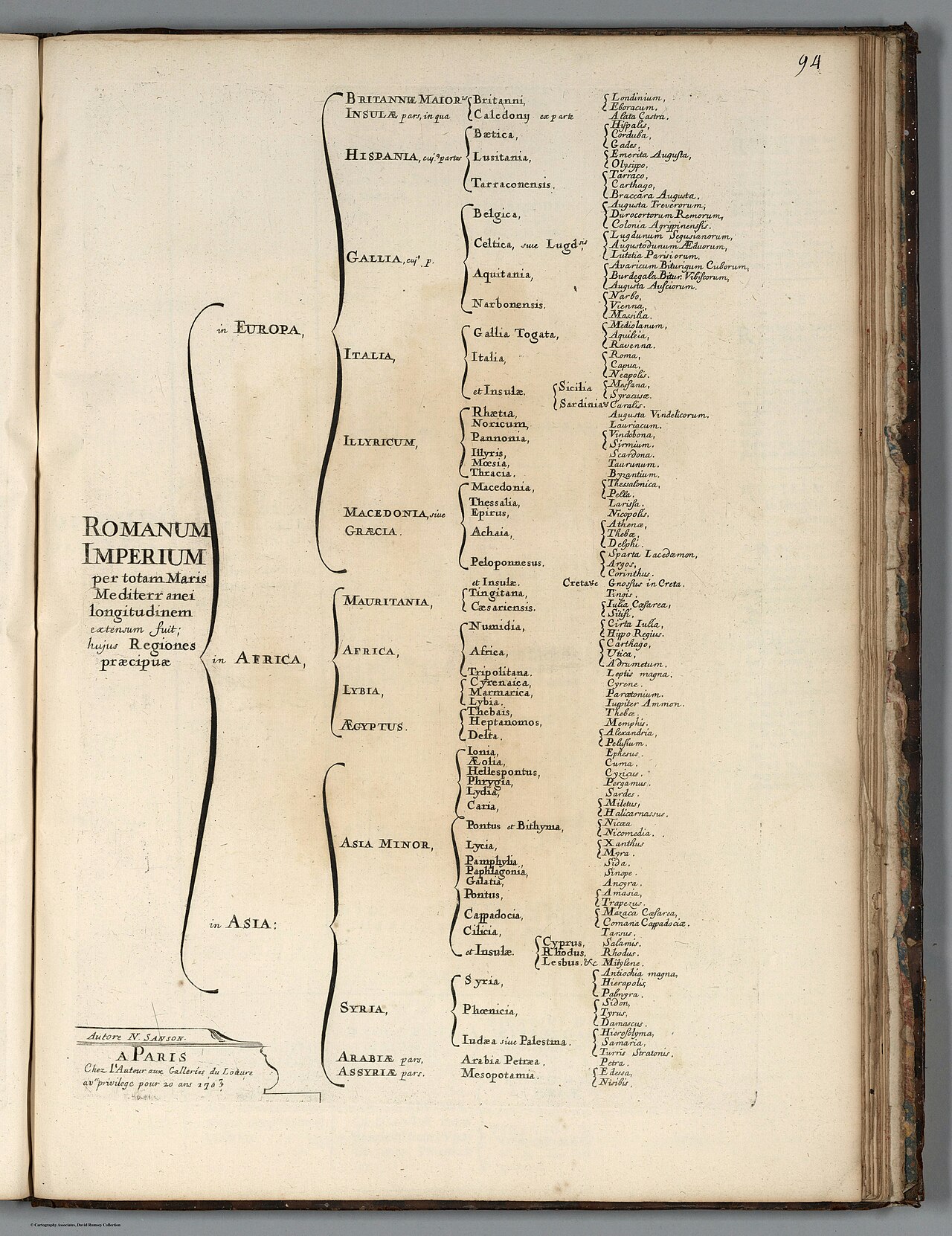
Sanson, Nicolas, 1600-1667 Sanson, Guillaume (1633-1703) · Public domain
Imperium Romanum is a city-building game released in 2008 for Windows. It was developed by Haemimont Games and published by Kalypso Media, with SouthPeak Games handling the licensing for the United States release. The game follows up on the 2006 title *Glory of the Roman Empire*, also from Haemimont Games. In it, players take on the role of a Roman provincial governor, tasked with constructing and managing a successful settlement during the Roman Empire era. In Italy and Spain, the game was released under the title *Imperivm: Civitas II*. A sequel, *Grand Ages: Rome* (also known as *Imperivm: Civitas III*), came out in 2009.
The game’s graphics are notably improved over its predecessor, and it introduces large Roman landmarks like the Circus Maximus and the Colosseum. Instead of a scripted campaign, players navigate various historical scenarios, such as life in Pompeii under the threat of Mount Vesuvius. City management requires careful organization and balanced distribution of money among citizens; extreme poverty can lead to higher crime rates and other negative consequences. The game features fully rendered 3D structures and people, with a camera that can zoom in and out and rotate 360 degrees. While the focus is on building and maintaining cities, real-time strategy elements appear when players’ settlements clash with opposing cities or civilizations. Players can construct fortified walls and towers for defense, as well as offensive weapons like trebuchets.
An expansion pack, *Imperium Romanum: Emperor Expansion*, was released in North America and Europe during summer 2008.
The base game received mixed reviews according to the aggregation site Metacritic. GamesRadar+ praised its pace, buildings, and user interface but criticized its uninspired mechanics and underwhelming design. IGN also gave a similarly mixed assessment. The *Emperor Expansion* received a mixed review based solely on IGN’s evaluation, as reported by Metacritic.
Quick Facts
- Title
- Imperium Romanum / Imperivm Civitas II
- Developer
- Haemimont Games
- Publisher
- PAL · Kalypso Media · NA · SouthPeak Games · ITA / SP · FX Interactive
- Released
- EU · February 22, 2008 · NA · March 11, 2008 · AUS · April 11, 2008Emperor Expansion / NA · July 30, 2008 · EU · August 29, 2008
- Genre
- City-building, real-time strategy
- Modes
- Single-player, multiplayer
- Platforms
- Windows
Facts from the source article.
Lore & Background
Imperium Romanum features significantly improved graphics from its predecessor and adds several large Roman monuments such as the Circus Maximus and the Colosseum. The game does not have a scripted campaign mode but instead has the player navigate different historical scenarios such as life in Pompeii under the terror of Mount Vesuvius. Along with maintaining cities, players must keep them very well-organized and keep money evenly distributed among the people; if the people experience extreme poverty, crime rates may increase, which has a number of negative effects on the city. The game features fully rendered 3D structures and people and allows the player to zoom in and out as well as rotate the camera a full 360 degrees. While much of the game is focused on building and maintaining cities, there are some RTS elements when opposing cities and civilizations do battle with the player's. Players may build fortified walls and towers around their cities to prevent enemy attacks, and also build objects such as trebuchets to go on the offensive against opposing nations. An expansion pack entitled Imperium Romanum: Emperor Expansion was released in the summer of 2008 in North America and Europe. A successor game, Grand Ages: Rome (also known as Imperivm: Civitas III), was released in 2009.
Reader's Guide
Imperium Romanum received mixed reviews according to the review aggregation website Metacritic. A review in GamesRadar+ praised the game's pace, buildings and user interface, while criticizing its uninspired mechanics and underwhelming design. IGN gave a similarly mixed review. The Emperor Expansion pack received a mixed review based solely on IGN's review according to Metacritic. The game is notable for its improved 3D graphics over its predecessor and the addition of large Roman monuments, as well as its lack of a scripted campaign in favor of historical scenarios. Its RTS elements for combat distinguish it from purely city-building titles. The game was licensed for a U.S. release by SouthPeak Games via Kalypso Media.
Did You Know?
- The Italian and Spanish versions of the game are titled Imperivm: Civitas II.
- The successor game, Grand Ages: Rome, was released in 2009.
Development & Regional Release
Imperium Romanum arrived in 2008 as a Windows city-building title crafted by Haemimont Games, the same studio behind the 2006 entry Glory of the Roman Empire. Kalypso Media handled publishing duties globally, while SouthPeak Games secured a licensing arrangement that brought the title to North American shelves under Kalypso's banner. The game positioned itself as a direct sequel, building on the developer's earlier Roman-themed project while retaining the core premise of governing a provincial settlement. Notably, the Italian and Spanish-language editions carried a distinct subtitle, appearing under the name Imperivm: Civitas II, which set them apart from the standard English branding. This regional naming quirk gave the game a slightly different identity in those markets. The project sat in a transitional period for Haemimont, as the studio would follow it up just a year later with Grand Ages: Rome, effectively continuing the same thematic lineage under yet another title. The 2008 release thus served as a bridge between the studio's earlier Roman experiments and its subsequent broader historical strategy ambitions, anchoring a short but focused run of Roman-province management games.
Gameplay & Strategic Depth
At its core, Imperium Romanum casts the player as the governor of a Roman province, tasked with constructing and sustaining a prosperous settlement during the era of the Roman Empire. The gameplay loop centers on erecting Roman towers, gates, and bridges while managing a currency pool to fund ongoing projects. Unlike many city-builders of its era, the title forgoes a scripted campaign in favor of open-ended historical scenarios, one of which places the player in Pompeii under the looming threat of Mount Vesuvius. A distinctive economic layer requires the governor to distribute wealth evenly among citizens; if extreme poverty takes hold, crime rates spike and cascade into broader negative effects on the city's stability. Visually, the game offered a significant graphical leap over its predecessor, featuring fully rendered three-dimensional structures and inhabitants. The camera system allowed players to zoom freely and rotate a full three hundred and sixty degrees around the scene. Beyond pure construction, the title wove in real-time strategy elements whenever rival cities or civilizations clashed with the player's domain. Defenders could raise fortified walls and watchtowers, while aggressors could deploy siege engines such as trebuchets to assault opposing nations.
Expansion & Successor
The base game's lifecycle was extended in the summer of 2008 with the release of the Emperor Expansion pack, which reached both North American and European markets during that window. This add-on provided additional content for players who had already invested in the core experience, though its critical reception remained modest, drawing a mixed assessment based on a single review from IGN as recorded on Metacritic. Looking beyond the expansion, Haemimont Games did not abandon the Roman-province management formula. In 2009, the studio released Grand Ages: Rome, also marketed under the name Imperivm: Civitas III, which functioned as a spiritual successor and carried the thematic torch forward. The naming convention—Civitas II for the Italian and Spanish editions of Imperium Romanum, followed by Civitas III for Grand Ages: Rome—reveals a deliberate attempt to position these titles as a numbered series in certain regions, even though the English-language branding shifted to the Grand Ages label. This succession pattern underscores how the studio iterated on a core city-building loop, refining it across three closely spaced releases while gradually broadening the historical scope and mechanical depth of each entry.
Critical Reception & Player Perception
Upon its 2008 launch, Imperium Romanum landed in the middle of the critical spectrum, earning an overall mixed rating on the review-aggregation platform Metacritic. GamesRadar+ offered a balanced assessment, singling out the game's pacing, the visual appeal of its buildings, and the clarity of its user interface as standout qualities. However, the same review flagged the underlying mechanics as uninspired and the overall design as underwhelming, suggesting that the presentation outshone the depth of gameplay. IGN delivered a similarly tempered verdict, reinforcing the mixed consensus. The Emperor Expansion fared no better in the critical eye, receiving a mixed rating that rested on a single review from IGN, as catalogued by Metacritic. The pattern across both the base game and its add-on points to a title that impressed visually and offered a comfortable, well-paced loop of provincial management, yet struggled to differentiate itself mechanically from the broader city-building genre. For fans of the Glory of the Roman Empire lineage, the game delivered a familiar and polished experience; for critics seeking innovation in strategy design, it fell short of expectations.
Gallery
Frequently Asked Questions
What is Imperium Romanum?
Imperium Romanum is a 2008 Windows city-building game in which you step into the shoes of a Roman provincial governor and grow a settlement from the ground up. It mixes construction and resource management with light real-time-strategy elements and a set of historical scenarios.
Who developed and published Imperium Romanum?
Haemimont Games built the title, and Kalypso Media took on the role of publisher. In the United States, SouthPeak Games handled the licensing side of the release.
What game came before Imperium Romanum?
It is a direct follow-up to Haemimont Games' 2006 release Glory of the Roman Empire, expanding on the same Roman-themed city-building formula with a fresh coat of paint and updated mechanics.
What is Imperium Romanum called in Italy and Spain?
In those two markets the game shipped under the alternate title Imperivm: Civitas II rather than its standard international name.
Is there a sequel to Imperium Romanum?
Yes—Grand Ages: Rome, also branded as Imperivm, continues the series as the next entry in Haemimont's Roman city-building line.
More in City-Building Games 1-24
Spotted an error? Know more?
Reader corrections go straight into our review queue. Suggest an edit · How this site is sourced