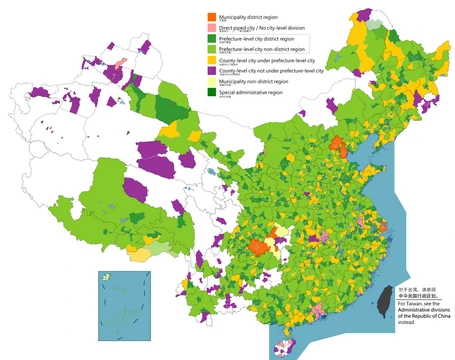
Shaoxing
Historic city known for wine, opera, and comfortable living.
Last updated
Where it is
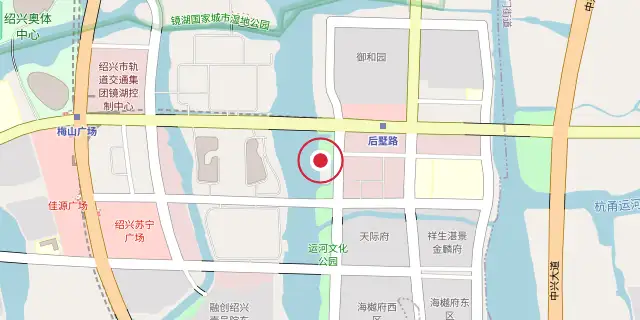
Coordinates: 30°03′04″N 120°34′59″E (30.0510, 120.5830) · Open in OpenStreetMap
Coordinates and connected clubs: the infobox of Wikipedia: Shaoxing (CC BY-SA 4.0). Map: drawn by Codexery from OpenStreetMap tiles.
The Southern Weekly Urban Research Center's 57 Cities Comfort Index 2025 placed Shaoxing first with a score of 82.29.[1] Among all cities in China, Shaoxing's per capita GDP places it 18th nationally.[2]
Geography and history
Modern-day Shaoxing lies north of the Kuaiji Mountains, an important center of the Yue people during ancient China's Spring and Autumn period.[3] Following Yue's conquest of Wu, its royal court moved to Suzhou until Chu conquered Yue in 334 BC.[3] The Qin Empire conquered the area in 222 BC, and the First Emperor visited the town in 210 BC, sacrificing to the spirit of Yu.[3] Under the Ming and Qing dynasties, the area was organized as a prefecture containing eight counties.[4]
King Goujian of Yue's people started to build permanent settlements in the alluvial plain north of the hills around the early 5th century BC.[3] The Southern Song dynasty gave the city the name Shaoxing for the first time in 1131 AD.[5] Bao Lisheng, a local militia leader during the Taiping Rebellion, organized armed opposition in his home village of Baochun.[6] The Taiping captured Baochun following a siege that lasted several months.[6]
What the cited sources add
By the end of 2024, Shaoxing's permanent population reached 5.43 million.[1] The average price of second-hand homes in Shaoxing in 2024 was approximately 19,100 yuan per square meter.[1] Per capita disposable income in the city reached 72,898 yuan, with a price-to-income ratio in a sustainable range.[1] Housing prices in Shanghai are about 3.6 times those in Shaoxing, while the income gap is only 1.21 times.[1]
Shaoxing boasts a robust manufacturing base offering stable employment and income.[1] The venue's yellow and white colors highlight Shaoxing's identity as a "water town" and "hometown of calligraphy".[7] Among the 12 new venues built for the Hangzhou Asian Games, the Shaoxing Baseball & Softball Sports Centre is the largest.[7]
References
- "Shaoxing tops 2025 cities comfort index", regional.chinadaily.com.cn. facts only, no text reused. regional.chinadaily.com.cn
- Wikipedia, "Shaoxing" (CC BY-SA 4.0), which cites: "2025年人均GDP前50强城市排名:北京居首,苏州第5,福州第11", www.sohu.com; "Shaoxing tops 2025 cities comfort index", regional.chinadaily.com.cn; "Comfort meets constraint in China’s most “liveable” city", The Economist (we also read that source) en.wikipedia.org
- Wikipedia, "Shaoxing" (CC BY-SA 4.0), which cites: Hargett, James M. " : Guaiji? Guiji? Huiji? Kuaiji? Some Remarks on an Ancient Chinese Place-Name" in Sino-Platonic Papers, No. 234. March 2013. Accessed 2 (original not read by us) en.wikipedia.org
- Wikipedia, "Shaoxing" (CC BY-SA 4.0), which cites: James H. Cole, Shaohsing: Competition and Cooperation in Nineteenth-Century China (Tucson: University of Arizona Press, Association for Asian Studies Monograph (original not read by us) en.wikipedia.org
- Wikipedia, "Shaoxing" (CC BY-SA 4.0), which cites: Shanghai Lexicographical Publishing House, 2005 (we also read that source) en.wikipedia.org
- Wikipedia, "Shaoxing" (CC BY-SA 4.0), which cites: Lone, "Daily Lives of Civilians in Wartime Asia: From the Taiping Rebellion to the Vietnam War", Greenwood Publishing Group, 2007, p. 18, 19 (original not read by us) en.wikipedia.org
- "Shaoxing Baseball & Softball Sports Centre, the largest new venue of Hangzhou Asian Games officially opened", The 19th Asian Games, 21 April 2022. facts only, no text reused. hangzhou2022.cn
Each numbered sentence above was checked against the source it cites before publication. Sentences citing Wikipedia adapt text from the English Wikipedia article Shaoxing (contributors), used under CC BY-SA 4.0; this entry is available under the same licence. Other sources were used for facts only; no text or images are copied from them.
More in Cities Of China
Sources
Compiled from Wikipedia and the sources listed below. Text from Wikipedia is available under CC BY-SA 4.0; this entry is adapted from it.
- Wikipedia: Shaoxing (CC BY-SA 4.0).
Spotted an error? Know more?
Reader corrections go straight into our review queue. Suggest an edit · How this site is sourced