The Taiping Rebellion
A 14-year civil war that devastated Qing China.
Last updated

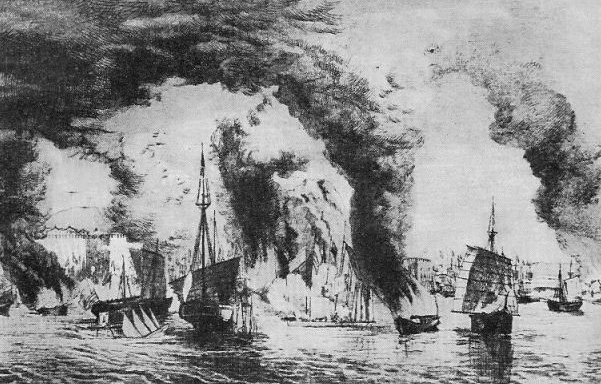
Unknown. Probably commisioned by Tianjing merchants as a souvenir to Prince Sang · Public domain
Led by Hong Xiuquan, an ethnic Hakka who proclaimed himself the younger brother of Jesus Christ, the conflict sought religious conversion, political overthrow of the Qing, and a complete transformation of state and social order.
Background
The Taiping Rebellion was ignited by Hong Xiuquan, a Hakka from Guangdong who, after failing the imperial examinations multiple times and experiencing visions, came to believe he was the younger brother of Jesus Christ. The Taiping Heavenly Kingdom, with its capital at Nanjing (renamed Tianjing), at its peak ruled nearly 30 million people and controlled significant portions of southern China.
From Uprising to Empire
By February, a ten-thousand-strong rebel army had routed a smaller Qing force, marking the transition from localized revolt to open war. At its peak, the Heavenly Kingdom held sway over a swath of southern China centered on the fertile Yangtze River Valley, an area home to nearly thirty million people. Control of the river gave the rebels a reliable supply line to their capital and launched them on ambitious campaigns: armies pushed west into the upper Yangtze reaches and north toward Beijing, the Qing capital. The bid for Beijing failed, but the kingdom's geographic reach demonstrated that a theocratic insurgency could challenge a two-century-old dynasty across a vast and populous region.
A Century of Humiliation and a Fourteen-Year War
The Taiping Rebellion did not erupt in a vacuum. Throughout the nineteenth century, Qing China endured famines, natural disasters, economic collapse, and humiliating defeats at the hands of foreign powers—a period later labeled the 'century of humiliation.' Farmers were crushed under heavy taxation and soaring rents; peasants abandoned their land in droves. The Qing military had just suffered a devastating loss in the First Opium War, and the national economy was battered by a trade imbalance driven by the massive illicit importation of opium. Banditry proliferated, secret societies and self-defense militias multiplied, and small-scale warfare became endemic.
Into this chaos, Protestant missionaries working out of Macao, Pazhou, and Guangzhou spread their message, their household staff and printers adapting the gospel for Chinese audiences and frequenting the prefectural and provincial examination halls where ambitious scholars competed for imperial office. It was in this ferment that Hong Xiuquan's vision took root. The resulting fourteen-year war saw Taiping territories besieged by Qing forces for most of its duration. The rebellion was ultimately crushed, but not by Qing arms alone: French and British forces lent their aid in the final campaigns, marking a grim intersection of internal revolt and foreign intervention.
Did You Know?
- The Qing referred to the conflict as a 'period of chaos' (luàn) to avoid lending credibility to the Taiping.
Also in the Codexery
More in Great Collapses
Sources
Compiled from Wikipedia and the sources listed below. Text from Wikipedia is available under CC BY-SA 4.0; this entry is adapted from it.
- Wikipedia: Taiping Rebellion (CC BY-SA 4.0).
- Word definitions: the , each quoted from its Wikipedia article.
Spotted an error? Know more?
Reader corrections go straight into our review queue. Suggest an edit · How this site is sourced