Ghazni
Last updated
Where it is
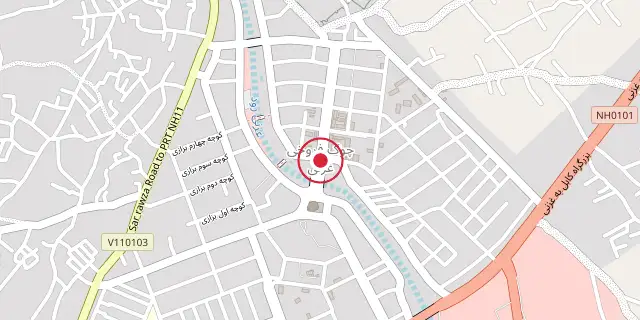
Coordinates: 33°32′56″N 68°25′23″E (33.5490, 68.4230) · Open in OpenStreetMap
Coordinates and connected clubs: the infobox of Wikipedia: Ghazni (CC BY-SA 4.0). Map: drawn by Codexery from OpenStreetMap tiles.
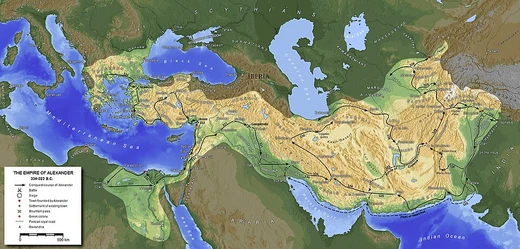
Ghazni, historically known as Ghaznayn or Ghazna and anciently called Alexandria in Opiana, is a city in southeastern Afghanistan that serves as the capital of Ghazni Province. It was founded by Alexander the Great in 329 BCE and later became the capital of the Ghaznavid Empire. The city is strategically located along the Kabul–Kandahar Highway and is known for its cultural heritage sites such as the Ghazni Citadel and the Minarets of Ghazni.
History
The city originated in antiquity as a small market town. In the 6th century BCE, Cyrus II conquered it and incorporated it into the Achaemenid Empire. Alexander the Great took the city in 329 BCE and renamed it Alexandria in Opiana. It may correspond to the Gazaca mentioned by Ptolemy in the 2nd century.
After the Greco-Bactrian kingdoms fell, the area became the heart of Zabulistan, a prosperous kingdom controlling trade routes between India, Iran, and Central Asia. From the 5th to the 7th centuries, the Nezak Huns ruled Zabulistan; their gold coins with a bull's head crown are distinctive. Under them, the region became a major center of Buddhism, Zoroastrianism, and Hinduism. The Chinese pilgrim Xuanzang visited in 644 and described a city named Jaguda, almost certainly Ghazni.
He noted its strong fortifications, rich natural resources, abundant winter wheat, and severely cold climate with much frost and snow.
Geography
Ghazni, a strategic city in southeastern Afghanistan, sits on a plateau at roughly 2219 meters above sea level and spans 57 square kilometers. Road networks link it to Kabul, Gardez, Sharan, Qalat, and Hazarajat. As a major trading and transit hub, its primary land use is agriculture, covering 28 percent of the area. The city is divided into four districts (nahias) totaling 3330 hectares.
Within built-up zones, vacant plots account for 33 percent, slightly more than residential areas at 31 percent. Districts 3 and 4 feature large institutional zones. Its climate blends cold semi-arid and hot-summer humid continental conditions, with cold, snowy winters and warm, dry summers; January’s daily average temperature is -5.9 degrees Celsius.
Economy
The economy relies on agriculture, trade, transport, and tourism. The Sultan Dam to the north and the Sarda Dam to the southeast supply irrigation water; about 39 check dams are in and around the city. In April 2012, the governor laid the foundation stone of Ghazni Airport, with construction supervised by Engineer Ahmad Wali Tawakuli. The city lies next to Afghanistan's main highway between Kabul and Kandahar, with roads leading east to Gardez and northwest to Hazarajat.
Many tourists visit for leisure. Ghazni has public and private schools, including Jahan Maleeka School (over 5,000 female students) and Naswan Shaher Kohna School (over 3,000 female students). Ghazni University and several other universities are located in the city.
Notable people
Notable figures associated with Ghazni include Abu Bakr Lawik and his son Abu Ali Lawik, rulers of the Lawik dynasty. Sabuktigin founded the Ghaznavid dynasty, and his son Mahmud of Ghazni became its first independent ruler in the 11th century. The 18th-century Mughal emperor Muhammad Shah also has ties to the city. Alp-Tegin, a Turkic slave commander of the Samanid Empire, became semi-independent governor of Ghazni and died there; his son Abu Ishaq Ibrahim of Ghazna and other Turkic officers such as Böritigin of Ghazni also served as Samanid governors.
Ismail of Ghazni, son of Sabuktigin, was emir of Ghazna. Ali ibn Ishak served as financial minister of the Ghaznavids, and Abd al-Razzaq Maymandi as vizier. Toghrul of Ghazna was a Turkish slave general who usurped the Ghaznavid throne. Azad Khan Afghan was an 18th-century Pashtun military commander.
Nur Muhammad Taraki was a former president of Afghanistan. The scholar Abu Rayhan Al-Biruni worked and died in Ghazni, as did mathematician Abu Nasr Mansur, historian Abu'l-Fadl Bayhaqi, and poets Asjadi, Farrukhi Sistani, Manuchehri Dāmghānī, Unsuri Balkhi, Hakim Sanai Ghaznavi, and Hassan Ghaznavi. Faiz Mohammad Katib Hazara was a 19th/20th-century historian, and Abdul Rahman Pazhwak a poet and diplomat. Bhai Nand Lal Goya was court poet of the 10th Sikh Guru.
Did You Know?
- The name Ghazni derives from the Persian word ganj, meaning 'treasure'.
- The city's population is multi-ethnic, estimated decades ago at around 50% Tajik, 25% Hazara, and 25% Pashtuns.
More in Cities Founded by Alexander the Great
Sources
Compiled from Wikipedia and the sources listed below. Text from Wikipedia is available under CC BY-SA 4.0; this entry is adapted from it.
- Wikipedia: Ghazni (CC BY-SA 4.0).
Spotted an error? Know more?
Reader corrections go straight into our review queue. Suggest an edit · How this site is sourced