Farah, Afghanistan
Last updated
Where it is
Coordinates: 32°20′38″N 62°07′08″E (32.3440, 62.1190) · Open in OpenStreetMap
Coordinates and connected clubs: the infobox of Wikipedia: Farah, Afghanistan (CC BY-SA 4.0). Map: drawn by Codexery from OpenStreetMap tiles.
Farah, the capital of Farah Province in western Afghanistan, sits in Farah District and is home to an estimated 141,091 people. The city’s current mayor is Mufti Sardar Mohammad Mirsad. Located on the Farah River at an elevation of about 650 meters, it is one of the largest cities in the region, lying roughly 125 kilometers from the border with Iran.
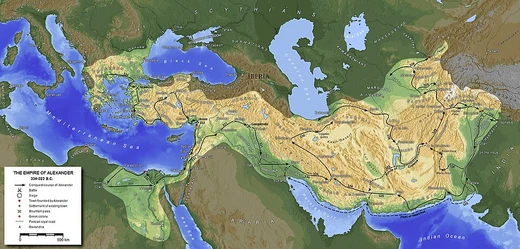
The city covers 29 square kilometers, or 2,949 hectares, and as of 2025 contained 5,299 dwellings. The Citadel at Farah is believed to be one of several fortresses built by Alexander the Great, placed along the route between his fortresses at Kandahar and Herat. When Alexander arrived in 330 BC, the city received the “Alexandria” prefix.
History
The citadel in Farah is believed to be one of several fortresses built by Alexander the Great, as the city served as a waypoint between Alexandria Arachosia, now Kandahar, and Herat, which also has one of his fortresses. The city gained the "Alexandria" part of its name when Alexander arrived in 330 BC. During the Parthian Empire, Farah was a major city in the satrapy of Aria. It is likely the settlement called Phra by Isidorus Characenus in the first century AD, or Alexandria Prophthasia as recorded by Pliny the Elder, Stephanus of Byzantium, and the fourth-century Peutinger Map.
Medieval and early modern
By the fifth century AD, Farah was a key stronghold on the Sassanid Empire’s eastern border, controlling the routes from Herat into India and Sistan. Muslim rule began in 651 with the conquest of Persia. Over the centuries, the region was held by the Tahirids, Saffarids, Samanids, Ghaznavids, Ghurids, Khwarazmshahs, Ilkhanids, Kartids, Timurids, the Khanate of Bukhara, and the Safavids, until the early 1700s when it joined the Afghan Hotaki dynasty and later the Durrani Empire.
Islam arrived in the seventh century. Mahmud of Ghazni took the city in the tenth century, and the Ghurids followed in the twelfth. Genghis Khan’s army passed through in the thirteenth century, after which the Kartids controlled it until the Timurids took over. The Safavids ruled until 1709, when Mirwais Hotak’s Afghan forces defeated them.
20th century
Farah became part of the Durrani Empire in the mid-1700s. It was captured by Sultan Jan, the ruler of Herat, but Dost Mohammad Khan retook it on July 8, 1862. When the Soviet invasion began in 1979, the Soviet 357th and 66th Motorized Rifle Divisions occupied Farah, along with Herat, Shindand, and Kandahar. Afghan mujahideen set up in the Farah area that same year, staying in the city until they were pushed out in 1982.
They then established a base on the nearby mountain Lor Koh, which they renamed Sharafat Koh, or "Honor Mountain." The Sharafat Kuh Front was the main mujahideen group operating there.
Geography
Farah is at 650 m above sea level between Kandahar and Herat, with a land area of 29 km². The city has a grid of roads through higher-density residential areas, though barren land and vacant plots combine for 60% of total land use.
Farah has a hot desert climate with more rainfall in winter than summer and almost no rain from June to October. The average annual temperature is 20.7 °C, with about 95 mm of precipitation annually. February is the wettest month, and in August 2009 Farah recorded 49.9 °C, the highest temperature ever recorded in Afghanistan.
Books relating to Farah
Little has been written about Farah, with fleeting references in works on Afghanistan or 19th-century Great Game politics. In 2011, Trent Reedy, one of the first American soldiers to enter Farah in 2004, published the fiction novel Words in the Dust, set in Farah City and the wider province. In 2021, Reedy also published Enduring Freedom with Jawad Arash, set in Farah Province.
Did You Know?
- Snowfall has not been observed in Farah from 1960 to 1983.
- The tomb and mausoleum of Muhammad Jaunpuri is located in Farah.
- On 4 May 2009, a US airstrike on three villages near Farah killed 147 civilians, with an Afghan government investigation later listing 140 dead, 93 of whom were children.
More in Cities Founded by Alexander the Great
Related in Cities Founded by Alexander the Great
Links follow this subject's own source article.
Sources
Compiled from Wikipedia and the sources listed below. Text from Wikipedia is available under CC BY-SA 4.0; this entry is adapted from it.
- Wikipedia: Farah, Afghanistan (CC BY-SA 4.0).
Spotted an error? Know more?
Reader corrections go straight into our review queue. Suggest an edit · How this site is sourced