Kano (city)
Ancient crossroads of the Sahel, second city of Nigeria.
Last updated
Where it is
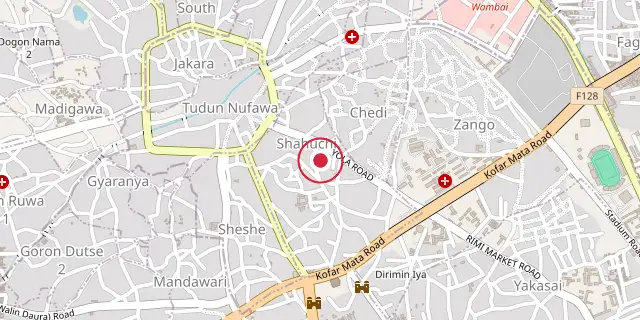
Coordinates: 12°00′00″N 8°31′01″E (12.0000, 8.5170) · Open in OpenStreetMap
Coordinates and connected clubs: the infobox of Wikipedia: Kano (city) (CC BY-SA 4.0). Map: drawn by Codexery from OpenStreetMap tiles.
Kano serves as the administrative center of Kano State and is situated in the northern region of Nigeria, functioning as a key hub for trans-Saharan commerce that has been active for thousands of years.[1] With a population exceeding four million spread across 449 square kilometers, Kano ranks as Nigeria's second-most populous city, trailing only Lagos.[1] The Hausa and Fulani ethnic groups constitute the majority of the city's population.[2]
Geography and history
In the 7th century, Dala Hill was the site of a hunting and gathering community that engaged in iron work.[3] In March 1903, the city-state was absorbed into the British Empire after the Battle of Kano.[4] Before the late 15th century, the settlement was called Dala, taking its name from the nearby hill, as recorded in Bornoan sources.[5] The Kano Chronicle records that Bagauda, the grandson of the legendary Bayajidda, assumed the throne as Kano's inaugural monarch in 999 and ruled until 1063.[6]
City wall construction at the base of Dala Hill was initiated by Gijimasu (1095–1134), Bagauda's grandson and the third ruler.[6] The trans-Saharan trade routes brought Islam to Kano during the 11th century or possibly even earlier.[7] Since the 19th century, the Dabo dynasty has provided the emirs who govern Kano as its traditional state.[8]
What the cited sources add
Heinrich Barth in 1851 mentioned that Kano had a 10-mile long 30 ft high clay walls with a population of 30,000.[9] The Ancient Kano City Walls were built as a defensive wall with the foundation laid by Sarki Gijimasu, the third king of the Kingdom of Kano.[10] He designated Kano as central Africa's foremost commercial center and calculated that slaves made up at least half of the population.[9] During 1851, the city's annual exports included 10 million sandal pairs and 5 million processed hides.[11]
References
- Wikipedia, "Kano (city)" (CC BY-SA 4.0), which cites: "Kano state, Nigeria", Encyclopedia Britannica; "Nigeria: cities with the largest population 2022", Statista (original not read by us) en.wikipedia.org
- Wikipedia, "Kano (city)" (CC BY-SA 4.0), which cites: "A History of the Hausa Language: Reconstruction and Pathways to the Present", Cambridge University Press, 2022, p. 1–5 (we also read that source) en.wikipedia.org
- Wikipedia, "Kano (city)" (CC BY-SA 4.0), which cites: Iliffe, "Africans: The History of a Continent", Cambridge University Press, 2007, p. 75 (original not read by us) en.wikipedia.org
- Wikipedia, "Kano (city)" (CC BY-SA 4.0), which cites: Shaw, "KANO, THE MANCHESTER OF NIGERIA", The Examiner (Launceston, Tas.), 1903-04-01 (original not read by us) en.wikipedia.org
- Wikipedia, "Kano (city)" (CC BY-SA 4.0), which cites: Nast, "Concubines and Power: Five Hundred Years in a Northern Nigerian Palace", University of Minnesota Press, 2005, p. 60; Adamu, "Perspective on Kano", Tellettes and Consultanting Company Ltd, 2010, p. 200 (original not read by us) en.wikipedia.org
- Wikipedia, "Kano (city)" (CC BY-SA 4.0), which cites: Isichei, "A History of African Societies to 1870", Cambridge Universitas Press, 1997, p. 234; Okehie-Offoha, "Ethnic and Cultural Diversity in Nigeria", Africa World Press, December 1995, p. 40; Britannica, Kano, britannica.com, USA, accessed on July 7, 2019; "Kano", Encyclopædia Britannica, Inc, 2 May 2024; Ki-Zerbo, "UNESCO General History of Africa, Vol. IV, Abridged Edition: Africa from the Twelfth to the Sixteenth Century", University of California Press, 1998, p. 107 (we also read that source) en.wikipedia.org
- Wikipedia, "Kano (city)" (CC BY-SA 4.0), which cites: Tour Nigeria, "Kano State, The Centre of commerce", m.facebook.com, 2022-03-12 (original not read by us) en.wikipedia.org
- Wikipedia, "Kano (city)" (CC BY-SA 4.0), which cites: "Kano historical kingdom, Nigeria", Encyclopedia Britannica (original not read by us) en.wikipedia.org
- Wikipedia, "Kano (city)" (CC BY-SA 4.0), which cites: Meredith, "The Fortunes of Africa: A 5000 Year History of Wealth, Greed and Endeavour", Public Affairs, 2014, p. 167; Lovejoy, "Transformations in Slavery: A History of Slavery in Africa", Cambridge University Press, 1983, p. 195 (original not read by us) en.wikipedia.org
- Wikipedia, "Kano (city)" (CC BY-SA 4.0), which cites: "Ancient Kano City Walls and Associated Sites", UNESCO World Heritage Centre (original not read by us) en.wikipedia.org
- Wikipedia, "Kano (city)" (CC BY-SA 4.0), which cites: Barau, A.S. (2007) The Great Attractions of Kano.; M. G. Smith, "Government In Kano, 1350-1950", Avalon Publishing, 1997, p. 257 (original not read by us) en.wikipedia.org
Each numbered sentence above was checked against the source it cites before publication. Sentences citing Wikipedia adapt text from the English Wikipedia article Kano (city) (contributors), used under CC BY-SA 4.0; this entry is available under the same licence. Other sources were used for facts only; no text or images are copied from them.
More in Cities And Settlements
Sources
Compiled from Wikipedia and the sources listed below. Text from Wikipedia is available under CC BY-SA 4.0; this entry is adapted from it.
- Wikipedia: Kano (city) (CC BY-SA 4.0).
Spotted an error? Know more?
Reader corrections go straight into our review queue. Suggest an edit · How this site is sourced