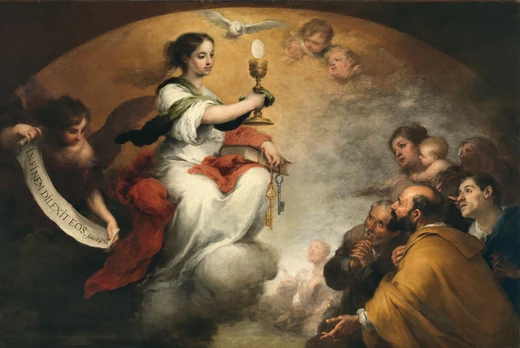
Tertullian
Early Christian author and first Latin theologian.

Wikipedia / Wikimedia Commons
Tertullian, whose full Latin name was Quintus Septimius Florens Tertullianus, lived from around 155 to about 220 AD. He was a prolific early Christian writer from Carthage, in the Roman province of Africa. He became the first Christian author to create a large body of Latin Christian literature, working as an apologist and polemicist against heresies such as Gnosticism. Because he was the first theologian to write in Latin, he is known as "the father of Latin Christianity" and "the founder of Western [Christian] theology." His most famous contribution is being the earliest Latin writer to use the word "trinity" (trinitas).
Tertullian introduced new theological ideas and helped shape early Church doctrine. However, some of his teachings—like the idea that the Son and Spirit are subordinate to the Father—were later rejected by the Catholic Church. In his later years, he joined the Montanist sect, though most scholars today disagree with the claim that he left the mainstream church or was excommunicated.
Very little reliable evidence survives about Tertullian's life; most of what is known comes from brief mentions in his own works. Roman Africa was known for its orators, and this influence appears in his writing style, which features archaisms, provincialisms, vivid imagery, and a passionate tone. He was a well-educated scholar who wrote at least three books in Koine Greek, none of which survive. Some sources describe him as Berber. Linguist René Braun suggested he had Punic origins but noted that Carthage's heritage had become common to the Berbers. Tertullian himself referred to himself as "Punic among Romans" in his book *De Pallio* and called Africa his homeland. Church tradition says he was raised in Carthage. Jerome claimed his father was a *centurio proconsularis* in the Roman army in Africa.
He has been thought to be a trained lawyer and an ordained priest, based on accounts by Eusebius and Jerome. Some also identified him with the jurist Tertullianus, quoted in the Pandects, because of his use of legal analogies. However, his legal knowledge does not clearly exceed what a good Roman education would provide, and the writings of that jurist exist only in fragments without explicit Christian authorship. The idea that he was a priest is also uncertain; in his surviving works, he never calls himself ordained and seems to place himself among the laity. His conversion to Christianity likely occurred around 197–198 AD, but its immediate causes are unknown. It appears to have been sudden and decisive, transforming his personality. He wrote that a truly Christian life required such a conscious break: "Christians are made, not born" (*Apol.*, xviii). Two books addressed to his wife confirm he was married to a Christian woman.
Around 207 AD, he was attracted to the "New Prophecy" of Montanism, but most scholars today reject the idea that he left the mainstream church or was excommunicated. He was highly regarded by St. Cyprian. By Augustine's time, a group called "Tertullianists" still had a basilica in Carthage, which later passed to the orthodox church. It is unclear whether this name simply referred to North African Montanists or meant Tertullian later split from them to form his own group. Jerome says Tertullian lived to old age. Through his doctrinal works, he became the teacher of Cyprian and the predecessor of Augustine, a key figure in western theology.
Thirty-one of Tertullian's works survive, along with fragments of others. About fifteen works in Latin or Greek are lost, some as recently as the 9th century (such as *De Paradiso*, *De superstitione saeculi*, and *De carne et anima*, which were still present in the damaged Codex Agobardinus in 814 AD). His writings cover the entire theological field of his time—apologetics against paganism and Judaism, polemics, church polity, discipline, and morals—essentially reorganizing human life on a Christian basis. They offer a valuable picture of the religious life and thought of the era for church historians. Like other early Christian writers, Tertullian used the term *paganus* to mean "civilian," contrasting it with "soldiers of Christ." The motif of *Miles Christi* did not take on a literal military meaning until the 5th century. In his 2nd-century writings, *paganus* meant a "civilian" lacking self-discipline. In *De Corona Militis* XI.V he writes on this topic.
The chronology of his writings is hard to determine with certainty. In his work against Marcion, which he calls his third composition on the Marcionite heresy, he dates it to the fifteenth year of Severus's reign (about 208 AD). His writings can be divided by subject into two groups: apologetic and polemic works, such as *Apologeticus*, *De testimonio animae*, the anti-Jewish *Adversus Iudaeos*, *Adv. Marcionem*, *Adv. Praxeam*, *Adv. Hermogenem*, *De praescriptione hereticorum*, and others.
- field
- Christian theology, apologetics, polemics
- nationality
- Roman Africa (Carthage)
- known_for
- First Latin theologian; coined 'trinity'; extensive Latin Christian corpus
Quick Facts
- Birth Name
- Quintus Septimius Florens Tertullianus
- Birth Date
- c. 155 AD
- Birth Place
- Carthage, Roman Africa
- Death Date
- after 220 AD
- Era
- Patristic age
- Notable Works
- Apologeticus
- Tradition Movement
- Trinitarianism
- Main Interests
- Soteriology, traducianism
- Notable Ideas
- Hypostasis, ousia, sacrament, consubstantiality, persona, religious liberty
Facts from the source article.
Lore & Background
Scant reliable evidence exists regarding Tertullian's life; most knowledge comes from passing references in his own writings. He was a scholar with an excellent education and wrote at least three books in Koine Greek, none of which survive. Some sources describe him as Berber, while linguist René Braun suggested Punic origin; Tertullian referred to himself as 'Punic among Romans' and claimed Africa as his patria. According to church tradition, he was raised in Carthage, and Jerome claimed his father was a centurio proconsularis in the Roman army. Tertullian has been claimed to have been a trained lawyer and an ordained priest, but those assertions rely on accounts by Eusebius and Jerome; his own writings never describe him as ordained and he seems to place himself among the laity. By all accounts, he was highly regarded by St. Cyprian.
Reader's Guide
Tertullian's significance lies in his foundational role for Latin Christian literature and theology. He was the first theologian to write in Latin, producing thirty-one extant works covering apologetics, polemics, and moral discipline. His Apologeticus is a key defense of Christianity, demanding fair trials and proclaiming freedom of religion as an inalienable human right. He was the first to disprove charges that Christians sacrificed infants or committed incest, and he argued that the blood of Christians is seed. In De Praescriptione, he argued that the burden of proof lies with separating parties, not the Church. His five books against Marcion are invaluable for gauging early Christian views of Gnosticism. Some of his teachings, such as the subordination of the Son and Spirit to the Father, were later rejected by the Catholic Church. He later joined the Montanist sect, though most scholars reject the idea he left the mainstream church. In the time of Augustine, a group of 'Tertullianists' still had a basilica in Carthage. Jerome says Tertullian lived to old age, and he became the teacher of Cyprian and the predecessor of Augustine, a key figure of western theology.
Did You Know?
- Tertullian was the first writer in Latin known to use the term 'trinity' (Latin: trinitas).
- He wrote at least three books in Koine Greek, none of which are extant.
- He referred to himself as 'Punic among Romans' and claimed Africa as his patria.
- Some of his teachings, such as the subordination of the Son and Spirit to the Father, were later rejected by the Catholic Church.
Frequently Asked Questions
Who is Tertullian?
Tertullian was a 2nd-3rd century Christian writer from Carthage in Roman Africa who produced the first substantial body of theological literature in the Latin language. He is widely regarded as the earliest major Latin theologian and a pioneering figure in early Christian apologetics.
Why is Tertullian called the 'father of Latin Christianity'?
He earned that title because he was the first Christian author to build a large, systematic corpus of theological writing in Latin rather than Greek. His work set the template for how Western Christianity would articulate its doctrines in the Latin tongue for centuries to come.
What is Tertullian famous for coining the term 'trinity'?
He is the earliest known writer to use the Latin word 'trinitas' to describe the Father, Son, and Holy Spirit as a unified divine reality. This linguistic contribution became foundational to how the Western church would later formalize Trinitarian doctrine.
What was Tertullian's role as an apologist and polemicist?
He wrote extensively to defend Christian beliefs against Roman critics and to argue against groups he considered heretical, particularly Gnostic sects. His polemical works aimed to clarify orthodox positions and expose what he saw as doctrinal errors.
Where was Tertullian from and what was his cultural context?
He was based in Carthage, a major city in Roman North Africa (modern-day Tunisia). This placed him at a crossroads of Greek and Latin intellectual traditions, which is part of why his shift to writing in Latin proved so significant for the broader Christian world.
More in Christian Reformers And Mystics 1-23
Spotted an error? Know more?
This is a living reference — every entry is fact-audited, and reader corrections feed straight into our audit queue. Suggest an edit · See this site's audit record