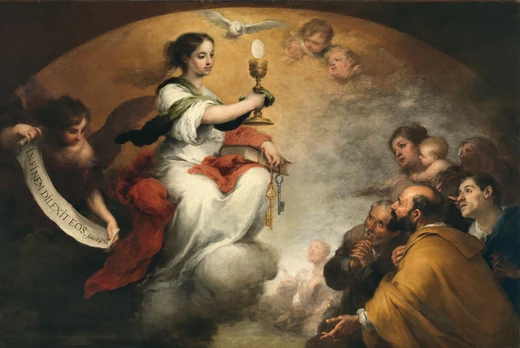
Tomás de Torquemada
First Grand Inquisitor of the Spanish Inquisition.

Wikipedia / Wikimedia Commons
Tomás de Torquemada, born 14 October 1420 in either Valladolid or the nearby village of Torquemada, was a Spanish Dominican friar who became the first Grand Inquisitor of the Spanish Inquisition. His name is now linked to cruelty and religious fanaticism because he approved and advocated the Inquisition’s use of torture and execution by burning at the stake.
Torquemada entered a Dominican monastery as a child and gained a reputation for learning, piety, and austerity. He became Prior of the monastery of Santa Cruz in Segovia, where he met the young Princess Isabella I. He served as her confessor and advisor, attended her coronation in 1474, and urged her to marry King Ferdinand of Aragon in 1469 to unite their kingdoms. He later also became Ferdinand’s confessor.
The Spanish Inquisition was established in 1478 when Pope Sixtus IV granted Ferdinand and Isabella’s request for a Holy Office. The Pope allowed the monarchs to name inquisitors, though Rome formally appointed them. Torquemada was appointed an inquisitor in early 1482 and became Grand Inquisitor a year later, holding the role until his death in 1498. In 1484, he stepped down as royal confessor, replaced by Diego Deza, who later succeeded him as Grand Inquisitor. The next year, Torquemada issued twenty-eight articles of faith to guide investigations.
Under Torquemada, the Inquisition expanded from one tribunal in Seville to about two dozen. He established tribunals in Sevilla, Jaén, Córdoba, Ciudad Real, and Saragossa. The chronicler Sebastián de Olmedo called him “the hammer of heretics, the light of Spain, the savior of his country, the honor of his order.”
Torquemada suspected that Jewish and Muslim converts to Catholicism—known as conversos, moriscos, and marranos—threatened Spain’s religious and social life. He supported the Alhambra Decree of March 31, 1492, which expelled about 40,000 Jews from Spain, allowing them only personal possessions. Around 50,000 other Jews converted to stay, but many secretly kept Jewish traditions and were targeted by the Inquisition, along with anyone who criticized it.
So many clemency petitions reached Rome that the Pope summoned Inquisition representatives three times. Ferdinand and Isabella also protested the large sums of money going to the Holy Office. Despite this, Torquemada remained in power until at least 1494. Estimates of executions during his tenure vary; Queen Isabella’s secretary Hernando del Pulgar wrote that 2,000 executions occurred throughout her entire reign, which continued after Torquemada’s death.
Torquemada’s uncle, Juan de Torquemada, was a celebrated theologian and cardinal. The chronicler Hernando del Pulgar, himself a converso, claimed Juan was of converso descent, but Pulgar is thought to have made this claim out of hatred for Tomás. A 2020 study of Juan’s ancestors found no Jewish converts in his family.
Torquemada died on September 16, 1498. On June 23, 1494, due to his failing health, Pope Alexander VI appointed four assistant inquisitors to help him: Martin Ponce de Leon, Don Iñigo Manrique de Lara, Don Francisco Sánchez de la Fuente, and another unnamed assistant.
- field
- Inquisitor, Dominican friar
- nationality
- Spanish (Castilian)
Lore & Background
Torquemada entered the local San Pablo Dominican monastery at a very young age. As a zealous advocate of church orthodoxy, he earned a solid reputation for learning, piety, and austerity, and was promoted to Prior of the monastery of Santa Cruz at Segovia. Around this time, he met the young Princess Isabella I, and the two established religious and ideological rapport. For a number of years, Torquemada served as her regular confessor and personal advisor. He was present at Isabella's coronation in 1474, remained her closest ally and supporter, and even advised her to marry King Ferdinand of Aragon in 1469. Torquemada subdued Ferdinand's own ambitions and became his confessor also. Torquemada deeply suspected the Marrano and Morisco as a menace to Spain's welfare by both their increasing religious influence and their economic power. So many clemency petitions were sent to Rome that the Pope became aware of Torquemada's severity, and he called the Inquisition's representatives to Rome three times. In addition, Isabella and Ferdinand were so concerned at the quantity of money that was being diverted to the Holy Office that they too protested to the Pope. On June 23, 1494, Pope Alexander VI appointed Torquemada and four assistant inquisitors due to his failing health. Many historians believe the numerous complaints reaching the Pope about Torquemada's relentless zeal may have been the true cause. Stripped of any real power, Torquemada retired to the monastery of St. Thomas Aquinas in Ávila in 1494, typically leaving only to attend to the royal family, and once again living the simple life of a friar.
Reader's Guide
Under his direction, the Spanish Inquisition grew from a single tribunal at Seville to a network of two dozen Holy Offices. He reorganized the Inquisition, establishing tribunals in Sevilla, Jaén, Córdoba, Ciudad Real and Saragossa. Under the Alhambra Decree of March 31, 1492, approximately 40,000 Jews were expelled from Spain with only their personal possessions; approximately 50,000 other Jews received Christian baptism to remain in Spain. The Spanish chronicler Sebastián de Olmedo called him 'the hammer of heretics, the light of Spain, the savior of his country, the honor of his order.' In 1498, still holding the office of Grand Inquisitor, he held his last general assembly, where new rules were formulated to assure the continuation of the Inquisition in Spain, attempting to curb some of the administrative abuses for which complaints had been lodged. After fifteen years as Spain's Grand Inquisitor, Torquemada died in the monastery on 16 September 1498 and was interred there. His tomb was ransacked in 1832, only two years before the Inquisition was finally disbanded; his bones were allegedly stolen and ritually incinerated in the same manner as an auto-da-fé.
Did You Know?
- Torquemada's uncle, Juan de Torquemada, was a celebrated theologian and cardinal; a 2020 study of all of Juan's ancestors found no Jewish converts in his family.
- The 15th century chronicler Hernando del Pulgar, a converso, recorded that Torquemada's uncle was of converso descent, but Pulgar is considered to have made this assertion out of hate for Tomás de Torquemada.
- Torquemada was present at Isabella's coronation in 1474 and advised her to marry King Ferdinand of Aragon in 1469.
- Under the Alhambra Decree of March 31, 1492, approximately 40,000 Jews were expelled from Spain, while about 50,000 others received Christian baptism to remain.
- Torquemada's tomb was ransacked in 1832, and his bones were allegedly stolen and ritually incinerated in the same manner as an auto-da-fé.
Frequently Asked Questions
Who is Tomás de Torquemada?
Tomás de Torquemada was a Castilian Dominican friar who served as the first Grand Inquisitor of the Spanish Inquisition. He is historically remembered as the principal architect of that institution's early operations.
What role did Tomás de Torquemada hold in the Inquisition?
As the inaugural Grand Inquisitor, he designed the procedural framework and oversaw the day-to-day enforcement of the Spanish Inquisition. He explicitly approved and promoted the use of torture and execution by burning at the stake as instruments of religious conformity.
What nationality and religious order was Tomás de Torquemada associated with?
He was a Castilian (Spanish) national and a member of the Dominican Order. His standing within the Dominican friary provided the theological authority he leveraged to shape Inquisitorial policy.
How does Tomás de Torquemada's story end?
Torquemada died in 1498 in Madrid while still holding his Inquisitorial office. He was interred at the Dominican convent of San Pablo, and his reputation as a symbol of religious persecution outlived him by centuries.
Why is Tomás de Torquemada important in Christian and Western history?
His name has become a cultural shorthand for religious intolerance and fanaticism. He is studied as a cautionary figure whose endorsement of extreme punitive measures defined the most feared chapter of the Spanish Inquisition.
More in Christian Reformers And Mystics 1-23
Spotted an error? Know more?
This is a living reference — every entry is fact-audited, and reader corrections feed straight into our audit queue. Suggest an edit · See this site's audit record