Where's Wally?
Find Wally hidden in detailed crowd scenes.
Last updated

Pat Loika · CC BY 2.0
Where's Wally?, known as Where's Waldo? in North America, is a puzzle book series for children created by English illustrator Martin Handford. The first book was released on 25 June 1987. Each book is made up of detailed two-page illustrations, with every scene showing many people engaged in various amusing activities at a specific location. The reader’s task is to locate the character Wally, along with his friends, who are concealed somewhere in each picture.
Primary books
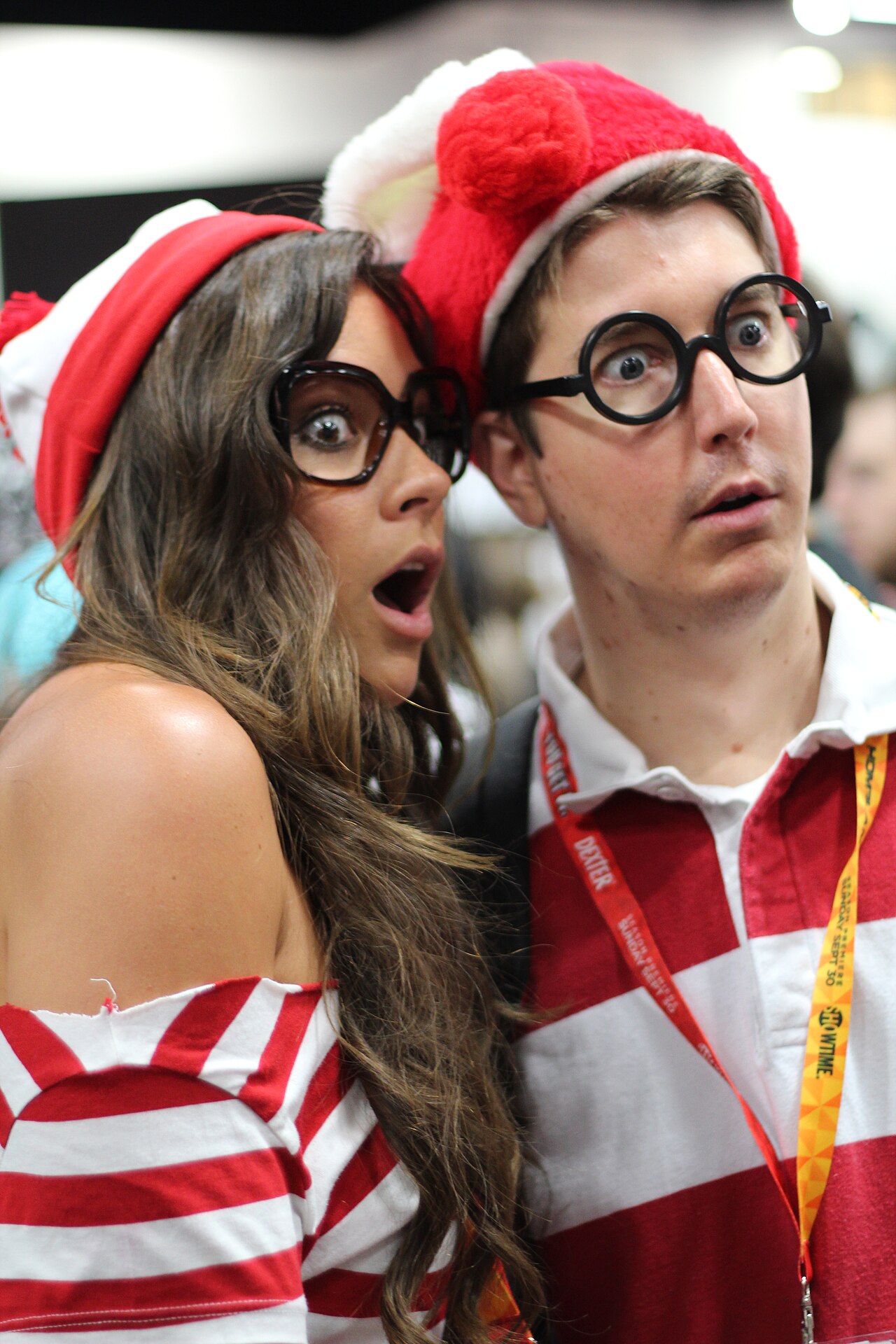
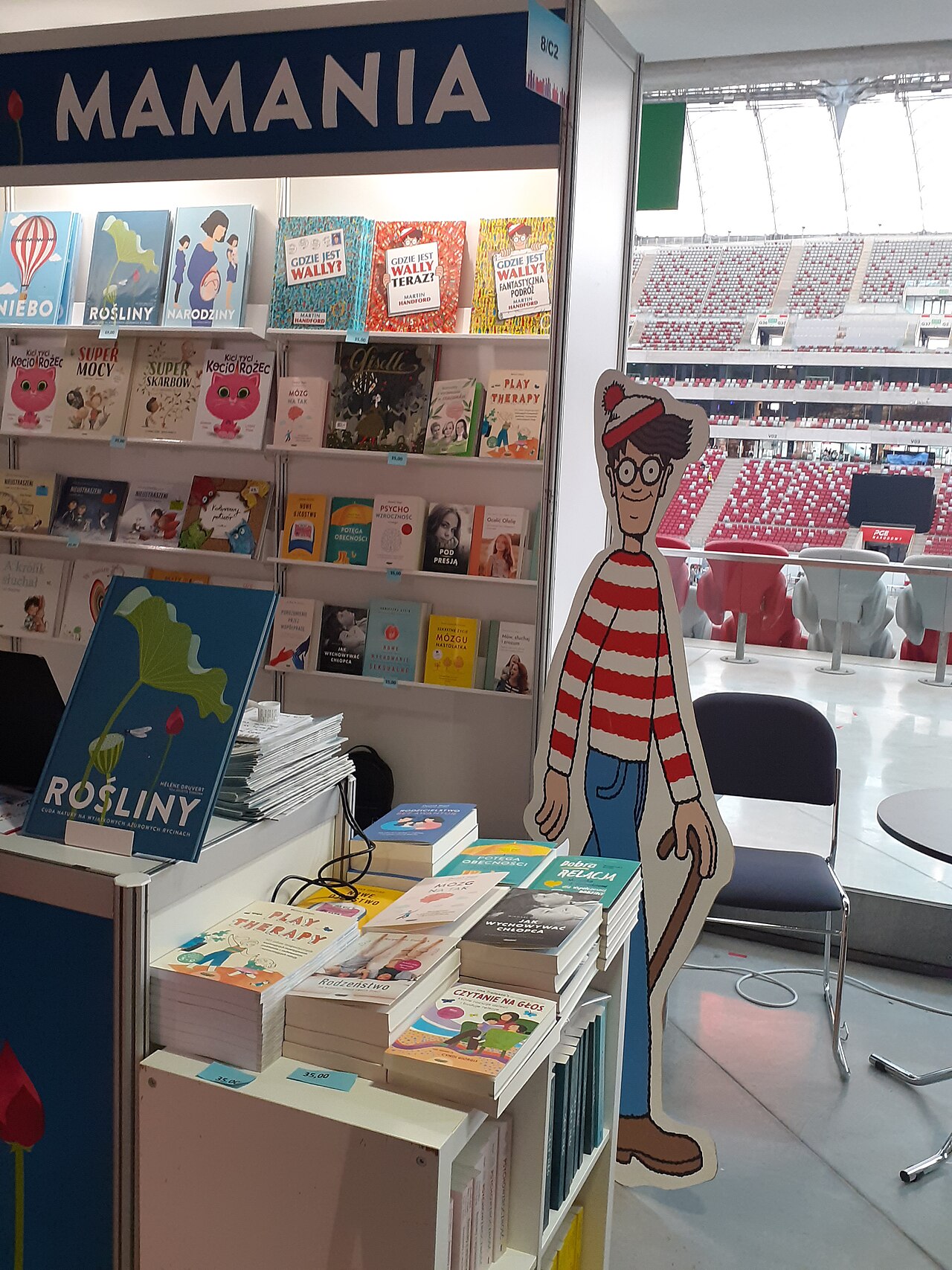
Wally stands out because of his red-and-white-striped shirt, bobble hat, and glasses. However, many illustrations include red herrings—objects with similar red-and-white stripes that can mislead the searcher. As the series continued, additional targets were added for readers to find in each scene. The books have also led to two animated television series (one in 1991 and another in 2019), a comic strip, and several video games.
By 2007, over 73 million copies of Where's Wally? books had been sold worldwide since the series began in 1987. The books have been translated into 26 languages and are published in more than 50 countries.
History
The series began in 1986 when illustrator Martin Handford, a graduate of the University for the Creative Arts in Kent, was asked by art director David Bennett at Walker Books in London to create a book of detailed crowd scenes. Bennett had been inspired by the Busy Places book series by Philippe Dupasquier. While preparing the book for the Bologna Children's Book Fair, someone at Walker Books suggested that Handford hide a distinctive character in the crowds for readers to find. Handford then came up with the idea of "Wally," a traveler through time and space who wears red and white stripes.
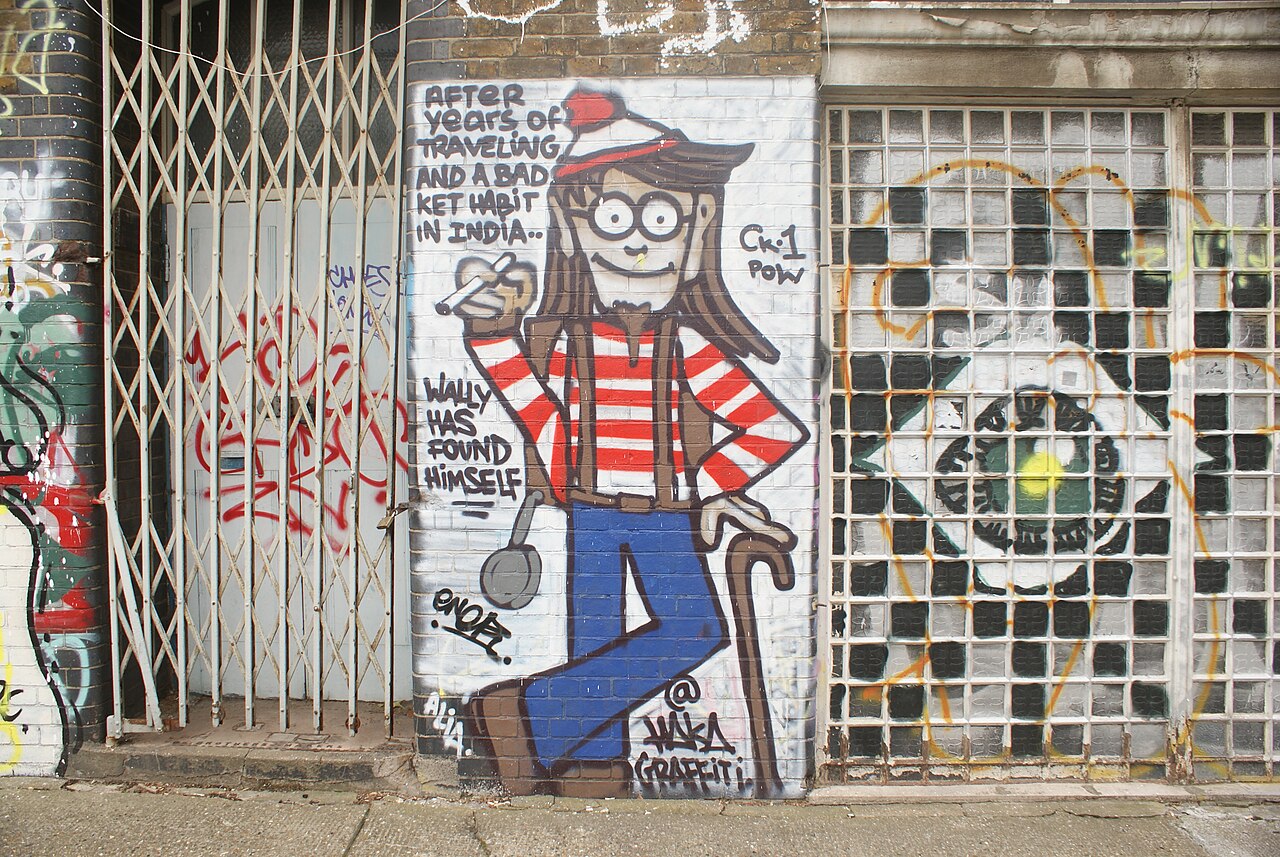
The first Where's Wally? book was published on 25 June 1987. It was first released in the United Kingdom by Walker Books. In the United States, it was introduced under the title Where's Waldo? because an executive at the initial American publisher, Little, Brown and Company, disliked the name "Wally" as it reminded him of Wallis Simpson. Later, American publishing rights were taken over by Candlewick Press, the American subsidiary of Walker Books.
The books became extremely popular internationally, and the character’s name was localized in many regions. For example, Wally is known as Walter in Germany, Charlie in France, Van Lang in Vietnam, Jonas in Lithuania, and Ubaldo in Italy.
The franchise also expanded into other media with more story-driven formats, including a 1991 television series, a comic strip, and video games. In the early 1990s, a Where's Waldo? puzzle that showed a topless beachgoer caused controversy in the United States, leading BJ's Wholesale Club and some school libraries to remove the book from shelves. This incident placed the book on the American Library Association’s list of the 100 most frequently challenged books of the 1990s.
Handford kept publishing new books in the series. Sometimes it took him up to eight weeks to draw a single two-page illustration of the elusive Wally and the many characters around him. He made Wally progressively harder to find by reducing his size on the page and surrounding him with more people.
In the first book, Wally measured about 0.99 cm² on average. This shrank to 0.80 cm² in the second book, 0.33 cm² in the third, and between 0.20 and 0.17 cm² in the fourth through seventh books. The number of characters also increased, from 225 on the first page of the first book to about 850 on the first page of the last book.
In January 2007, Entertainment Rights bought the Where's Wally? franchise. On 1 April 2009, Entertainment Rights went into voluntary administration. That same day, Boomerang Media acquired all of Entertainment Rights' subsidiaries, including Entertainment Rights itself, Big Idea, and Classic Media. The following month, Boomerang Media began unifying the former British and US subsidiaries under the name "Classic Media," while Big Idea continued under its own name.
The Entertainment Rights PLC company was dissolved in December 2010. In 2012, Classic Media was bought by DreamWorks Animation. DreamWorks Animation was then acquired by NBCUniversal in 2016, giving Universal Pictures the rights to most of Entertainment Rights' catalogue.
The main character, Wally, had his name localized for certain international editions—for instance, Waldo in North America and Sweden. Over time, more characters were added for readers to find in each scene. Wilma, Wally’s girlfriend, first appeared in the Ultimate Fun Book.
She was later replaced by her identical twin sister Wenda after both appeared together in Where's Wally: The Magnificent Poster Book. Wenda, a friend of Wally, replaced her twin sister Wilma for the book In Hollywood, though she had previously appeared alongside Wilma in The Magnificent Poster Book. Odlaw, Wally’s arch-enemy, made his print debut in The Magnificent Poster Book.
He looks almost identical to Wally, except his clothes are yellow and black striped instead of red and white, his glasses have a blue tint, and he has a moustache. In the television series, he speaks with an English accent. Although it is said that "his bad deeds are many," he is not shown doing anything particularly nasty in the books. In the TV series, however, he often tries to steal Wally’s magical walking stick.
His name "Odlaw" is simply "Waldo" spelled backward (from the American editions), though he is still called Odlaw in the United Kingdom as well. Woof, Wally’s dog, first appeared in The Ultimate Fun Book, where he was identified as Wenda’s dog. Only his tail can be found in most illustrations, except on the final page of Where's Wally: The Wonder Book, which shows all of Woof, and in the six activity books released between 1993 and 1995, starting with The Truly Terrific Activity Book, where Woof appears fully.
Lore & Background
Wally is identified by his red-and-white-striped shirt, bobble hat, and glasses, but many illustrations contain red herrings involving deceptive use of red-and-white striped objects. Later entries in the long-running book series added other targets for readers to find in each illustration.
The books have also inspired two television programmes (the 1991 Where's Wally? animated series and the 2019 Where's Waldo? animated series), a comic strip and a series of video games. As of 2007, more than 73 million Where's Wally? books had been sold around the world since the debut of the series in 1987. The series has been translated into 26 languages and is published in over 50 countries.
From Crowd Scene to Cultural Phenomenon
In 1986, Martin Handford, a graduate of the University for the Creative Arts in Kent, received an assignment that would reshape children's publishing. Art director David Bennett at Walker Books in London tasked him with creating a book built around intricate crowd illustrations. Bennett's own inspiration came from Philippe Dupasquier's Busy Places series, a collection of densely populated scenes. As the project neared completion for the Bologna Children's Book Fair, a colleague at Walker Books proposed a simple but transformative idea: conceal a single, visually distinctive figure within the throng and challenge young readers to locate him.
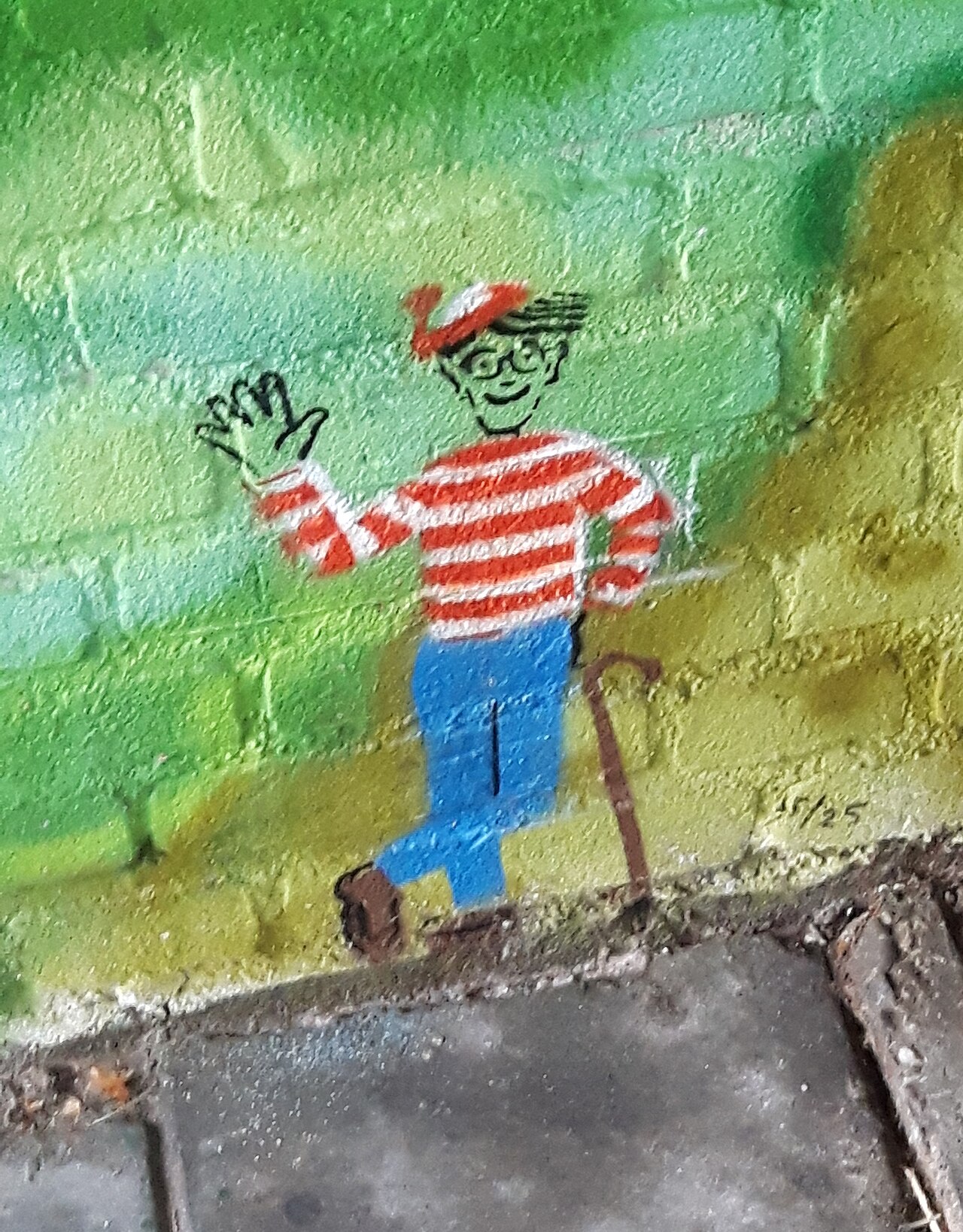
Handford seized on the suggestion and conceived Wally, a wandering world and time traveller clad in a red-and-white striped outfit. The first volume hit shelves on 25 June 1987, published in the United Kingdom by Walker Books. What began as a straightforward commission evolved into a search-and-find format that would captivate millions of children across the globe, establishing a template for interactive picture books that still echoes in the genre today.
The Escalating Challenge
Each double-page spread in a Where's Wally? book is a meticulously crafted landscape of hundreds of figures engaged in whimsical activities at a single location. Wally himself is marked by his iconic red-and-white striped shirt, bobble hat, and round glasses, yet Handford deliberately peppered every scene with red herrings—other striped objects and similarly dressed figures designed to mislead the searching eye. The illustrator reportedly spent as long as eight weeks rendering a single two-page illustration, and he steadily ratcheted up the difficulty across the series.
In the debut volume, Wally occupied an average of roughly one square centimetre of page space. By the second book that had shrunk to 0.80 square centimetres, the third to 0.33, and by the fourth through seventh volumes he had been compressed to between 0.20 and 0.17 square centimetres. Simultaneously, the crowd density grew from 225 characters on the opening page of the first book to approximately 850 on the opening page of the final volume, making each successive search a far more demanding exercise in visual patience.
A Name in Every Language
The series achieved extraordinary international penetration, with more than 73 million copies sold worldwide by 2007, translations in 26 languages, and distribution across over 50 countries. The character's name itself became a canvas for localisation. In Germany he is Walter, in France Charlie, in Vietnam Van Lang, in Lithuania Jonas, and in Italy Ubaldo. The North American edition carries the name Waldo, a change prompted not by marketing strategy but by a single executive at Little, Brown and Company who felt "Wally" was too close to Wallis Simpson.
American publishing rights later passed to Candlewick Press, the US arm of Walker Books. The franchise's reach also brought scrutiny: in the early 1990s a topless beachgoer hidden in one of the puzzle spreads sparked controversy in the United States. BJ's Wholesale Club and several school libraries removed the book from their shelves, and the title ended up on the American Library Association's list of the 100 most frequently challenged books of the 1990s.
From Franchise to Corporate Odyssey
Beyond the printed page, Wally's world expanded into animation, print serials, and interactive gaming. A 1991 animated television series brought the character to screens, followed by a second animated series in 2019 under the North American title Where's Waldo? A comic strip and a run of video games further extended the brand into storyline-driven territory.
The business history behind the franchise, however, has been turbulent. In January 2007, Entertainment Rights acquired the Where's Wally? rights. Just over two years later, on 1 April 2009, Entertainment Rights entered voluntary administration, and Boomerang Media stepped in to absorb its subsidiaries.
The following month, Boomerang began consolidating former British and American operations under the banner Classic Media. Entertainment Rights PLC was formally wound up in December 2010. In 2012, Classic Media was purchased by DreamWorks Animation, and when NBCUniversal acquired DreamWorks in 2016, Universal Pictures inherited the rights to the bulk of the catalogue, including the Wally franchise.
Reader's Guide
First published in the United Kingdom by Walker Books, the series was introduced in the United States under the title Where's Waldo? because an executive at the book's initial American publisher, Little, Brown and Company, disliked the name 'Wally' because it reminded him of Wallis Simpson. American publishing rights were later taken on by Candlewick Press, the American subsidiary of Walker Books.
Frequently Asked Questions
Who created Where's Wally?
British illustrator Martin Handford both conceived and hand-drew every page of the series. The first book was published on 21 September 1987.
Why is it called Where's Waldo in the US?
The name was swapped for North American releases because 'Wally' was already tied to a different product in that market. The artwork and puzzles are identical; only the character's name changes between regions.
How popular is the Where's Wally? series?
By 2007 the books had moved more than 73 million copies worldwide. The titles have been translated into 28 languages, turning the franchise into a genuine global puzzle phenomenon.
Is there a plot or ending to Where's Wally?
No, the books carry no narrative arc or traditional story conclusion. Each spread is a self-contained visual challenge where the reader simply hunts for Wally and his friends hidden in the crowd.
More in Children'S And Animation
Sources
Compiled from Wikipedia and the sources listed below. Text from Wikipedia is available under CC BY-SA 4.0; this entry is adapted from it.
- Wikipedia: Where's Wally? (CC BY-SA 4.0).
Spotted an error? Know more?
Reader corrections go straight into our review queue. Suggest an edit · How this site is sourced