Animaniacs
An animated variety show featuring the Warner siblings and a large cast.
Last updated

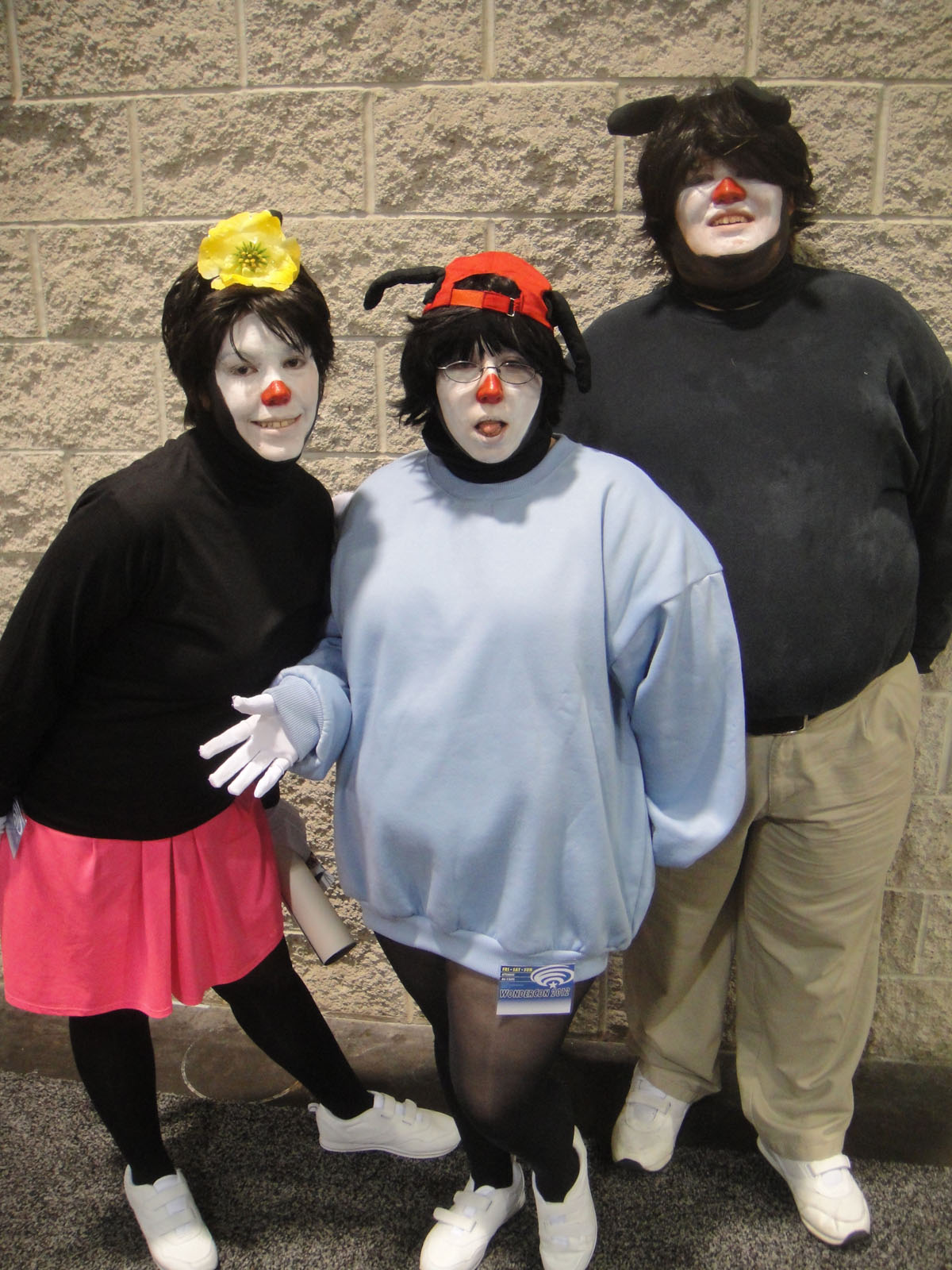
The Conmunity - Pop Culture Geek from Los Angeles, CA, USA · CC BY 2.0
Animaniacs is an American animated comedy variety show, created by animator Tom Ruegger and produced by Amblin Entertainment alongside Warner Bros. Television Animation. The series originally aired on Fox's Fox Kids block from September 13, 1993 to November 12, 1994, then moved to The WB on September 9, 1995 as part of its Kids' WB afternoon block, running until November 14, 1998. A direct-to-video film, Wakko's Wish, came out in 1999. Over five seasons, 99 episodes (comprising 274 segments) were produced.
The show is structured as a variety program, with short skits featuring a large cast. Its main characters are the Warner siblings—Yakko, Wakko, and Dot—who were partly inspired by the real Warner Bros. Water Tower on the studio lot in Burbank, California. Episodes had no fixed format but typically consisted of three short mini-episodes, each starring a different set of characters, linked by bridging segments.
The series was known for frequent musical numbers, satire, character catchphrases, and references to historical events and figures. Critics praised the series, and it won multiple awards, including eight Daytime Emmys and a Peabody Award. After new episodes stopped, Animaniacs continued to air in syndication through the 1990s and into the early 2000s. A revival streamed on Hulu from 2020 to 2023.
Premise
Nine video games based on the series were also produced. In the 1930s, the Warner siblings—Yakko, Wakko, and Dot—were three cartoon stars locked away in the real-life Warner Bros. Water Tower because they were considered too zany.
Decades later, they escape and interact with Warner Bros. studio workers, including security guard Ralph, archrival Dr. Otto Scratchansniff, and Hello Nurse. Pinky and the Brain are two genetically altered lab mice who constantly plot to take over the world; their segments typically begin with Brain asking, "Are you pondering what I'm pondering?" before Pinky responds with a non sequitur. Slappy Squirrel is an octogenarian squirrel cartoon star who appears with her nephew, Skippy. The Goodfeathers—Bobby, Pesto, and Squit—are New York pigeons based on characters from the 1990 film Goodfellas.
Buttons is a dog who risks his life to protect his four-year-old owner, Mindy. Rita and Runt are a homeless cat-and-dog duo, dropped after the first season. Katie Ka-Boom is a teenager with a temper. Chicken Boo is a giant chicken who wants to live among humans.
Development
Other side characters include the Hip Hippos. After Tiny Toon Adventures succeeded, Steven Spielberg gave series creator Tom Ruegger a chance to develop another TV series. Walking around the studio lot and seeing the Warner Bros. Water Tower, Ruegger took inspiration from the Marx Brothers to create Yakko, Wakko, and Dot, wanting to put them in a "contemporary Little Rascals' situation." The siblings' personalities were based on Ruegger's three sons.
Slappy Squirrel came from a suggestion by Tiny Toon Adventures producer and writer Sherri Stoner, who said she acted like a teenager in adulthood. Other characters were based on staff members' children, experiences, cartoons, and films. The Goodfeathers trio were based on characters from Goodfellas (1990). Spielberg approved and rejected 25 sets of characters pitched by Ruegger and his team at his home, with help from his children.
Four or five sets were approved; rejected ones included Nipsy and Russell, Bossy Beaver and Doyle, and the amoeba stars of "As the Petri Dish Turns." Buttons and Mindy were nearly rejected but saved by one of Spielberg's children. The series cost about $400,000 per episode, with a first-season budget of nearly $26 million—almost $1 million more than Tiny Toon Adventures' first season. After the series ended, Wakko's Wish was developed.
Writing
Writing Animaniacs was written for all ages, emphasizing comedy. Some ideas came from the writers' lives. Cultural references were added to appeal to a slightly older audience. Several jokes were improvised during recording sessions.
A few segments faced censorship. For three months, the production team argued with censors to air a scene where a caricature of Elizabeth II sits on a whoopee cushion in the segment "Windsor Hassle." Censors also rejected a segment where the Warners torment a group of censors, finding the script unfunny. The show was developed after the 1990 Children's Television Act, which required educational content in children's programming. Writers worked this in by having characters interact with historical figures and creating songs like "Yakko's World" to serve as educational content.
Voice actors
The voice cast includes Rob Paulsen as Yakko and Pinky, Jess Harnell as Wakko, Tress MacNeille as Dot, and Maurice LaMarche as the Brain. To audition, voice director Andrea Romano, Ruegger, and a few others had actors sit at a table in the SoundCastle studio and develop voice ideas. Paulsen auditioned for Yakko by sounding like comedian Groucho Marx, and for Pinky by using a Cockney accent inspired by English comedians such as Monty Python and The Goon Show; he received callbacks over an eight-week process. Paulsen also voiced Dr. Otto Scratchansniff.
Lore & Background
In the 1930s, the Warner siblings, Yakko, Wakko, and Dot, were three cartoon stars locked away in the real-life Warner Bros. Water Tower because they were seen as too zany. Several decades later, the trio escapes from the tower, interacting with Warner Bros. studio workers, including Ralph the Security Guard, archrival Dr. Otto Scratchansniff, and Hello Nurse. The show also features Pinky and the Brain, two genetically altered anthropomorphic laboratory mice who continuously plot to take over the world; Slappy Squirrel, an octogenarian squirrel cartoon star paired with her nephew Skippy; and other characters such as the Goodfeathers trio, Buttons and Mindy, Rita and Runt, Katie Ka-Boom, and Chicken Boo.
Following the success of Tiny Toon Adventures, Steven Spielberg offered series creator Tom Ruegger a chance to develop another television series. While walking around the studio lot and seeing the Warner Bros. Water Tower, Ruegger took inspiration from the Marx Brothers to create Yakko, Wakko, and Dot.
The personalities of the siblings were based on Ruegger's three sons. The series was produced with a budget of nearly $26 million for the first season. Animaniacs was written for an audience of all ages, and cultural references were added to target a slightly older audience. The writers worked educational content into the show by featuring segments involving the characters interacting with historical figures and creating songs like 'Yakko's World.'
Reader's Guide
Animaniacs is significant as a critically acclaimed animated variety show that blended slapstick comedy, musical numbers, satire, and educational content. It won eight Daytime Emmy awards and a Peabody award, reflecting its broad appeal and quality. The show's format, with no set structure, allowed for a rotating cast of characters and short skits, making it a staple of 1990s children's television.
Its legacy includes a direct-to-video film, Wakko's Wish (1999), nine video games, and a revival that streamed on Hulu from 2020 to 2023. The series continued to rerun in syndication through the 1990s into the early 2000s after production of new episodes ceased. The show's use of historical references and original music, composed by Richard Stone with a 29- to 32-player orchestra, contributed to its enduring popularity and influence on later animated series.
More in Children'S And Animation
Sources
Compiled from Wikipedia and the sources listed below. Text from Wikipedia is available under CC BY-SA 4.0; this entry is adapted from it.
- Wikipedia: Animaniacs (CC BY-SA 4.0).
Spotted an error? Know more?
Reader corrections go straight into our review queue. Suggest an edit · How this site is sourced