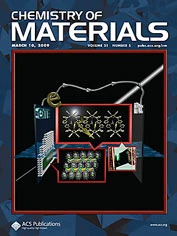
Inorganic chemistry
Study of non-carbon-based compounds and their industrial applications.

Inorganic chemistry is the study of how inorganic and organometallic compounds are made and how they behave. It generally focuses on compounds that are not based on carbon, which is the domain of organic chemistry, but this boundary is not strict, especially in the shared area of organometallic chemistry. The field touches nearly every part of the chemical industry, from catalysis and materials science to pigments, surfactants, coatings, medicines, fuels, and farming.
Many inorganic compounds occur naturally as minerals. For instance, soil can contain iron sulfide as pyrite or calcium sulfate as gypsum. These compounds also serve vital roles in biology, acting as electrolytes (like sodium chloride), storing energy (as in ATP), or forming structural parts (such as the polyphosphate backbone of DNA).
The bonding in inorganic compounds varies widely. Some are ionic, made of simple cations and anions held together by ionic bonds. Examples include magnesium chloride (MgCl₂), with Mg²⁺ and Cl⁻ ions, and sodium hydroxide (NaOH), with Na⁺ and OH⁻ ions. Others are highly covalent, like sulfur dioxide or iron pentacarbonyl. Many feature polar covalent bonding, which sits between ionic and covalent bonding—this applies to many oxides, carbonates, and halides. Inorganic compounds often have high melting points, and some salts, such as NaCl, dissolve readily in water. When a reactant contains hydrogen, reactions can involve proton exchange in acid-base chemistry. More broadly, a Lewis acid is any species that can accept an electron pair, while a Lewis base donates one. The HSAB theory refines this by considering ion size and polarizability.
Inorganic chemistry has several subdivisions. Organometallic chemistry deals with compounds containing metal-carbon bonds and is important in organic synthesis, where many catalysts and reagents are organometallic. Cluster chemistry involves compounds with several metals linked by metal-metal bonds or bridging ligands. Bioinorganic chemistry looks at metal-containing biomolecules and connects to medicinal chemistry. Materials chemistry and solid-state chemistry focus on extended solids (like polymers) with properties not seen in simple molecules, covering practical topics such as ceramics.
Inorganic chemistry is highly practical. Historically, a nation’s economic strength could be gauged by its production of sulfuric acid. Ammonium nitrate, a key fertilizer, is made from ammonia produced via the Haber process, with nitric acid then prepared by oxidizing that ammonia. Another large-scale inorganic product is Portland cement. Inorganic compounds also serve as catalysts, such as vanadium(V) oxide for oxidizing sulfur dioxide and titanium(III) chloride for polymerizing alkenes. Many, like lithium aluminium hydride, are used as reagents in organic chemistry.
Descriptive inorganic chemistry classifies compounds by their properties, often based on the heaviest element’s position in the periodic table or by structural similarities.
Coordination compounds traditionally involve metals bound to lone pairs on ligands like H₂O, NH₃, Cl⁻, or CN⁻. Today, nearly any organic or inorganic compound can act as a ligand. The metal is usually from groups 3–13, including the lanthanides and actinides, though all chemical compounds can be viewed as coordination complexes. Their stereochemistry can be rich—Werner’s separation of two enantiomers of [Co((OH)₂Co(NH₃)₄)₃]⁶⁺ showed that chirality is not unique to organic compounds. A current focus is supramolecular coordination chemistry. Examples include [Co(EDTA)]⁻, [Co(NH₃)₆]³⁺, and TiCl₄(THF)₂. Structures vary from tetrahedral (TiCl₄) to square planar (some nickel complexes) to octahedral (cobalt complexes). Many transition metals appear in biologically important molecules, like iron in hemoglobin. Other examples are iron pentacarbonyl, titanium tetrachloride, and cisplatin.
Main group compounds involve elements from groups I, II, III, IV, V, VI, VII, and 0 (excluding hydrogen). Groups 3 (Sc, Y, La) and 12 (Zn, Cd, Hg) are often included due to similar reactivity, and sometimes the lanthanides and actinides as well. These compounds have been known since chemistry’s early days—for instance, elemental sulfur and white phosphorus. Experiments on oxygen by Lavoisier and Priestley identified a key diatomic gas and opened the way for describing reactions by stoichiometric ratios. The practical synthesis of ammonia using iron catalysts, developed by Carl Bosch and Fritz Haber in the early 1900s, had a huge impact on humanity and showed the importance of inorganic synthesis. Typical main group compounds include SiO₂ and S.
- notable_compounds
- Sulfuric acid, cisplatin, ferrocene, ammonium nitrate, and other key inorganic compounds
Lore & Background
Inorganic chemistry covers the synthesis and behavior of compounds that are not carbon-based, though the boundary with organic chemistry is not absolute, especially in organometallic chemistry. Many inorganic compounds occur naturally as minerals; for example, soil can contain iron sulfide as pyrite or calcium sulfate as gypsum. These compounds also function as biomolecules, acting as electrolytes (such as sodium chloride), in energy storage (like ATP), or as structural components (such as the polyphosphate backbone in DNA). Bonding in inorganic compounds spans a wide spectrum. Some are ionic, consisting of simple cations and anions, such as magnesium chloride (Mg²⁺ and Cl⁻) or sodium hydroxide (Na⁺ and OH⁻). Others are highly covalent, like sulfur dioxide or iron pentacarbonyl, while many feature polar covalent bonding, an intermediate form seen in numerous oxides, carbonates, and halides. Inorganic compounds often have high melting points, and some salts, like sodium chloride, are very soluble in water. Reactions can involve proton exchange in acid-base chemistry, or more broadly, Lewis acids (electron-pair acceptors) and Lewis bases (electron-pair donors), with the HSAB theory refining these interactions based on ion size and polarizability. Subdivisions of the field include organometallic chemistry (compounds with metal-carbon bonds), cluster chemistry (compounds with multiple metals bonded together), bioinorganic chemistry (metal-containing biomolecules), and solid-state or materials chemistry (extended solids with unique properties, such as ceramics). Industrially, inorganic chemistry is highly practical: the scale of an economy was traditionally measured by sulfuric acid production. Key man-made compounds include ammonium nitrate (produced via the Haber process) and portland cement. Inorganic compounds serve as catalysts, such as vanadium(V) oxide for sulfur dioxide oxidation or titanium(III) chloride for alkene polymerization, and as reagents in organic chemistry, like lithium aluminium hydride. Descriptive inorganic chemistry classifies compounds by the position of the heaviest element in the periodic table and by structural similarities. Coordination compounds feature metals bound to lone pairs on ligands like water, ammonia, or chloride; modern coordination chemistry can involve almost any organic or inorganic ligand. These complexes exhibit rich
Reader's Guide
Inorganic chemistry is a highly practical area of science, traditionally evaluated by a nation's productivity of sulfuric acid. Important man-made inorganic compounds include ammonium nitrate for fertilization, produced via the Haber process, and portland cement. Inorganic compounds serve as catalysts, such as vanadium(V) oxide for sulfur dioxide oxidation and titanium(III) chloride for alkene polymerization. The field includes numerous subdivisions: organometallic chemistry deals with metal-carbon bonds and touches on organic synthesis; cluster chemistry involves compounds with several metals bonded together; bioinorganic chemistry examines metal-containing biomolecules and medicinal chemistry; and materials chemistry focuses on extended solids like ceramics. Descriptive inorganic chemistry classifies compounds based on properties and periodic table position. Coordination compounds feature metals bound to ligands, with rich stereochemistry including chirality. Main group compounds include elements from groups I, II, III, IV, V, VI, VII, and 0, and have been known since the beginnings of chemistry. Organometallic compounds contain M-C-H groups and require specialized preparative methods. Cluster compounds consist of triangular sets of bonded atoms and bridge the gap between molecules and solids. Bioinorganic compounds occur in nature and include anthropogenic species like pollutants and drugs.
Did You Know?
- Many inorganic compounds are found in nature as minerals, such as pyrite (iron sulfide) and gypsum (calcium sulfate).
- Inorganic compounds serve as biomolecules, including electrolytes like sodium chloride.
- An important man-made inorganic compound is ammonium nitrate, used for fertilization, typically produced by reacting ammonia with nitric acid.
- Coordination compounds can exhibit chirality, as demonstrated by Werner's separation of two enantiomers of [Co(en)3]3+.
Scope, Applications, and Natural Presence
Inorganic chemistry encompasses the synthesis and behavior of compounds that are not carbon-based, along with organometallic species. While organic chemistry focuses on carbon-containing molecules, inorganic chemistry covers everything else — yet the boundary between the two is far from clean. Organometallic chemistry, for instance, sits squarely in the overlap, bridging both disciplines. The field's reach extends into virtually every corner of the chemical industry. From catalysis and materials science to pigments, surfactants, coatings, pharmaceuticals, fuels, and agricultural products, inorganic compounds underpin a staggering breadth of practical applications. In nature, these compounds appear as minerals — pyrite (iron sulfide) and gypsum (calcium sulfate) are common examples found in soil. They also serve critical biological roles: sodium chloride functions as an electrolyte, ATP stores cellular energy, and the polyphosphate backbone of DNA is itself an inorganic structural feature. This dual presence in both geological and biological systems underscores how fundamental inorganic chemistry is to understanding the material world.
Bonding Diversity and Acid-Base Frameworks
One of the most striking features of inorganic chemistry is the extraordinary variety of bonding it encompasses. At one end of the spectrum sit ionic compounds — simple salts like magnesium chloride, where magnesium cations pair with chloride anions, or sodium hydroxide, pairing sodium cations with hydroxide anions. At the other end lie highly covalent species such as sulfur dioxide and iron pentacarbonyl. Between these extremes, many inorganic compounds exhibit polar covalent bonding, an intermediate form found in numerous oxides, carbonates, and halides. This bonding diversity translates into practical properties: many inorganic compounds have high melting points, while salts like sodium chloride dissolve readily in water. Reactivity in this field is often described through acid-base frameworks. When a reactant carries hydrogen atoms, proton exchange drives the reaction. More broadly, Lewis acid-base theory defines any species that can accept an electron pair as a Lewis acid and any that donates one as a Lewis base. The HSAB theory refines this further by factoring in the polarizability and ionic size of the participants.
Coordination Chemistry and Stereochemical Richness
Coordination chemistry represents one of the richest subfields within inorganic chemistry. Classical coordination compounds feature a central metal atom bound to ligands — molecules or ions that donate lone pairs of electrons. Traditional ligands include water, ammonia, chloride, and cyanide, but modern coordination chemistry has expanded the palette so broadly that virtually any organic or inorganic molecule can serve as a ligand. The central metal typically comes from groups 3 through 13, the lanthanides, or the actinides, though from a certain theoretical vantage point, nearly any compound can be described as a coordination complex. The stereochemistry here is remarkably varied: titanium tetrachloride adopts a tetrahedral geometry, certain nickel complexes are square planar, and cobalt complexes often form octahedral structures. Perhaps the most celebrated early achievement in this area was Alfred Werner's separation of two enantiomers of a cobalt-ammonia complex, demonstrating that chirality is not exclusive to organic molecules. Today, supramolecular coordination chemistry continues to push the boundaries of what these structures can achieve.
Industrial Impact and Historical Significance
Inorganic chemistry is deeply practical, and its industrial footprint is enormous. Historically, a nation's economic strength could be gauged by its sulfuric acid output, a testament to how central inorganic processes are to industrial civilization. The Haber-Bosch process, developed by Carl Bosch and Fritz Haber in the early 1900s, revolutionized agriculture by enabling large-scale ammonia synthesis using iron catalysts; that ammonia is subsequently oxidized to nitric acid and converted into ammonium nitrate, a staple fertilizer. Portland cement, another massive inorganic material, underpins modern construction. Inorganic compounds also serve as critical catalysts: vanadium(V) oxide drives the oxidation of sulfur dioxide, while titanium(III) chloride catalyzes alkene polymerization. Even organic chemistry relies heavily on inorganic reagents — lithium aluminium hydride is a prime example. The field's subdivisions, from cluster chemistry to bioinorganic chemistry and solid-state materials science, each feed into distinct industrial and medical applications, making inorganic chemistry one of the most consequential branches of the entire discipline.
Frequently Asked Questions
Who is Inorganic chemistry?
Inorganic chemistry is the branch of chemistry dedicated to compounds that are not primarily carbon-based, ranging from simple salts to complex organometallic structures. It runs parallel to organic chemistry but spans a far wider set of elements and bonding types.
What are Inorganic chemistry's powers/role?
Its core function is figuring out how non-carbon-based elements bond, react, and form useful materials. That knowledge underpins catalysis, pigments, coatings, pharmaceuticals such as cisplatin, and agricultural inputs like ammonium nitrate.
How does Inorganic chemistry's story end?
It has no true ending — its scope stretches from single-atom catalysts to entire industrial processes and keeps expanding. Its ongoing arc includes designing new materials, fuels, and medications that still rest on inorganic principles.
Why is Inorganic chemistry important?
Virtually every sector of the chemical industry leans on it, whether for surfactants, protective coatings, or crop fertilizers. Without its underlying principles, modern manufacturing, medicine, and energy systems would lose their foundational building blocks.
What are Inorganic chemistry's most notable compounds?
Fan favorites include sulfuric acid, cisplatin (a cancer-fighting drug), ferrocene (a landmark organometallic), and ammonium nitrate (a staple fertilizer). Together they showcase the field's range from industrial workhorses to life-saving medicines.
More in Chemistry & Materials 1-24
Spotted an error? Know more?
This is a living reference — every entry is fact-audited, and reader corrections feed straight into our audit queue. Suggest an edit · See this site's audit record