Stem cell
Undifferentiated cells capable of self-renewal and differentiation.
Stem cells are the earliest cells in a developmental lineage, found in both embryos and adults, though their traits differ slightly depending on their origin. Unlike progenitor cells, which have a limited capacity for division, or precursor and blast cells, which are typically destined to become a single cell type, stem cells can self-renew indefinitely while remaining unspecialized. They also have the ability to transform into various specialized cell types.
In mammals, the inner cell mass of a blastocyst—the stage of embryonic development occurring around days 5 to 14—contains roughly 50 to 150 cells with stem-cell capability. Inside the body, these cells eventually give rise to every cell type in the organism, a property known as pluripotency, beginning with differentiation into the three germ layers (ectoderm, mesoderm, and endoderm) during gastrulation. When removed and grown in a lab, these cells can be kept in their stem-cell state and are called embryonic stem cells (ESCs).
Adult stem cells reside in specific locations in the body, called niches, such as the bone marrow or gonads. Their role is to replenish cells that are lost quickly, and they are multipotent or unipotent—meaning they can only produce a few cell types or just one. Examples in mammals include hematopoietic stem cells (which generate blood and immune cells), basal cells (which maintain skin epithelium), and mesenchymal stem cells (which maintain bone, cartilage, muscle, and fat). Adult stem cells are scarce, vastly outnumbered by the progenitor and fully differentiated cells they produce.
Stem cell research originated from the work of Canadian biologists Ernest McCulloch, James Till, and Andrew J. Becker at the University of Toronto and the Ontario Cancer Institute in the 1960s. As of 2016, the only established stem cell therapy is hematopoietic stem cell transplantation, first performed in 1958 by French oncologist Georges Mathé. Since 1998, it has been possible to culture and differentiate human embryonic stem cells in lab lines. Isolating these cells has been controversial because it typically destroys the embryo, leading to restrictions in some European countries and Canada, while others like the UK and China have promoted the research. Somatic cell nuclear transfer, a cloning method, can create a cloned embryo for harvesting its embryonic stem cells. In 2006, a Japanese team led by Shinya Yamanaka discovered a way to convert mature body cells back into a stem-cell state, creating induced pluripotent stem cells (iPSCs).
The term "stem cell" was coined by Theodor Boveri and Valentin Haecker in the late 19th century. Early theoretical work on blood stem cells was done by Artur Pappenheim, Alexander A. Maximow, and Franz Ernst Christian Neumann in the early 20th century. The key properties of stem cells were first defined by McCulloch and Till in the early 1960s through experiments injecting bone marrow cells into irradiated mice. They observed spleen lumps proportional to the number of injected cells, hypothesizing each lump was a clone from a single marrow cell. Later work with Andrew John Becker and Louis Siminovitch confirmed this, and Siminovitch led studies showing these colony-forming cells could self-renew. The first stem cell therapy was a bone marrow transplant performed by Georges Mathé in 1956 on five workers exposed to radiation from a criticality accident in Yugoslavia; all survived. In 1981, Martin Evans and Matthew Kaufman first isolated and cultured mouse embryonic stem cells from blastocysts. In 1991, Ann Tsukamoto patented a process for isolating human stem cells. By 1998, James Thomson isolated human embryonic stem cells. In 2006, Shinya Yamanaka’s team converted fibroblasts into pluripotent stem cells by modifying the expression of just four genes, creating iPS cells. In 2011, a female maned wolf hit by a truck underwent stem cell treatment at Zoo Brasília, the first recorded use of stem cells to heal injuries in a wild animal.
The classical definition of a stem cell requires two properties: self-renewal—the ability to undergo many cycles of growth and division while staying undifferentiated—and potency, the capacity to differentiate into specialized cell types. In the strictest sense, this requires stem cells to be totipotent or pluripotent.
- field
- Cell biology, developmental biology, regenerative medicine
- known_for
- Self-renewal and potency; ability to differentiate into specialized cell types
- key_discoverers
- Ernest McCulloch, James Till, Andrew J. Becker (1960s)
Lore & Background
The term stem cell was coined by Theodor Boveri and Valentin Haecker in the late 19th century. Pioneering works in theory of blood stem cell were conducted at the beginning of the 20th century by Artur Pappenheim, Alexander A. Maximow, and Franz Ernst Christian Neumann. The key properties of a stem cell were first defined by Ernest McCulloch and James Till at the University of Toronto's Faculty of Medicine and the Ontario Cancer Institute in the early 1960s. They discovered the blood-forming stem cell, the hematopoietic stem cell (HSC), through their pioneering work in mice. McCulloch and Till began a series of experiments in which bone marrow cells were injected into irradiated mice. They observed lumps in the spleens of the mice that were linearly proportional to the number of bone marrow cells injected. They hypothesized that each lump (colony) was a clone arising from a single marrow cell (stem cell). In subsequent work, McCulloch and Till, joined by graduate student Andrew John Becker and senior scientist Louis Siminovitch, confirmed that each lump did in fact arise from a single cell. In that same year, Siminovitch was a lead investigator for studies that found colony-forming cells were capable of self-renewal, which is a key defining property of stem cells that Till and McCulloch had theorized.
Reader's Guide
Stem cells are significant because they offer the potential to understand development, model diseases, and develop regenerative therapies. These have stem-cell capability and are pluripotent, eventually differentiating into all of the body's cell types. Adult stem cells, found in niches such as bone marrow or gonads, are multipotent or unipotent and replenish rapidly lost cell types. Research into stem cells continues to raise ethical and regulatory questions, with sources for isolating ESCs restricted in some European countries and Canada, while others such as the UK and China have promoted the research.
Did You Know?
- Stem cells use telomerase, a protein that restores telomeres, to protect their DNA and extend their cell division limit (the Hayflick limit).
The Double Helix and the Birth of Molecular Understanding
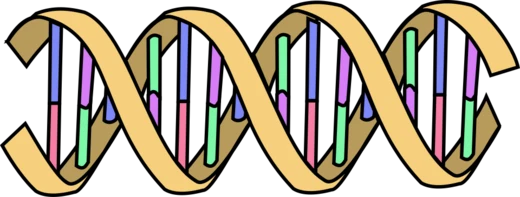
James Watson and Francis Crick, building upon X-ray crystallography data originally produced by Rosalind Franklin and subsequently shared with them through Maurice Wilkins and Max Perutz, proposed the double helix model for DNA's chemical architecture. This was not merely a structural curiosity; it offered, for the first time, a concrete physico-chemical framework through which the long-vague notion of nucleic acids as the carriers of biological inheritance could finally be understood in mechanistic terms. The implications rippled outward immediately, leading to the identification of DNA in microorganisms, plants, and animals alike.
Pioneers Who Laid the Groundwork
The road to understanding how cells operate at the molecular level was paved by generations of researchers working across centuries. Just four years later, Swiss biochemist Friedrich Miescher isolated a phosphorus-rich substance from the components of pus-filled bandages, which he termed nuclein; this was, in fact, DNA.
From Laboratory to Clinic: Modern Applications
Molecular biology is not confined to theoretical inquiry; it has become a deeply practical, multi-disciplinary field drawing on genetics, biochemistry, physics, mathematics, and increasingly computer science through bioinformatics. The techniques developed within this discipline now serve as essential tools for efficiently targeting new pharmaceuticals, diagnosing diseases at their molecular roots, and deepening our comprehension of how cells function physiologically. When clinical research and therapeutic interventions derived from molecular-level understanding are applied to treat genetic conditions, the practice falls under the umbrella of gene therapy. More broadly, the application of molecular biology and molecular cell biology principles within a medical context has come to be known as molecular medicine. The field's multi-disciplinary character means that progress in one area—whether a new imaging technique borrowed from physics or an algorithmic approach from computer science—can unlock biological questions that previously seemed intractable. In this way, molecular biology continues to bridge the gap between fundamental cellular mechanisms and tangible improvements in human health and disease management.
Rewriting the Rules of Heredity
Two experimental breakthroughs fundamentally reshaped how scientists understood the flow of genetic information. Working against the prevailing Mendelian assumption that genetic material could only be transmitted from parent to daughter cells, Griffith demonstrated that gene transfer could occur between organisms of the same generation—a process now called horizontal gene transfer or genetic transformation. Together, these discoveries dismantled earlier assumptions about the rigidity of heredity and revealed the dynamic, mechanistic machinery operating within every living cell.
Gallery


Frequently Asked Questions
Who is Stem cell?
Stem cell is the foundational, undifferentiated (or only partially differentiated) cell that sits at the root of every lineage in a multicellular organism. It is present in both embryonic and adult tissues, though its potency and behavior shift noticeably between those two settings.
What are Stem cell's powers/role?
Its two signature abilities are self-renewal—dividing without a set limit to produce more copies of itself—and potency, meaning it can give rise to a range of specialized cell types. This dual capacity clearly separates it from progenitor cells, which hit a division ceiling, and from committed blast cells that are locked into a single fate.
How does Stem cell's story end?
In a developmental sense, its arc concludes when it exits the stem-cell state and commits to a differentiation pathway, becoming a specialized cell type. In regenerative-medicine contexts the story is still unfolding, as researchers continue to harness that self-renewal capacity for tissue repair and replacement.
Why is Stem cell important?
It sits at the intersection of cell biology, developmental biology, and regenerative medicine, making it central to understanding how organisms build, maintain, and repair their tissues. Its unique combination of unlimited proliferation and multi-lineage potential underpins growth, homeostasis, and a wide range of therapeutic strategies.
Who discovered Stem cell?
The concept was formally demonstrated in the 1960s by Ernest McCulloch, James Till, and Andrew J. Becker, who showed that hematopoietic stem cells could both self-renew and give rise to blood-lineage cells. Their landmark work laid the experimental groundwork for the entire field of stem-cell biology.
More in Cell And Molecular Biology 1-24
Spotted an error? Know more?
This is a living reference — every entry is fact-audited, and reader corrections feed straight into our audit queue. Suggest an edit · See this site's audit record