Macrophage
White blood cells that engulf pathogens and regulate immune responses.

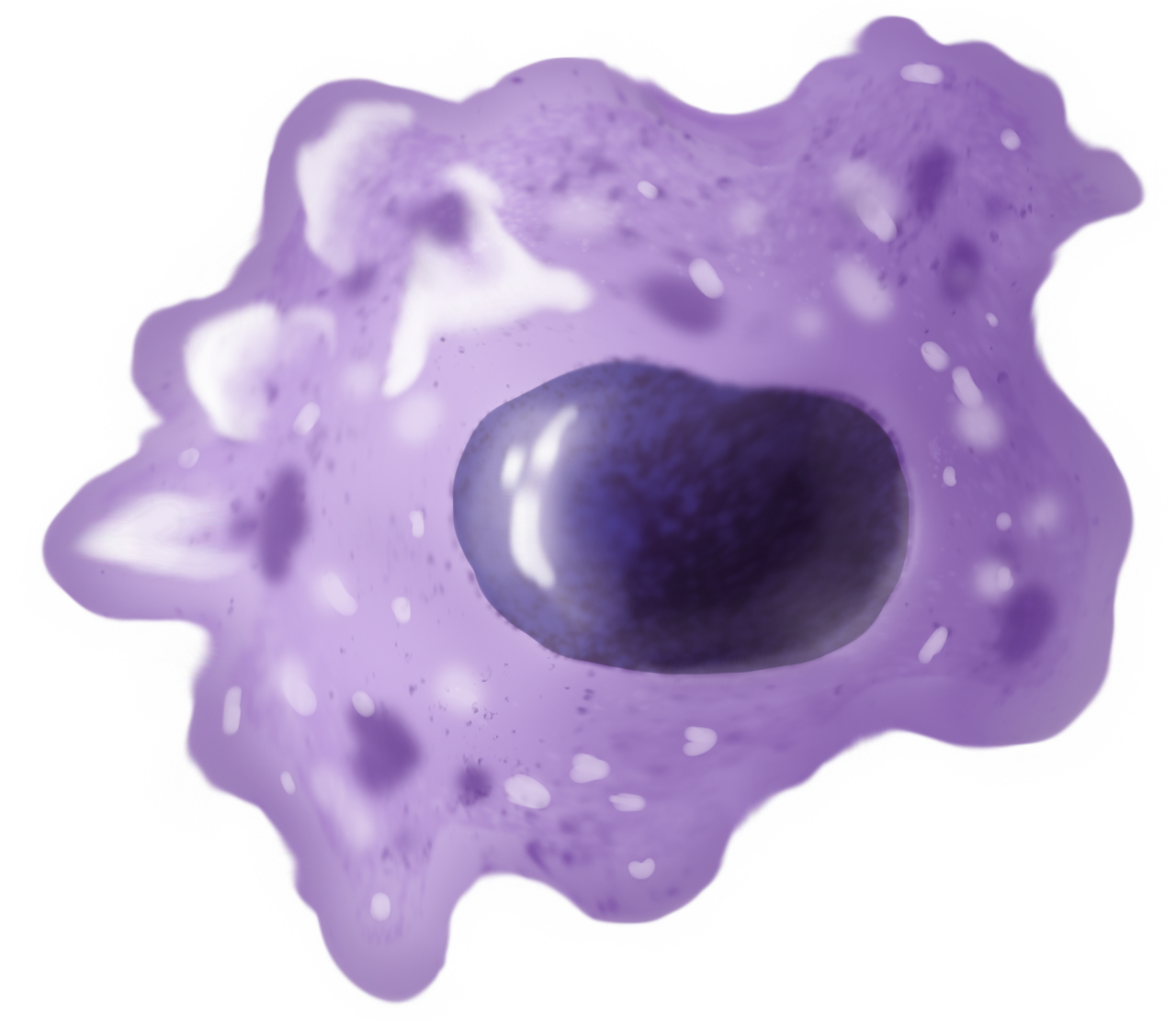
Noah Smith · CC BY-SA 4.0
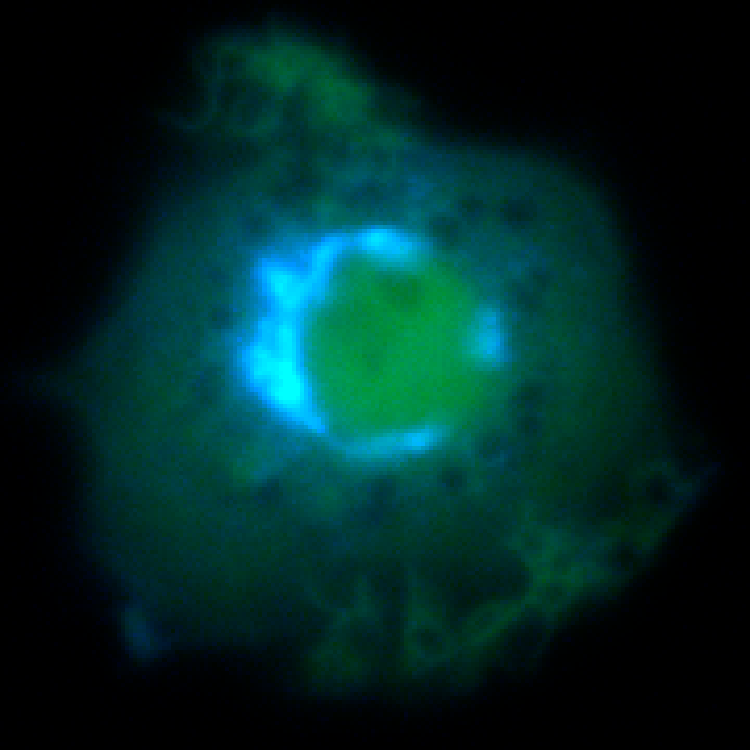
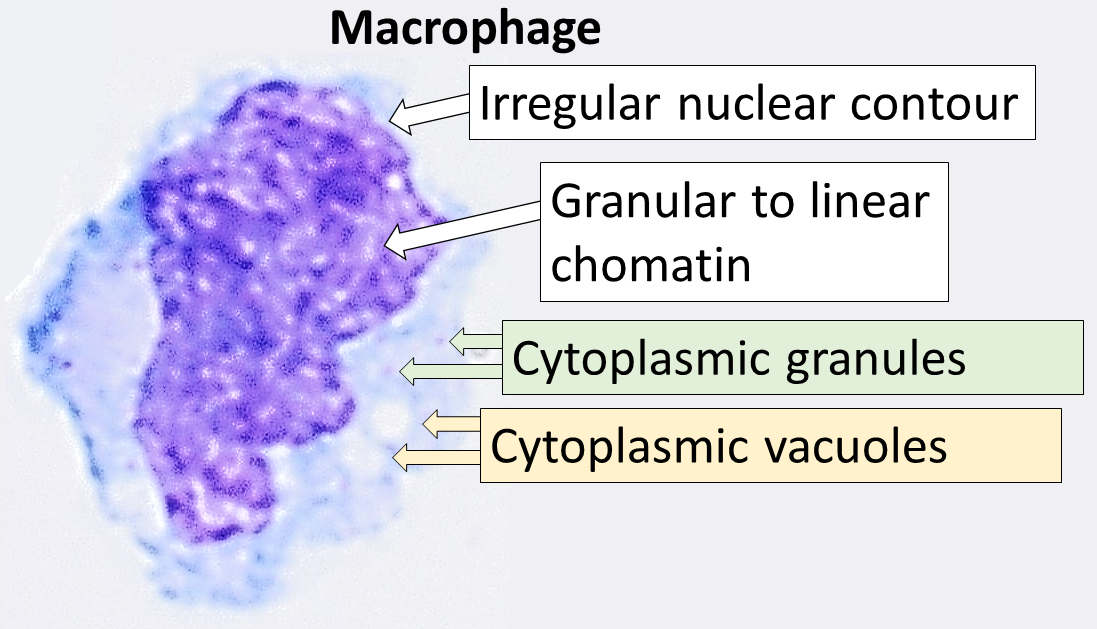
Macrophages are a type of white blood cell belonging to the innate immune system, first identified and named by the zoologist Élie Metchnikoff in 1884. Their primary function is to engulf and digest entities that lack the surface proteins characteristic of healthy body cells, including cancer cells, microbes, cellular debris, and foreign substances. This process, known as phagocytosis, defends the host against infection and injury, and is distinct from the self-protection method employed by Natural Killer cells. Macrophages patrol tissues via amoeboid movement and are found throughout the body, taking different forms with specific names such as histiocytes, Kupffer cells, alveolar macrophages, and microglia, all of which are part of the mononuclear phagocyte system. Beyond phagocytosis, they play a critical role in nonspecific innate immunity and help initiate adaptive immunity by recruiting other immune cells like lymphocytes, notably acting as antigen presenters to T cells. Human macrophages are produced through the differentiation of monocytes in tissues and can be identified by their expression of proteins such as CD14, CD40, CD11b, CD64, and CD68. They exhibit functional diversity: M1 macrophages encourage inflammation and uniquely metabolize arginine into the killer molecule nitric oxide, while M2 macrophages decrease inflammation and promote tissue repair by metabolizing arginine into ornithine. This M1/M2 dichotomy, however, has been questioned due to further complexity, as macrophages are considered highly plastic cells with a fluctuating phenotype. Dysfunctional macrophages can cause severe diseases like chronic granulomatous disease, which leads to frequent infections. Macrophages also perform paracrine functions specific to their organ; for example, testicular macrophages secrete 25-hydroxycholesterol to aid testosterone production by Leydig cells, and cardiac resident macrophages participate in electrical conduction via gap junctions with cardiac myocytes.
- discovered_by
- Élie Metchnikoff
- field
- Immunology
- known_for
- Phagocytosis and roles in innate and adaptive immunity
Lore & Background
Macrophages are white blood cells of the innate immune system that defend the body by engulfing and digesting pathogens, cancer cells, cellular debris, and foreign substances through a process called phagocytosis. They are found in nearly all tissues, where they move via amoeboid motion to patrol for threats. These cells take different forms depending on their location, including histiocytes, Kupffer cells, alveolar macrophages, and microglia, and are collectively part of the mononuclear phagocyte system. Beyond phagocytosis, macrophages play a key role in both nonspecific and adaptive immunity, such as by presenting antigens to T cells and recruiting lymphocytes. They can promote inflammation (M1 type) or reduce it and encourage tissue repair (M2 type), a distinction reflected in their metabolism: M1 macrophages convert arginine into nitric oxide, while M2 macrophages convert it into ornithine. However, this dichotomy is now understood as an oversimplification, as macrophages are highly plastic cells with fluctuating phenotypes. Human macrophages are produced from the differentiation of monocytes in tissues and can be identified by surface proteins like CD14, CD40, CD11b, CD64, and CD68. They were first discovered and named by Élie Metchnikoff in 1884. Macrophages in healthy adult tissues either derive from circulating monocytes or are established before birth and maintained independently. Dysfunctional macrophages can cause severe diseases, such as chronic granulomatous disease, leading to frequent infections.
Reader's Guide
Macrophages are central to the immune system, acting as professional phagocytes that remove dying cells, cellular debris, and pathogens. They are highly plastic and fluid cells, with a fluctuating phenotype, and can be classified as M1 (pro-inflammatory) or M2 (anti-inflammatory and tissue repair) macrophages, though this dichotomy has been recently questioned. Dysfunctional macrophages cause severe diseases such as chronic granulomatous disease, which results in frequent infections. Their ability to present antigens to T cells links innate and adaptive immunity, and they also participate in organ-specific functions, such as interacting with Leydig cells in the testis and contributing to electrical conduction in the heart.
Did You Know?
- Macrophages can survive up to several months in the body, unlike short-lived neutrophils.
- M1 macrophages metabolize arginine to nitric oxide, while M2 macrophages metabolize arginine to ornithine.
- Cardiac resident macrophages participate in electrical conduction via gap junction communication with cardiac myocytes.
A Name Given in 1884
Long before modern immunology had a vocabulary, a zoologist working in the Russian Empire named one of the body's most tireless defenders. Today, these roughly 21-micrometre cells are recognized as professional phagocytes, born from the differentiation of circulating monocytes once they migrate into tissue. They are not a single uniform population but a sprawling family: the same fundamental cell type wears different names depending on where it resides—histiocytes in connective tissue, Kupffer cells in the liver, alveolar macrophages in the lungs, microglia in the brain. All of them belong to what is now called the mononuclear phagocyte system, a label that replaced the older term reticuloendothelial system. Despite their varied appearances, every macrophage shares the core mission of patrolling its assigned territory by amoeboid movement, scanning for anything that lacks the protein signature of healthy self-cells.
The Phagocytic Relay
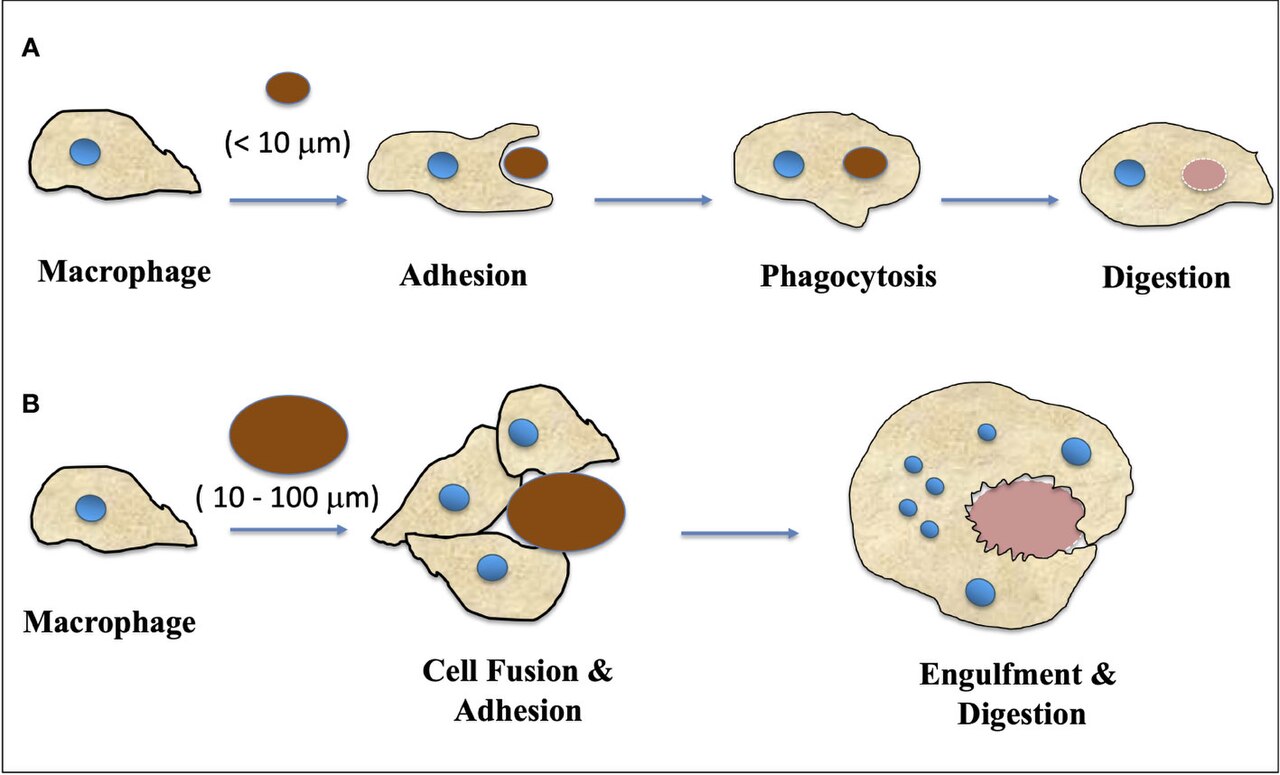
Macrophages are the body's cleanup crew and its first-line digesters. Their signature act—phagocytosis—involves engulfing anything that does not display the protein markers of healthy tissue: microbes, cancer cells, foreign particles, and even the dead bodies of other immune cells. Once a pathogen is swallowed, it is sealed inside a phagosome that fuses with a lysosome, creating a phagolysosome where enzymes and toxic peroxides break the intruder apart. Yet not every invader submits; organisms like Mycobacterium tuberculosis have evolved resistance to this chemical assault. A remarkable relay exists between neutrophils and macrophages. Neutrophils rush to a wound first, working for roughly two days before expending themselves. Their dying bodies and extracellular traps are then ingested by arriving macrophages, a process called efferocytosis. Macrophages typically reach a wound site within two days of injury, and unlike their short-lived neutrophil counterparts, they can survive in the body for several months, continuing their patrol long after the initial emergency has passed.
Two Faces of Inflammation
Macrophages are far from one-dimensional soldiers. They can either stoke inflammation or calm it, and the distinction is encoded in their biochemistry. Classically activated M1 macrophages drive the inflammatory response and possess the unique metabolic ability to convert arginine into nitric oxide, a molecule that acts as a chemical weapon against pathogens. Their counterparts, the alternatively activated M2 macrophages, take the opposite path: they dampen immune reactions, promote tissue repair, and metabolize arginine into ornithine, a building block for healing. A third group, regulatory macrophages or Mregs, adds yet another layer. All three types communicate through cytokines, the small signaling molecules that can amplify or suppress immune activity. Macrophages also serve as critical bridges to adaptive immunity, presenting antigens to T cells and recruiting lymphocytes to the scene. However, researchers increasingly recognize that the tidy M1-versus-M2 framework oversimplifies reality. Macrophages are now understood as highly plastic, fluid cells whose phenotype fluctuates continuously rather than locking into a single identity.
Guardians of Every Organ
Because macrophages are stationed in essentially every tissue, their roles extend far beyond generic pathogen clearance. In the heart, resident macrophages participate directly in electrical conduction by forming gap junctions with cardiac myocytes, linking immune defense to the organ's rhythm. In the testis, macrophages interact with Leydig cells by secreting 25-hydroxycholesterol, an oxysterol that neighboring Leydig cells can convert into testosterone; they also help maintain an immune-privileged environment and can mediate infertility when testicular inflammation occurs. Kupffer cells in the liver are notoriously difficult to study—humans can only be analyzed through biopsies or autopsies, and a single mouse yields only about five million purified cells. Fixed macrophages guard the lungs, bone, spleen, and connective tissue, ingesting foreign material and recruiting reinforcements when needed. When these cells malfunction, the consequences are severe: chronic granulomatous disease in humans leaves patients vulnerable to repeated, dangerous infections, underscoring how essential this quiet, omnipresent workforce truly is.
Gallery

Frequently Asked Questions
What are Macrophage's powers and role?
Macrophage patrols tissues via amoeboid movement, hunting down and digesting bacteria, cancer cells, dead debris, and foreign particles through phagocytosis. It also acts as a bridge to adaptive immunity by presenting antigens to T cells and other specialized defenders.
How does Macrophage's story end?
After fulfilling its engulfment and signaling duties, a macrophage may undergo programmed cell death and be cleared by neighbouring cells, or it may settle into a tissue-resident identity such as a Kupffer cell in the liver or a microglial cell in the brain, where it continues local surveillance.
Why is Macrophage so important to the immune system?
Macrophage occupies a unique crossroads position, serving simultaneously as a rapid first-line scavenger and as the initiator of targeted adaptive responses. Without it, the body would lose both its immediate cleanup crew and the critical signal that launches specialised immune attacks.
More in Cell And Molecular Biology 1-24
Spotted an error? Know more?
This is a living reference — every entry is fact-audited, and reader corrections feed straight into our audit queue. Suggest an edit · See this site's audit record