Somatic cell
Body cells that divide by mitosis, excluding germ and stem cells.
In cellular biology, a somatic cell—also called a vegetal cell—is any cell that makes up the body of a multicellular organism, excluding gametes, germ cells, gametocytes, and undifferentiated stem cells. These cells form an organism’s tissues and organs, dividing through mitosis. In mammals, somatic cells constitute all internal organs, skin, bones, blood, and connective tissue. By contrast, gametes arise from meiosis in germline germ cells and merge during sexual reproduction. Stem cells also divide via mitosis but differ from somatic cells because they can differentiate into many specialized cell types. The human body contains roughly 220 distinct types of somatic cells.
Theoretically, somatic cells are not germ cells (the source of gametes); any mutations they acquire can be passed to their cellular descendants but not to the organism’s offspring. However, in sponges, non-differentiated somatic cells form the germ line, and in Cnidaria, differentiated somatic cells give rise to the germline. Mitotic cell division occurs only in diploid somatic cells; only certain cells, like germ cells, participate in reproduction.
**Evolution** Multicellularity is thought to have evolved multiple times, and sterile somatic cells evolved alongside it. The emergence of an immortal germline producing specialized somatic cells introduced mortality, seen in its simplest form in volvocine algae. Species with a separation between sterile somatic cells and a germline are called Weismannists. This developmental pattern is relatively rare (e.g., vertebrates, arthropods, *Volvox*), as many species can undergo somatic embryogenesis (e.g., land plants, most algae, and numerous invertebrates).
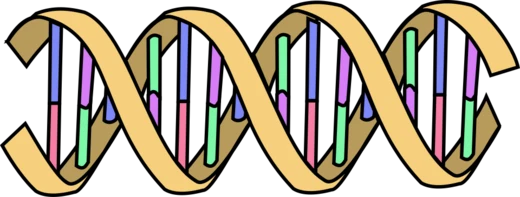
**Genetics and chromosomes** Like all cells, somatic cells contain DNA arranged in chromosomes. If a somatic cell has paired chromosomes, it is diploid, and the organism is diploid. Gametes of diploid organisms contain single, unpaired chromosomes and are haploid. Each chromosome pair consists of one from the father and one from the mother. Human somatic cells have 46 chromosomes in 23 pairs; human gametes have 23 unpaired chromosomes. When two gametes (a sperm and an egg) fuse during conception, they form a zygote with 46 chromosomes (23 pairs). Many species have somatic cells with chromosomes in fours (tetraploid) or sixes (hexaploid), and their germline cells may be diploid or even triploid. For example, modern cultivated wheat (*Triticum aestivum* L.) is hexaploid, with six copies of each chromatid in its somatic cells.
Spontaneous mutation rates are significantly lower in advanced male germ cells than in somatic cells from the same individual. Female germ cells also show a lower mutation frequency than corresponding somatic cells, similar to male germ cells. This suggests that germ cells employ more effective mechanisms to limit initial spontaneous mutations, likely including elevated levels of DNA repair enzymes that fix most potentially mutagenic DNA damage.
**Cloning** In recent years, whole-organism cloning has been developed in mammals, producing nearly identical genetic copies. One method, somatic cell nuclear transfer, involves removing the nucleus from a somatic cell (often a skin cell), which contains all genetic information needed to create the donor organism. This nucleus is injected into an ovum of the same species from which the genetic material has been removed. The ovum no longer needs fertilization, as it now has a diploid chromosome set. In theory, the ovum can be implanted into a same-species uterus and allowed to develop, yielding an animal that is a nearly identical genetic clone of the nucleus donor—the only difference being mitochondrial DNA retained from the ovum. In practice, this technique has been problematic, though there have been notable successes, such as Dolly the Sheep and, later, Snuppy, the first cloned dog.
**Biobanking** Somatic cells are also collected in biobanking. Cryoconservation of animal genetic resources helps preserve genetic material in response to declining ecological biodiversity. As populations shrink, genetic diversity falls, threatening species’ long-term survival. Biobanking aims to store viable cells long-term for future use. Somatic cells have been stored with the hope that they can be reprogrammed into induced pluripotent stem cells (iPSCs), which could then differentiate into viable reproductive cells.
**Genetic modifications** Advances in biotechnology have enabled genetic manipulation of somatic cells, whether for modeling chronic diseases or preventing health conditions.
- type
- Biological cell
- function
- Forms body of multicellular organisms; divides via mitosis
- chromosomes_in_humans
- 46 (23 pairs)
- reproduction_role
- Not directly involved; mutations not passed to offspring
- cloning_method
- Somatic cell nuclear transfer
Lore & Background
Somatic cells derive from Ancient Greek σῶμα (sôma) 'body' and are also called vegetal cells. They are distinct from gametes, which derive from meiosis within germ cells and fuse during sexual reproduction. In mammals, somatic cells form all internal organs, skin, bones, blood, and connective tissue, while germ cells give rise to spermatozoa and ova. Theoretically, somatic cells transmit their mutations to cellular descendants but not to the organism's descendants, though in sponges non-differentiated somatic cells form the germ line, and in Cnidaria differentiated somatic cells are the source of the germline.
Reader's Guide
Somatic cells are central to understanding multicellularity, development, and aging. The evolution of an immortal germline producing specialized somatic cells involved the emergence of mortality, seen in its simplest version in volvocine algae. Species with separation between sterile somatic cells and a germline are called Weismannists, a relatively rare condition found in vertebrates, arthropods, and Volvox. Somatic cells contain DNA arranged in chromosomes; in humans, they contain 46 chromosomes organized into 23 pairs. The frequency of spontaneous mutations is significantly lower in advanced male germ cells than in somatic cells, reflecting more effective DNA repair mechanisms in germ cells. Somatic cells have been used in cloning via somatic cell nuclear transfer, as with Dolly the Sheep, and in biobanking for cryoconservation of animal genetic resources. Genetic engineering of somatic cells using TALENs or CRISPR has been supported by the International Summit on Human Gene Editing because modifications are not passed to offspring. Cellular aging in mammals is linked to reduced DNA repair capability in post-mitotic somatic cells such as those of brain and muscle.
Did You Know?
- Somatic cells divide through mitosis, while gametes derive from meiosis.
- In humans, somatic cells contain 46 chromosomes organized into 23 pairs.
- The frequency of spontaneous mutations is significantly lower in advanced male germ cells than in somatic cells from the same individual.
- Somatic cell nuclear transfer was used to clone Dolly the Sheep.
Frequently Asked Questions
How do somatic cells divide compared to germ cells?
Somatic cells reproduce through mitosis, producing two genetically identical daughter cells. This contrasts with germ cells, which undergo meiosis to halve their chromosome number for sexual reproduction.
How many chromosomes do human somatic cells carry?
Each human somatic cell contains 46 chromosomes arranged in 23 homologous pairs. This diploid set is what distinguishes them from haploid gametes, which carry only 23.
Why don't mutations in somatic cells get inherited by the next generation?
Because somatic cells sit outside the germline, any genetic changes they accumulate stay confined to that individual's body. Only mutations present in sperm or egg cells can be transmitted to offspring.
What's the connection between somatic cells and cloning?
Somatic cell nuclear transfer is the technique behind Dolly the sheep and other cloned mammals, where the nucleus of an adult body cell is transplanted into an enucleated egg to create a genetically identical copy. It essentially reprograms a differentiated somatic cell back into a totipotent state.
More in Cell And Molecular Biology 1-24
Spotted an error? Know more?
This is a living reference — every entry is fact-audited, and reader corrections feed straight into our audit queue. Suggest an edit · See this site's audit record