Busanjinseong
Last updated
Where it is
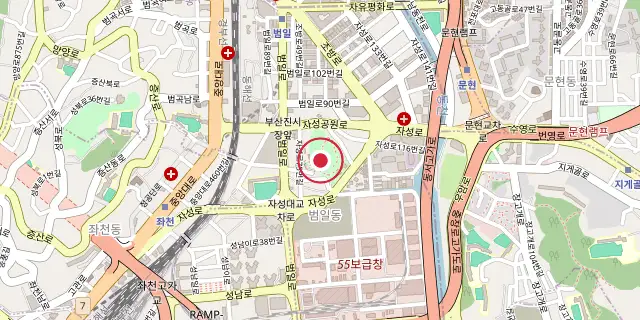
Coordinates: 35°08′10″N 129°03′40″E (35.1360, 129.0610) · Open in OpenStreetMap
Coordinates and connected clubs: the infobox of Wikipedia: Busanjinseong (CC BY-SA 4.0). Map: drawn by Codexery from OpenStreetMap tiles.
Busanjinseong is a fortress in Beomil-dong, Dong-gu, Busan, South Korea. It goes by several names, including the Branch Wall-fortress in Busanjin, Maruyama Castle, and Konishi Castle. The stone walls that still stand today were built by Japanese forces during the Imjin War. The site is also called Mangongdae, a name that honors Ming-dynasty General Wan Shide, who stayed at Jaseongdae to support Korean defenders in that conflict.
There are two theories about the name Jaseong, meaning "Subordinate Castle." One holds that it was the wall-fortress on Jeungsan Mountain, with Jwacheon-dong as its mother castle. The other claims Jaseong was built on the mountain peak as a general's terrace. After General Wan Shide returned home, the wall-fortress was repaired.
Origin
The fortress's origin ties to the fact that Busanjinseong was once called Jiseong or Jaseong Fortress, and Jaseongdae was made from Jiseong to form a pole. It served as the headquarters for the Gyeongsangjwa-do navy, which later moved to the Jwasuyeong fortress site, and also as the Busanjin Naval Headquarters. During the Japanese occupation, the wall-fortress was removed. Around that time, the sea near Jaseongdae was filled in, shrinking the site, though it was later repaired.
History
In Busanpo, there were inner and outer fortresses surrounding Jeungsan Mountain behind the main industrial complex. Jaseungdae was built as an open fortress. When Japanese troops stationed in Busan during the 1592 invasion, they rebuilt it as a barracks. It was also called Soseoseong and Hwansanseong Fortress.
In Japan, it was known as Maruyama Castle and Konishi Castle when Busanjinseong was a Japanese fortress—and it is still called Maruyama Castle there today. The Japanese used it as a command post. After they were driven out, troops under Ming commander Mansedeok stayed, giving it the name Mangongdae. Following the invasion, the fortress and Sadaemun Gate were built, government offices were repaired, and it became lodging for the Jwa Do-su Military Preceptor.
The castle is thought to have been built in 1593, alongside the main Busanjinseong Fortress on Jeungsan Mountain, by Mōri Hidemoto and his son, who were in charge of Gyeongsang Province. Meanwhile, Japanese leader Asano Nagayoshi is believed to have contracted or expanded it in 1598 during the invasion.
Strategic Naval Headquarters & the Mother-Subordinate Structure
The Branch Wall-fortress at Beomil-dong in Dong-gu, Busan, functioned as a critical military installation for the Gyeongsangjwa-do, the western South Gyeongsang navy, before that command relocated to the Jwasuyeong Fortress site. It also anchored the Busanjin Naval Headquarters, forming part of the coastal defense network surrounding the port. The fortress sat on a towering mountain, and the sea encircling it was eventually filled in, shrinking its original footprint, though subsequent repairs restored portions of the structure.
Its relationship to the main Busanjinseong Fortress is described through a mother-and-subordinate (Jaseong) pairing, yet two competing explanations exist for what constituted the subordinate castle. One places it on Jeungsan Mountain with Jwacheon-dong serving as the mother castle; the other identifies it as a structure atop the mountain that functioned as the General's terrace. This layered command architecture underscored the site's role as an operational nerve center for Korean naval forces in the Busan region.
The Ming Dynasty Connection and the Name Mangongdae
The fortress carries a lasting imprint of Ming Dynasty military involvement during the Imjin War. General Wan Shide of the Ming army remained at Jaseongdae to reinforce Korean defenders against the Japanese incursion, and the site was subsequently named Mangongdae in his honor. After Wan Shide returned to China, the wall-fortress was repaired, a testament to the collaborative defense effort between Ming and Joseon forces. Following the Japanese withdrawal, troops under the command of Mansedeok, another Ming figure, also garrisoned the location.
The Chungnyeolsa Temple Site records that the Japanese army erected a fortress atop the towering mountain within the complex, which later served as a memorial stone commemorating the events of the 1592 invasion. This Ming association layered an additional historical identity onto the site, distinguishing it from purely Korean or Japanese narratives and embedding it firmly in the broader Sino-Korean military history of the late sixteenth century.
Late Joseon Service, Colonial Loss, and Administrative Renaming
After the original Busan Fortress was destroyed by Japanese forces during the 1592 invasion, the Joseon Navy adopted the Jaseongdae site as the operational Busanjinseong Fortress beginning in 1607, the 40th year of King Seonjo's reign. The location thus became a base for the Busan garrison throughout the late Joseon Dynasty. Historical records add further texture: the text Yeongnamjinji notes that Yukwoojeong was established atop Jagseong during the Imjin period and named Seungga, with Jagseong regarded as the first generation of Jin and Seunggajeong as the first generation of Jagseong.
The Japanese later removed the wall-fortress during their colonial occupation of Korea. In a more recent administrative correction, the cultural property's official name was changed from Busanjinjiseong to Busanjinseong on 15 January 2020, resolving a long-standing naming discrepancy in the national registry.
More in Castles in South Korea
Sources
Compiled from Wikipedia and the sources listed below. Text from Wikipedia is available under CC BY-SA 4.0; this entry is adapted from it.
- Wikipedia: Busanjinseong (CC BY-SA 4.0).
Spotted an error? Know more?
Reader corrections go straight into our review queue. Suggest an edit · How this site is sourced