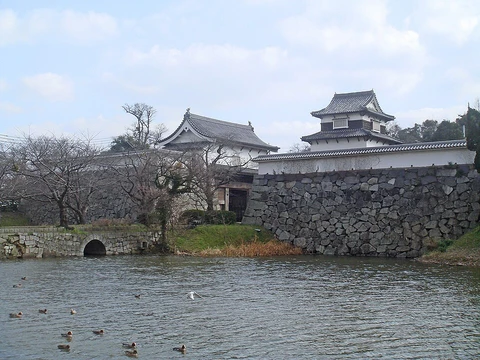
Ashikisan Castle
Ancient Korean-style fortress in Chikushino, Fukuoka Prefecture.
Last updated
Where it is
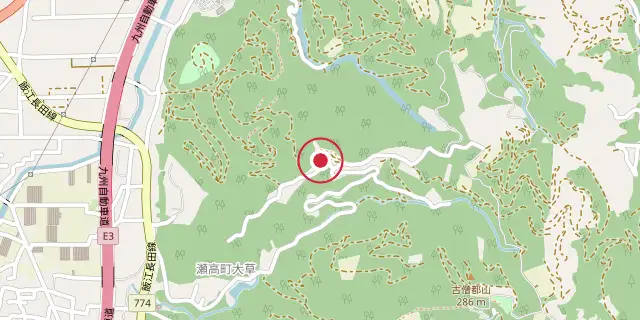
Coordinates: 33°09′47″N 130°31′08″E (33.1630, 130.5190) · Open in OpenStreetMap
Coordinates and connected clubs: the infobox of Wikipedia: Ashikisan Castle (CC BY-SA 4.0). Map: drawn by Codexery from OpenStreetMap tiles.
Ashikisan Castle is an ancient Korean-style fortress in the Hakiho Ashiki neighborhood of Chikushino, Fukuoka Prefecture. Its ruins have been protected as a National Historic Site since 2011.
History
Following the defeat of the combined Baekje and Yamato Japan forces by the Silla and Tang China alliance at the Battle of Hakusukinoe in 663, the Yamato court feared an invasion. In response, a network of shore fortifications was built throughout the rest of the 600s, often with assistance from Baekje engineers, generals, and artisans. Unaware of the Silla-Tang War (670–676), the Japanese continued building fortifications until 701, even after learning that Silla was no longer allied with Tang.
The name "kōgoishi" was given by Meiji period archaeologist Tsuboi Shōgorō, who thought the structures provided spiritual or practical protection for sacred sites. Later scholars determined they are likely practical military fortifications, though much remains unknown due to scant contemporary documentary evidence. Ashikisan fortification lies about 5 kilometers east-southeast of Dazaifu, at the western foot of Miyajidake. Discovered in 1999, excavations have confirmed a 1340-meter stone row with three water gates and an earthwork.
The entire mountain appears to have been used as a defensive facility, with stone rows encircling the mountainside. It is believed contemporary with the Kii Castle ruins.
More in Castles in Fukuoka Prefecture
Sources
Compiled from Wikipedia and the sources listed below. Text from Wikipedia is available under CC BY-SA 4.0; this entry is adapted from it.
- Wikipedia: Ashikisan Castle (CC BY-SA 4.0).
Spotted an error? Know more?
Reader corrections go straight into our review queue. Suggest an edit · How this site is sourced