Bangui
Capital and largest city of the Central African Republic.

Bangui, also known as Bangî in Sango and formerly spelled Bangi in English, is the capital and most populous city of the Central African Republic. Founded as a French outpost in 1889, it takes its name from its position on the north bank of the Ubangi River. The river itself was named using the Bobangi word for the "rapids" near the settlement, which marked the northernmost point of navigable water from Brazzaville. Most of the country’s population lives in the western region, centered on Bangui and its surroundings.
Since December 2020, the city has been part of Bangui Prefecture. Its estimated population in 2020 was 889,231. Bangui is divided into eight urban districts (arrondissements), 16 groups (groupements), and 205 neighborhoods (quartiers). As the national capital, it serves as the hub for administration, trade, and commerce. Key institutions located here include the National Assembly, government offices, banks, foreign businesses and embassies, hospitals, hotels, major markets, and the Ngaragba Central Prison. Local manufacturing includes textiles, food products, beer, shoes, and soap. The city’s Notre-Dame Cathedral is the seat of the Roman Catholic Archdiocese of Bangui. The University of Bangui, opened in 1970, is also based here, and the city is served by Bangui M'Poko International Airport.
Archaeological work in and around Bangui has uncovered at least 26 ancient Iron Age sites, rich with metallurgical tools and artifacts that shed light on the area’s pre-European history. These sites were added to the UNESCO World Heritage Tentative List on 11 April 2006 in the Cultural category. The closest site to Bangui is Pendere-Sengue, located 800 meters from Independence Avenue, where studies have been conducted by archaeologists and conservation agencies. This paleo-metallurgical site has yielded thousands of ceramic shards, iron tools, pottery, and a 9-kilogram iron spatula. Based on comparisons with similar sites in Nigeria and Sudan, it may date back to around the ninth century BC.
The modern settlement of Bangui was founded by Michel Dolisie and Alfred Uzac on 26 June 1889, under the direction of Brazzaville administrator Albert Dolisie. It was situated in what was then the upper reaches of the French Congo (present-day Congo), about 10 kilometers south of the Ubangi rapids. The territory was first organized as the Upper Ubangi (Haut-Oubangui) and later as the separate colony of Ubangi-Shari. Initial capitals were at les Abiras and Fort de Possel further upstream, but the rapids at Bangui blocked direct river communication from those points, boosting the settlement’s importance. In 1906, Bangui became the new headquarters for the French administration. It remained a key military and administrative center when the colony was integrated into French Equatorial Africa, and during World War II it was controlled by both Vichy and Free French forces. In 1932, a French radio transmitter in Bangui was described as "the most remote radio station in Africa."
Ubangi-Shari gained autonomy in 1958 as the Central African Republic and achieved full independence from France in 1960. In 1970, President Jean-Bédel Bokassa inaugurated the University of Bangui. The following year, he founded the national airline Air Centrafrique and ordered the construction of two new luxury hotels in the city. As Bokassa’s spending spiraled, western banks refused further loans, straining relations with Paris. Tensions escalated in April 1974 after the body of Brigette Miroux, a French woman who had worked as a "hostess" on Bokassa’s aircraft, was found in a Bangui hotel room. French media reported she had been Bokassa’s mistress and that he was responsible for her murder. In response, Bokassa banned French newspapers and took control of the Agence France-Presse office in Bangui. By 1975, the city’s population had reached 300,723.
Widespread violence erupted in Bangui in March 1981 following elections, after Operation Caban led the French to remove Bokassa (who had declared himself Emperor Bokassa I) and replace him with David Dacko. Opponents of the president met in Bangui and were forced into exile. Bokassa voluntarily returned to the city in autumn 1986 and stood trial. Initially facing the death penalty, he was sentenced to life imprisonment in February 1988. His successor, General André Kolingba, the army chief of staff under Dacko, took control from local French forces on 1 September 1981, citing the threat of civil war. Although he aimed to fight corruption and stabilize the economy, his reforms failed. By the mid-1980s, 80% of national revenue went toward staff salaries, and the economy worsened.
Under pressure from the donor group GIBAFOR (France, USA, Japan, Germany, EU, World Bank, and UN), Kolingba moved toward limited democracy in 1991 with a multiparty government. Elections were held in 1993 and 1994, but the first round was sabotaged by the government when it became clear they would lose. Continued donor pressure, with help from the UN Electoral Assistance Division, led to new elections in 1994, in which Ange-Félix Patassé was elected president. Because Patassé came from northern CAR, the southern group backing Kolingba launched a rebellion in 1996. In May of that year, about 200 soldiers of the Central African Republic began a mutiny in Bangui.
- Country
- Central African Republic
- Notable Landmarks
- Notre-Dame Cathedral, University of Bangui, Ngaragba Central Prison
Verified Timeline
Lore & Background
The modern settlement of Bangui was founded by Michel Dolisie and Alfred Uzac on 26 June 1889 on the direction of Brazzaville administrator Albert Dolisie. It was located in what was then the upper reaches of the French Congo, the present-day Congo. The original site was 10 km (6.2 mi) south of the Ubangi rapids. Its territory was organized first into the territory of the Upper Ubangi (Haut-Oubangui) and then as the separate colony of Ubangi-Shari. The initial capitals of these areas were at les Abiras and Fort de Possel further upstream, but the rapids at Bangui blocked them from direct communication along the river and caused the settlement there to grow in importance until, in 1906, it was chosen as the new headquarters for the French administration. Bangui retained its importance as a military and administrative centre when the colony was folded into French Equatorial Africa and under both Vichy and Free French control during World War II. The French operated a radio transmitter in Bangui, which was described in 1932 as "the most remote radio station in Africa".
Reader's Guide
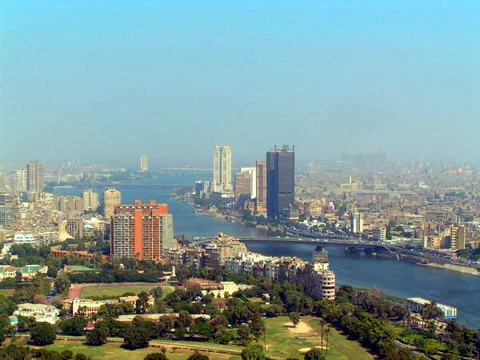
Despite its challenges, Bangui remains the primary hub for trade, manufacturing (textiles, beer, shoes, soap), and international diplomacy in the region. The city consists of eight urban districts (arrondissements), 16 groups (groupements) and 205 neighbourhoods (quartiers). As of 2020 it had an estimated population of 889,231. The city has been part of Bangui Prefecture since December 2020. The navigable Ubangi River, with the backdrop of lush green hills, turns sharply south below Bangui and connects to the Congo River just south of the equator near Brazzaville as its chief northern tributary. The Ubangi river marks the border between the Central African Republic and the Democratic Republic of the Congo. The Congolese town of Zongo is situated across the river from Bangui. The city was also known as La Coquette (the beautiful city) in the 1970s.
Did You Know?
- The name Bangui comes from the Bobangi word for the 'rapids' located beside the settlement, which marked the end of navigable water north from Brazzaville.
- Archaeological studies in and around Bangui have uncovered at least 26 ancient Iron Age sites, including Pendere-Sengue, which may date as far back as the ninth century BC.
- The French operated a radio transmitter in Bangui, described in 1932 as 'the most remote radio station in Africa'.
- In May 1996, about 200 soldiers mutinied in Bangui, demanding salary increases and the abdication of President Ange-Félix Patassé, leading to the deaths of more than 50 people.
- As of early January 2014, around 500,000 people had fled their homes in Bangui—almost half the city's population.
From French Outpost to Colonial Capital
The settlement's name derives directly from that river, which itself takes its name from the Bobangi word for the rapids that sit beside the town—rapids that marked the northern limit of navigable water from Brazzaville. The original site sat roughly ten kilometres south of those rapids. What began as a modest station in the upper reaches of the French Congo gradually grew in strategic importance because the rapids cut off direct river communication with upstream posts at les Abiras and Fort de Possel. In 1906, it was chosen as the new headquarters for the French administration. Bangui retained its importance as a military and administrative centre when the colony was folded into French Equatorial Africa and under both Vichy and Free French control during World War II. The French operated a radio transmitter in Bangui, which was described in 1932 as "the most remote radio station in Africa".
Iron Age Roots Beneath the Modern City
Long before European boots touched the soil, the area around Bangui was a centre of metallurgical activity. Archaeological investigations have identified at least twenty-six ancient Iron Age sites in and around the city, each yielding metallurgical tools and objects that illuminate a pre-colonial past stretching back millennia. The closest of these to the modern city is Pendere-Sengue, situated just eight hundred metres from Independence Avenue. There, researchers and conservation agencies have uncovered several thousand ceramic shards, iron tools, pottery fragments, and a remarkable iron spatula weighing nine kilograms. When its dating is compared with analogous sites in Nigeria and Sudan, Pendere-Sengue may date as far back as the ninth century BC. The archaeological sites were added to the UNESCO World Heritage Tentative List on 11 April 2006 in the Cultural category.
A Stage for Political Storms
Bangui has served as the stage for some of the Central African Republic's most dramatic political upheavals. In 1974, the body of Brigette Miroux was discovered in a hotel room in Bangui. Miroux was a native of northern France who in 1973 came to the Central African Republic to become a "hostess" in Bokassa's Caravelle aircraft. It was reported in the French media that she had been Bokassa's mistress and that he was responsible for her murder; in response, Bokassa banned French newspapers and seized control of the Agence France-Presse office in the city. In March 1981, widespread violence took place in Bangui following elections, after Operation Caban led the French to drop Bokassa and to replace him with David Dacko. In May 1996, about 200 soldiers of the Central African Republic mutinied in Bangui, demanding salary increases and the abdication of Ange-Félix Patassé. In the aftermath, the renegades plundered and killed more than 50 people. On 25 October 2002, several towns in the country and later Bangui itself were attacked by the forces of General François Bozizé. In late 2012, the Séléka coalition rebelled and captured Bangui on 23 March 2013, forcing Bozizé to flee the capital. As of early January 2014, "around 500,000 have fled their homes" in Bangui, "almost half the city's population." On 13 January 2021 around 200 rebels attacked Bangui, killing one peacekeeper before being repelled.
Administrative and Economic Heart of the Republic
Today Bangui functions as the administrative, trade, and commercial nerve centre of the Central African Republic. The majority of the country's population is concentrated in the western region, with the city and its surroundings forming the demographic core. The city houses the National Assembly, government buildings, banks, foreign enterprises, embassies, hospitals, hotels, main markets, and the Ngaragba Central Prison. Its industrial output includes textiles, food products, beer, shoes, and soap. International connectivity is maintained through Bangui M'Poko International Airport, linking the capital to the wider world. The city is also home to the University of Bangui, inaugurated in 1970. Its Notre-Dame Cathedral is the seat of the Roman Catholic Archdiocese of Bangui.
Frequently Asked Questions
What is Bangui?
Bangui is the capital and largest city of the Central African Republic, functioning as the country's primary hub for administration, trade, and commerce.
What role does Bangui play in the Central African Republic?
It acts as the nation's administrative and commercial heart, housing the National Assembly, government offices, banks, foreign embassies, and the University of Bangui.
What languages are spoken in Bangui?
French serves as the official language, while Sango is also widely used in everyday life across the city.
What notable landmarks can fans find in Bangui?
Key sites include the Notre-Dame Cathedral, the University of Bangui, and the Ngaragba Central Prison, each marking a distinct facet of the city's identity.
Why is Bangui important in the context of African capitals?
As the seat of the Central African Republic's government and its largest urban center, Bangui concentrates the country's legislative, educational, and diplomatic activity in one place.
More in Capital Cities Of Africa 1-16
Spotted an error? Know more?
This is a living reference — every entry is fact-audited, and reader corrections feed straight into our audit queue. Suggest an edit · See this site's audit record