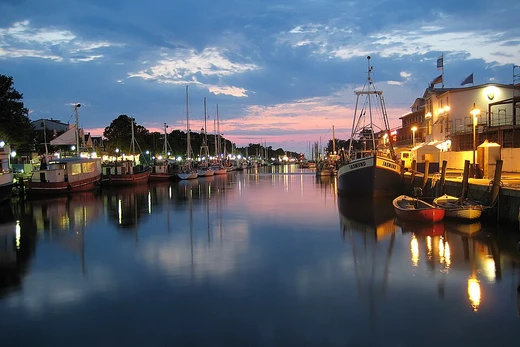
Dortmund–Ems Canal
German canal linking Dortmund to Emden, opened 1899.

The Dortmund–Ems Canal stretches 269 kilometres across Germany, linking the inland port of Dortmund with the North Sea port of Emden. Its southern, man-made section runs 215 kilometres to the Herbrum lock near Meppen. From there, the route follows the natural course of the River Ems for 45 kilometres up to the Oldersum lock. A final artificial segment of 9 kilometres then completes the journey. This last stretch was necessary because the inland vessels of the canal’s era were not designed for the open sea, which they would have encountered at the Dollart and the entrance to Emden’s harbour. The canal also connects to the Ems-Jade Canal, which runs from Emden to Wilhelmshaven.
Opened in 1899, the canal was built to relieve pressure on the railway network, which was struggling to handle freight from the Ruhr region. It also aimed to make Ruhr coal more competitive against imported English coal, and to support the eastern Ruhr’s steel industry, which needed foreign ore. The canal’s importance led to the construction of barges and motor vessels built specifically to its dimensions—the Dortmund–Ems Canal barge and the Gustav Koenigs type. These vessels, which later sailed on many other routes, became the standard for CEMT class III. In 1962, the canal was upgraded to accommodate 1,350-tonne vessels, corresponding to CEMT class IV.
Because of its strategic value, the canal was repeatedly attacked during World War II. Between June and 12 August 1940, a series of raids—culminating in an attack by 49 and 83 Squadrons—damaged the aqueducts crossing the River Elbe, briefly putting the canal out of action. In September 1943, Operation Garlic, an assault by 617 Squadron RAF (the “Dambusters”), failed and was costly. The squadron struck again in September 1944, this time using Tallboy “earthquake” bombs, which breached the canal and caused heavy damage. In August 1944, 571 Squadron attacked with de Havilland Mosquitos, dropping mines into the water. The canal was repaired after the war.
The canal’s most famous structure is the Henrichenburg boat lift in Waltrop, which raised ships 14 metres. It operated until 1962, when a new lift and a lock replaced it. Today, the old lift houses the Westfälisches Industriemuseum. A few kilometres north, the canal reaches Datteln, a junction of four waterways: the Datteln-Hamm Canal, the Wesel-Datteln Canal, the Dortmund–Ems Canal, and the Rhein-Herne Canal. The canal’s original route crosses the rivers Lippe, Stever, and Ems on arched bridges; the Lippe bridge sits 15 metres above the river.
After the Second World War, the canal needed widening. Sections that ran above ground level could not be easily expanded, so a new route was built between Olfen and Münster, running parallel to the old one with new river crossings. The old route was closed to shipping. Today, the Dortmund-Ems-Kanal-Route is a 350-kilometre official long-distance cycling path that follows the canal.
Towns along the canal include Dortmund, Waltrop, Datteln, Olfen, Lüdinghausen, Senden, Hiltrup, Münster, Dörenthe, Hörstel, Bevergern, Rheine, Hesselte, Lingen, Geeste, Meppen, Haren, Papenburg, Düthe, Heede, Lehe, Aschendorf, Oldersum, and Emden.
- Length
- 269 km (167 mi)
- Opened
- 1899
- Southern artificial segment
- 215 km (134 mi) to Herbrum lock
- River Ems section
- 45 km (28 mi) to Oldersum lock
- Northern artificial segment
- 9 km (6 mi)
- CEMT class upgrade
- Class IV in 1962
- Best known structure
- Henrichenburg boat lift
Verified Timeline
Lore & Background
The canal was opened in 1899 to reduce demand on the railway network, which could not cope with the transport of products from the Ruhr area. Also, the canal was supposed to make coal from the Ruhr area more competitive compared to imported English coal. Furthermore, the steel industry in the eastern Ruhr area needed to import ore from abroad. The canal was so important that a lot of barges and motor vessels were built to its dimensions. These are the Dortmund–Ems Canal barge and the Gustav Koenigs type. Both sailed on many other routes and make up the CEMT class III vessels. In 1962, the canal was upgraded for use by 1350t vessels, i.e. CEMT class IV. The canal was attacked numerous times during World War II due to its strategic importance. During June through August 12th 1940 a series of raids culminating in a raid by 49 and 83 Squadrons damaged the aqueducts that crossed the River Elbe - putting the canal out of commission for short periods. Operation Garlic, an attack in September 1943 by 617 Squadron RAF (the "Dambusters") was unsuccessful and costly. The squadron attacked it again in September 1944 using Tallboy "earthquake" bombs breaching it and causing considerable damage. In August 1944, 571 squadron attacked it with de Havilland Mosquitos, dropping mines into the canal. It was repaired after the conflict. The best known building of the Dortmund-Ems canal is the Henrichenburg boat lift in Waltrop, which enabled a ship to bridge a difference in height of 14 metres (46 ft). It operated until 1962, and was then replaced by a new elevator and a lock. Today it houses the Westfälisches Industriemuseum. After the Second World War, the canal had to be widened. Those parts that were above ground level could not easily be widened, and therefore a new route was constructed between Olfen and Münster. It lies parallel to the old route, and new river crossings were also built. The old route was closed for shipping.
Reader's Guide
The Dortmund–Ems Canal runs 269 kilometres from Dortmund to Emden. The southern artificial section is 215 km to Herbrum lock near Meppen, then the route follows the river Ems for 45 km to Oldersum lock, and finally a second artificial segment of 9 km. That last stretch was built because inland ships of the era were not built for the open sea they would have faced at the Dollart and the entry to Emden. The canal connects to the Ems-Jade Canal from Emden to Wilhelmshaven. Towns along the canal include Dortmund, Waltrop, Datteln, Olfen, Lüdinghausen, Senden, Hiltrup, Münster, Dörenthe, Hörstel, Bevergern, Rheine, Hesselte, Lingen, Geeste, Meppen, Haren, Papenburg, Düthe, Heede, Lehe, Aschendorf, Oldersum, and Emden. The best known structure is the Henrichenburg boat lift in Waltrop, which lifted ships 14 metres. It operated until 1962 and now houses the Westfälisches Industriemuseum. The Dortmund-Ems-Kanal-Route is a 350 km long official long-distance cycling route next to the canal.
Did You Know?
- The northern artificial segment of 9 km was built because inland ships at the time were not built for the open sea they would have faced at the Dollart and the entry to Emden.
- During June through August 12th 1940, raids by 49 and 83 Squadrons damaged the aqueducts crossing the River Elbe, putting the canal out of commission for short periods.
- Operation Garlic in September 1943 by 617 Squadron RAF (the 'Dambusters') was unsuccessful and costly.
- In September 1944, 617 Squadron attacked again using Tallboy 'earthquake' bombs, breaching the canal and causing considerable damage.
- The Henrichenburg boat lift in Waltrop enabled a ship to bridge a difference in height of 14 metres (46 ft) and operated until 1962.
More in Canals And Artificial Waterways 1-19
Spotted an error? Know more?
This is a living reference — every entry is fact-audited, and reader corrections feed straight into our audit queue. Suggest an edit · See this site's audit record