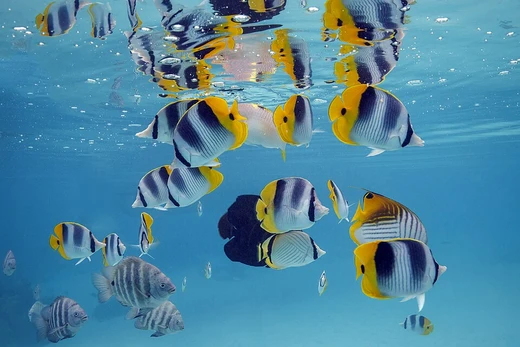
Lined butterflyfish
One of the largest butterflyfish, with a wide Indo-Pacific range.

dr.scott.mills · CC BY-SA 2.0
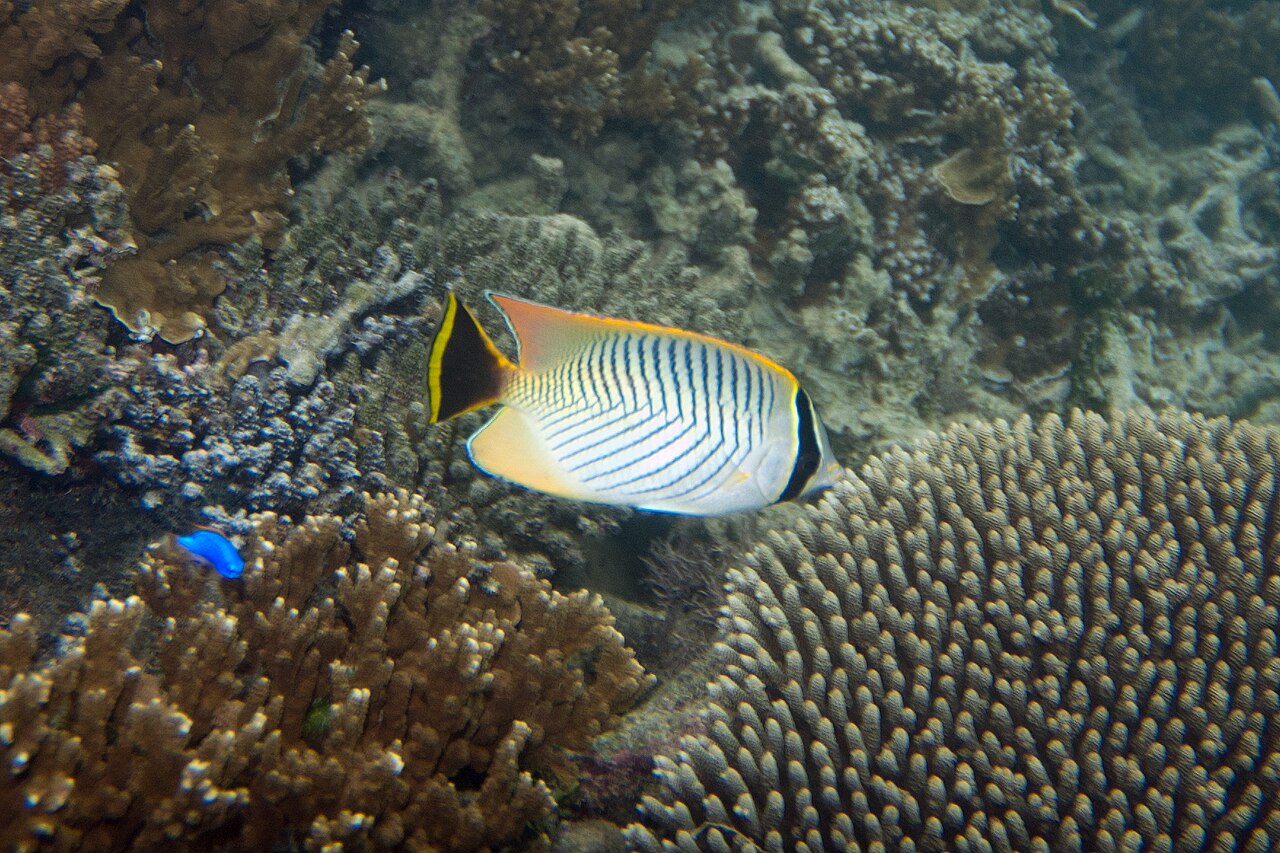
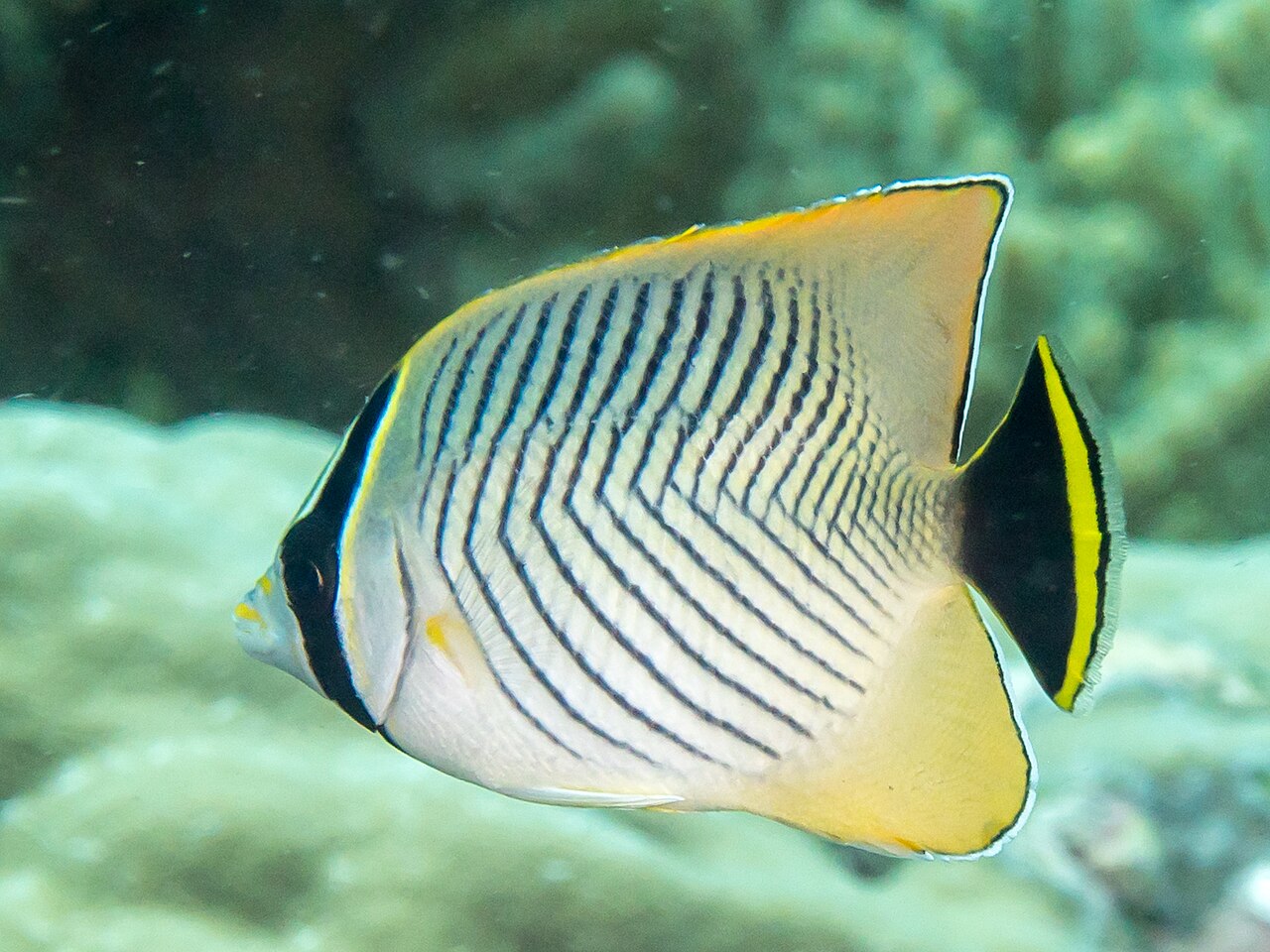
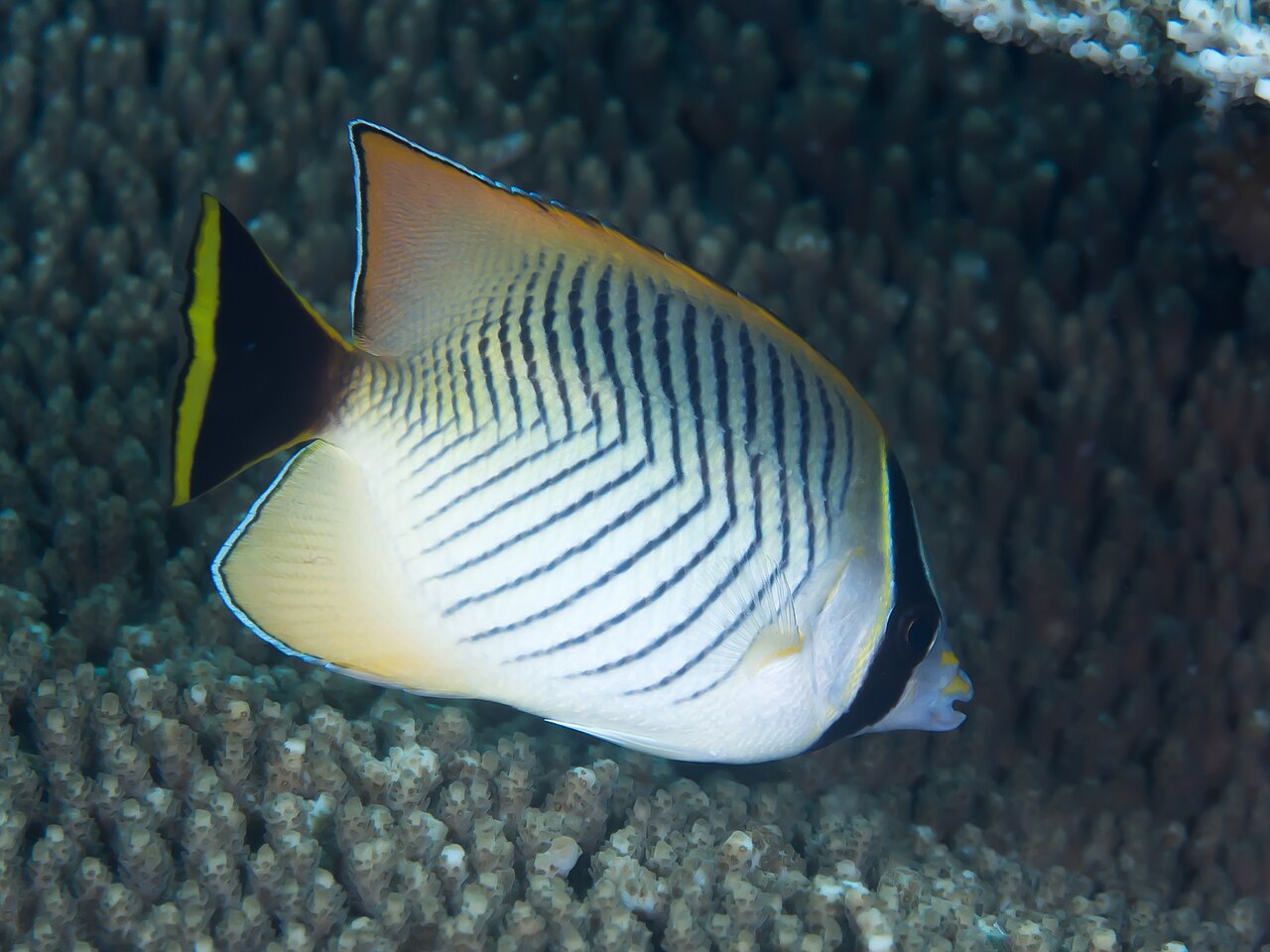
The lined butterflyfish (Chaetodon lineolatus) is a species of marine ray-finned fish belonging to the family Chaetodontidae, one of the largest species in the genus Chaetodon. It is notable for its wide range from the Red Sea to South Africa and as far east as southern Japan and Hawaii, and for being among the largest butterflyfish, growing up to 30 centimeters (12 inches) long.
Quick Facts
- Genus
- Chaetodon
- Parent
- Chaetodon (Rabdophorus)
- Species
- lineolatus
Facts from the source article.
Lore & Background
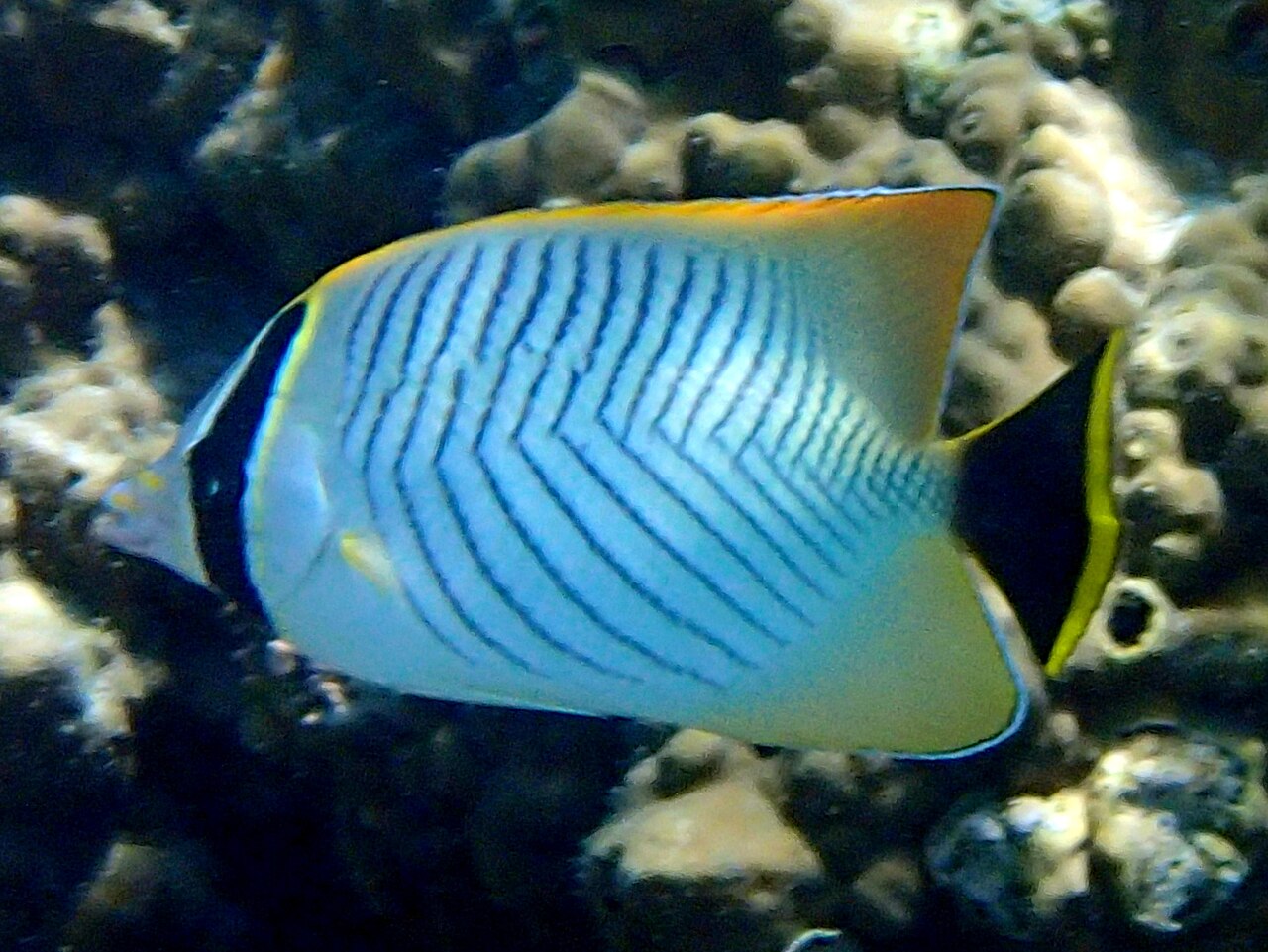
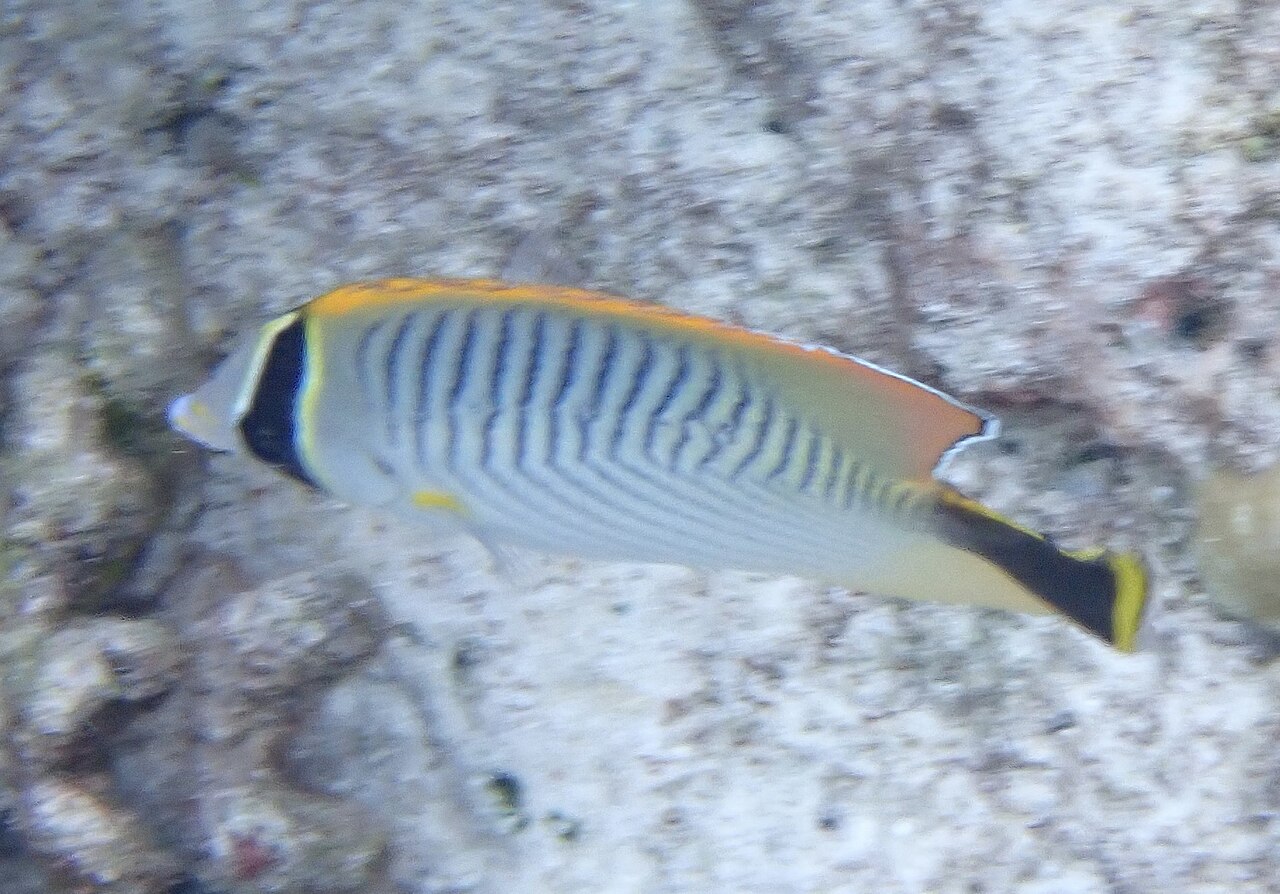
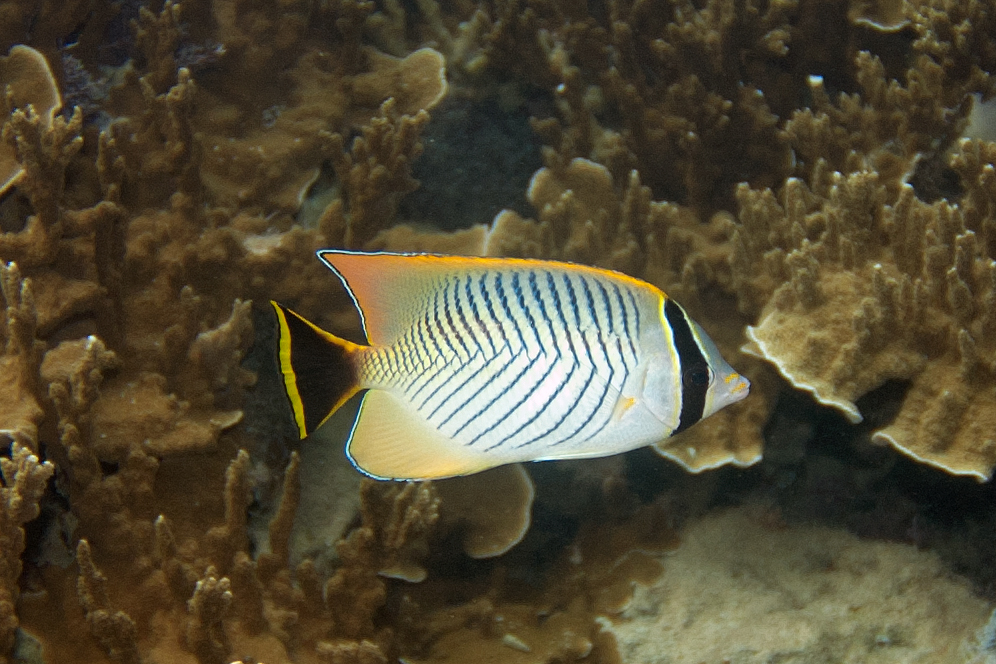
The lined butterflyfish belongs to the large subgenus Rabdophorus, which might warrant recognition as a distinct genus. In this group, it is sister to a clade composed of the spot-naped butterflyfish, the black-wedged butterflyfish, and the Pacific double-saddle butterflyfish. These four differ wildly in shape, but all have bluish vertical lines on a white body with yellow behind, and black on back and caudal peduncle in addition to the typical eyestripe of Chaetodon. The blue-cheeked butterflyfish is in turn sister to this entire clade, but it also has the tell-tale blue vertical lines.
The species occurs along the east coast of Africa including the Red Sea and Mozambique Channel, throughout Northern Australia including the Coral Sea, Gulf of Carpentaria, and Timor Sea, and throughout West Indo-Pacific including the Java Sea, South China Sea, Philippine Sea, and Celebes Sea. This uncommon fish is found in pairs or swimming alone, or occasionally in spawning aggregations. It occurs between 2 and 50 m depth, in coral-rich areas of reefs and lagoons.
Reader's Guide
The lined butterflyfish is significant as one of the largest species in the genus Chaetodon, matched only by the saddle butterflyfish, making them about as big as dinner plates. Its wide distribution from the Red Sea to Hawaii and southern Japan contributes to its Least Concern conservation status, though its biggest threat is loss of habitat via coral reef degradation due to overdevelopment and over-use of coral reefs and their resources. Ecologically, it is a corallivore that disturbs the growth of coral species, and this predation may have a long-term effect on reef biodiversity. The species is preyed on by many larger marine predators including sharks, eels, and snappers; predation may be intensified by loss of habitats and feeding grounds. It is known to be territorial, and this territorialism is connected to its highly specific feeding habits located on certain areas. The species mates in lifelong monogamous relationships, though the male chooses to either stay with its one mate or leave and find another mate to maximize fecundity. Larvae have a random distribution pattern causing them to settle in various habitats, with juveniles migrating to adult habitats after reaching post-settlement growth of greater than 100 mm.
Did You Know?
- The lined butterflyfish may grow up to 30 centimeters (12 inches) long, among the largest in the genus Chaetodon.
- The species mates in lifelong monogamous relationships, though the male may leave to find another mate.
- Its diet includes coral polyps, small anemones, algae, and invertebrates.
Appearance and Physical Distinctiveness
The lined butterflyfish and its relatives are among the most visually arresting inhabitants of tropical coral reefs. Most species in the family Chaetodontidae measure between 12 and 22 centimeters, though the lined butterflyfish and the saddle butterflyfish (C. ephippium) can reach 30 centimeters. Their bodies are deep and laterally compressed, making them easy to spot amid the dense life of a reef. Many display vivid combinations of black, white, blue, red, orange, and yellow, while others are comparatively dull. A hallmark feature is the dark band running across the eye and eyespots on the flanks—patterns that echo those of butterfly wings. They possess a single, uninterrupted dorsal fin and a tail that is either rounded or truncated, never forked. Unlike the closely related angelfish, butterflyfish lack preopercle spines on their gill covers, and some members of the genus Heniochus bear a resemblance to the Moorish idol. All three families fall within the order Acanthuriformes and occupy similar reef habitats.
Daily Life and Territorial Behavior
Butterflyfish are predominantly diurnal, spending their active hours in waters shallower than 18 meters, though certain species venture as deep as 180 meters. They are notably territorial, and the corallivorous species in particular form pairs that stake out a specific coral head as their home range. In contrast, those that feed on zooplankton tend to gather in large groups of their own kind. At night, the behavior shifts dramatically: individuals retreat into reef crevices for shelter and their coloration changes markedly, a transformation that likely aids in concealment. The bright daytime coloration is thought to serve as a form of interspecies communication. Their diet is a key ecological factor—most species graze on coral polyps and sea anemones, which makes keeping them in home aquaria challenging. Hobbyists generally favor the few generalist or zooplankton-feeding species, since maintaining the delicate balance between coral prey and butterflyfish predators in a tank is complex.
Reproduction and the Armored Larval Stage
Butterflyfish reproduce as pelagic spawners, releasing large numbers of buoyant eggs directly into the open water column. These eggs become part of the plankton, drifting with ocean currents until they hatch. The resulting fry enter a remarkable developmental phase known as the tholichthys stage, during which the postlarval body is encased in large, bony plates that extend from the head. This armored juvenile form is extraordinarily rare in the fish world; only one other family, the scats (Scatophagidae), exhibits a comparable bony-plate stage. As the young fish mature, they shed these protective plates and assume their adult body plan. This reproductive strategy—relying on ocean currents to disperse eggs and fry—contrasts sharply with the highly territorial, site-faithful adult behavior, illustrating how the life cycle of butterflyfish spans both open-water and reef-bound phases.
Taxonomic Complexity and Fossil Evidence
The family Chaetodontidae, described by Rafinesque in 1815, encompasses roughly 129 species across 12 genera, distributed primarily across the coral reefs of the Atlantic, Indian, and Pacific Oceans. The group splits into two major lineages: the typical butterflyfishes centered on the genus Chaetodon, and the bannerfish-coralfish lineage that includes genera such as Heniochus, Chelmon, and Forcipiger. Molecular analyses indicate that Chaetodontidae shared a common ancestor with the scats and angelfish during the Early Eocene, approximately 54 million years ago. The fossil record, however, is thin and disputed; coral-reef environments make preservation difficult, as carcasses are scavenged, overgrown, or eroded. The earliest confirmed fossils are an indeterminate larva from Germany, two tholichthys specimens from Poland, and the extinct Chaetodon (Blumchaetodon) wattsi from Italy, all dating to the Early Oligocene. Before DNA sequencing, taxonomists struggled to determine whether many forms were distinct species or mere subspecies, and numerous subgenera have since been proposed to subdivide the massive genus Chaetodon.
Gallery
Frequently Asked Questions
Who is Lined butterflyfish?
The lined butterflyfish (Chaetodon lineolatus) is a marine ray-finned fish in the Chaetodontidae family, recognized as one of the largest members of the Chaetodon genus. It inhabits coral reef environments across a broad stretch of the Indo-Pacific.
What are Lined butterflyfish's powers/role?
In its reef ecosystem, this species feeds on coral polyps, small anemones, algae, and various invertebrates, making it a key grazer in coral communities. Its foraging helps shape the balance between coral growth and algal cover on the reef.
Why is Lined butterflyfish important?
As one of the largest butterflyfish species, it plays a visible role in reef food webs and serves as an indicator of coral-reef health. Its current conservation status is listed as Least Concern, meaning it is not presently at significant risk of extinction.
How big and where does Lined butterflyfish live?
This species can grow to roughly 30 centimeters (about 12 inches), making it notably large among butterflyfish. Its range stretches from the Red Sea and South Africa eastward to southern Japan and Hawaii.
More in Butterflyfish, Part 2 1-24
Spotted an error? Know more?
Reader corrections go straight into our review queue. Suggest an edit · How this site is sourced