
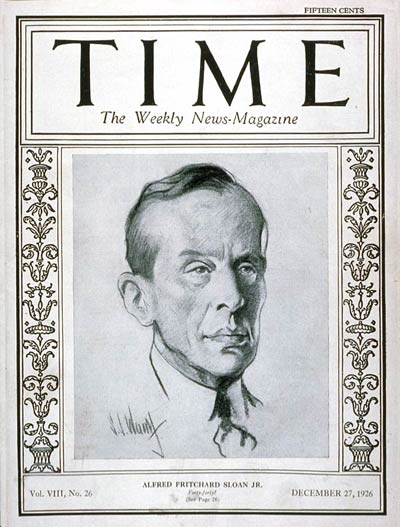
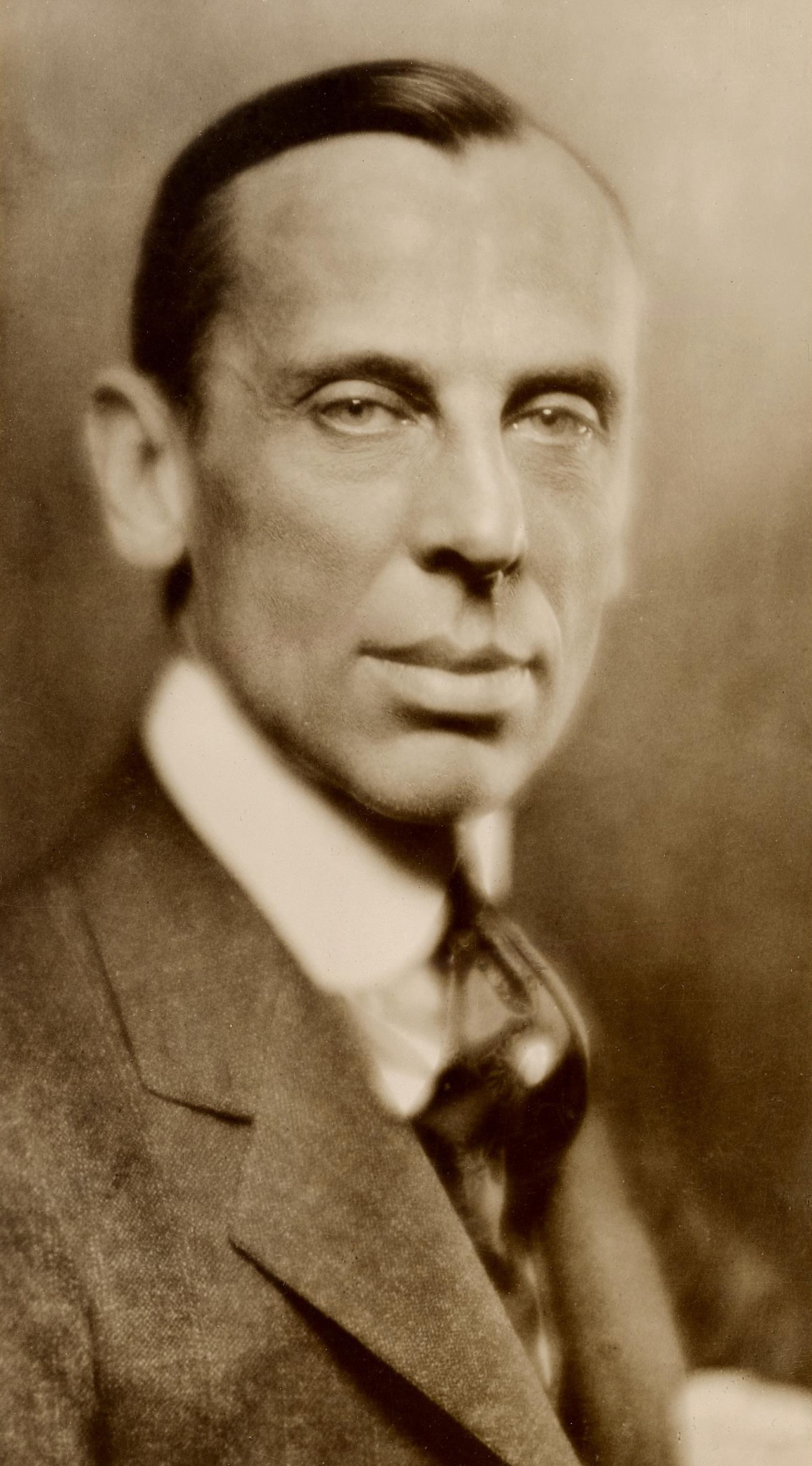
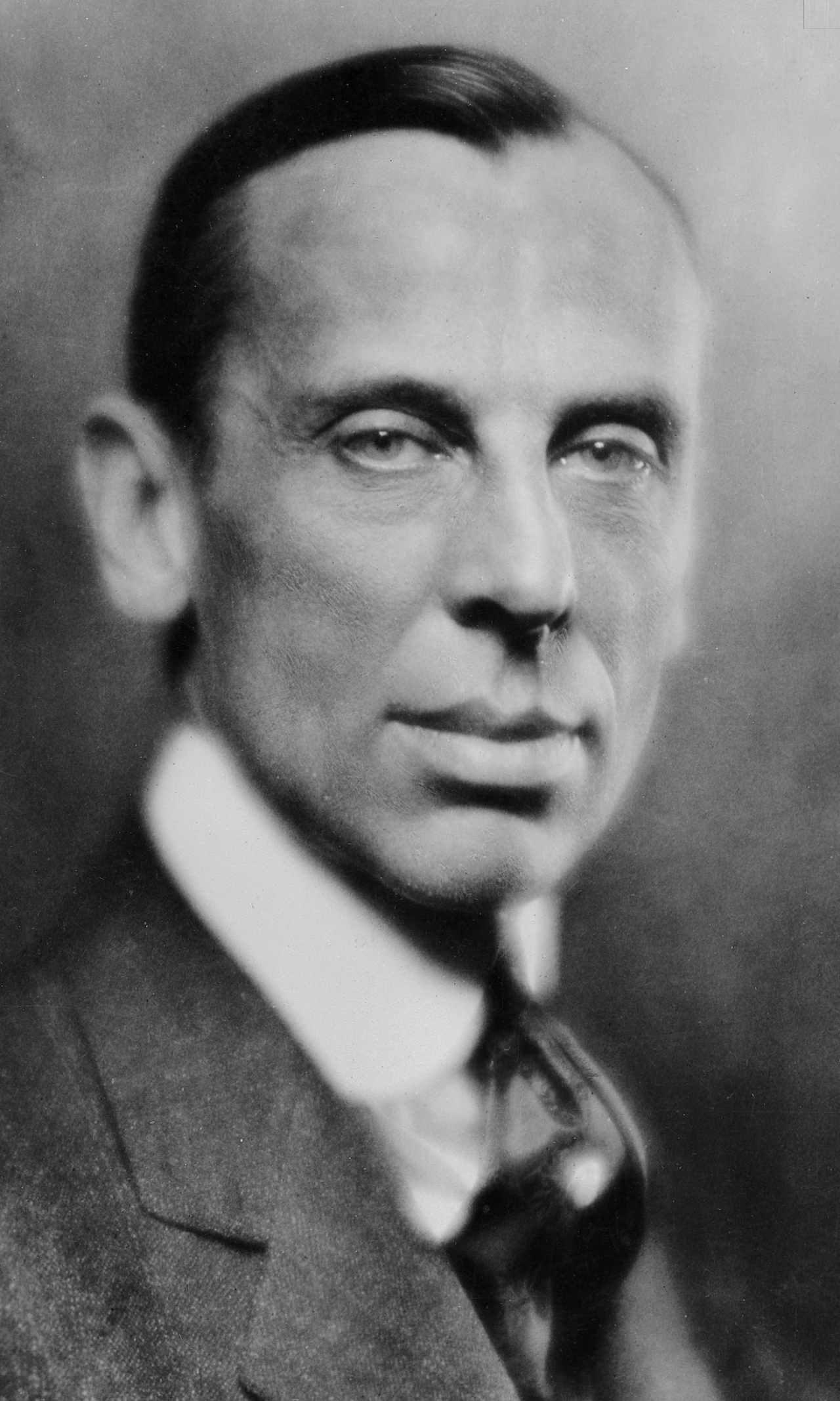
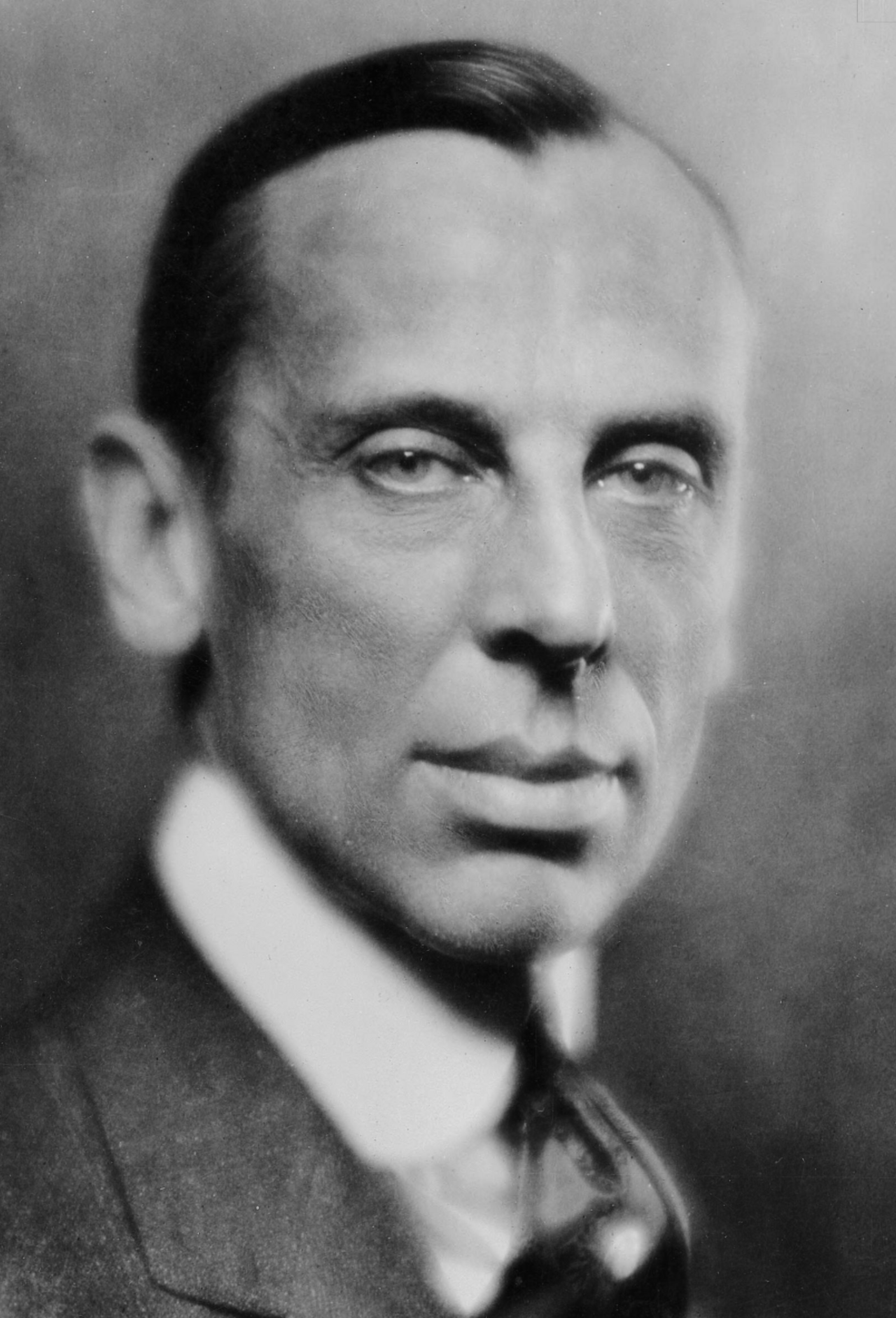
Alfred P. Sloan
Executive who built General Motors into a global industrial giant.

Pirie MacDonald · Public domain
Alfred P. Sloan was an American business executive who led General Motors as its president, chairman, and CEO, overseeing its rise into one of the world’s largest corporations. Born in New Haven, Connecticut, he studied electrical engineering at the Massachusetts Institute of Technology, graduating in 1895. In 1899, he became president and owner of Hyatt Roller Bearing after persuading his father to buy a controlling interest. Hyatt supplied bearings to early automotive customers like Oldsmobile and Ford, and a critical conversation with Henry Leland about quality gave Sloan a lasting understanding of mass production. In 1916, Hyatt merged into United Motors, which soon became part of GM, where Sloan rose to vice-president, then president in 1923, and chairman in 1937. He is credited with establishing annual styling changes, which led to planned obsolescence, and a pricing structure across Chevrolet, Pontiac, Oldsmobile, Buick, and Cadillac that kept buyers within the GM family. In 1919, he helped create the General Motors Acceptance Corporation, an auto loan system that allowed car buyers to finance purchases. These strategies, combined with Ford’s resistance to change, propelled GM to industry sales leadership by the early 1930s. During the 1930s, Sloan opposed unionization, preferring internal spying over violence, but the Flint sit-down strike in 1936 ultimately legitimized the United Auto Workers. He established the Alfred P. Sloan Foundation in 1934 and funded management education, including the Sloan Fellows program at MIT, which later became the Sloan School of Management. His memoir, *My Years with General Motors*, was completed in the 1950s but delayed nearly a decade by GM’s legal staff over antitrust concerns, finally published in 1964. He died in 1966.
- born
- May 23, 1875, New Haven, Connecticut
- field
- Automotive industry, business management
- nationality
- American
- known_for
- President, chairman, and CEO of General Motors; annual model changes; planned ob
Verified Timeline
Lore & Background
Hyatt supplied bearings to Oldsmobile and Ford, and a conversation with Henry Leland gave Sloan a conception of mass production. In 1916, Hyatt merged into United Motors Company, which soon became part of General Motors. Sloan established annual styling changes and a pricing ladder from Chevrolet to Cadillac, keeping buyers within the GM family. He helped create the General Motors Acceptance Corporation, which invented the auto loan credit system. These strategies, combined with Ford's resistance to change, propelled GM to industry sales leadership by the early 1930s. Under Sloan’s direction, GM became the largest industrial enterprise the world had ever known. He also introduced financial measures like return on investment, brought in by Donaldson Brown. In the 1930s, Sloan opposed unionization, preferring internal spying over violence; the Flint sit-down strike in 1936, however, forced GM to recognize the United Auto Workers. Sloan’s memoir, *My Years with General Motors*, was completed around 1956 but publication was delayed by GM’s legal staff for nearly a decade over antitrust concerns. He retired as GM chairman in 1956 and died in 1966. His philanthropy included founding the Alfred P. Sloan Foundation in 1934 and supporting the MIT Sloan School of Management.
Reader's Guide
Alfred P. Sloan's significance lies in his transformation of General Motors into the world's largest industrial enterprise through systematic management and marketing innovations. He introduced annual model changes and planned obsolescence, reshaping consumer culture and the automobile industry. His creation of the GM Acceptance Corporation made car ownership accessible via credit, challenging Ford's cash-only model. However, his legacy is complex: admired for his accomplishments and philanthropy, yet criticized for his attitudes during the interwar period and World War II, and for GM's anti-union tactics. The Alfred P. His memoir remains a management classic, though critics note his overly rational, profit-driven approach may have contributed to GM's later struggles.
Did You Know?
- The source does not mention Alfred P. Sloan; it is entirely about Henry Ford.
- No facts about Alfred P. Sloan can be extracted from the provided source.
- The source covers Henry Ford's birth, family, career, and innovations, but not Sloan.
Gallery

Frequently Asked Questions
Who is Alfred P. Sloan?
Alfred P. Sloan was an American business leader who rose to the top of General Motors and guided it into becoming one of the world's largest corporations. He is widely regarded as a transformative figure in twentieth-century American industry.
What is Alfred P. Sloan most famous for?
He is credited with introducing the annual model change, structured brand hierarchies, and the concept of planned obsolescence into the auto industry. These innovations reshaped how Americans lived, drove, and interacted with consumer goods.
What position did Alfred P. Sloan hold at General Motors?
Sloan served as president, chairman, and chief executive officer of GM during its most dramatic period of expansion. In that capacity he oversaw the company's evolution into a global industrial powerhouse.
How did Alfred P. Sloan impact American culture and the built environment?
By driving GM's growth and introducing strategies like planned obsolescence, his decisions altered everyday consumer habits and the physical landscape of American cities and suburbs. His influence extended well beyond the factory floor into how people organized their daily lives.
When was Alfred P. Sloan born and when did he pass away?
He was born on May 23, 1875, in New Haven, Connecticut, and died on February 17, 1966. His life spanned most of the twentieth century, during which he helped define the modern corporate landscape.
More in Business Magnates And Industrialists 1-20
Spotted an error? Know more?
This is a living reference — every entry is fact-audited, and reader corrections feed straight into our audit queue. Suggest an edit · See this site's audit record