
Alan Sugar

Ben1we · CC BY-SA 4.0
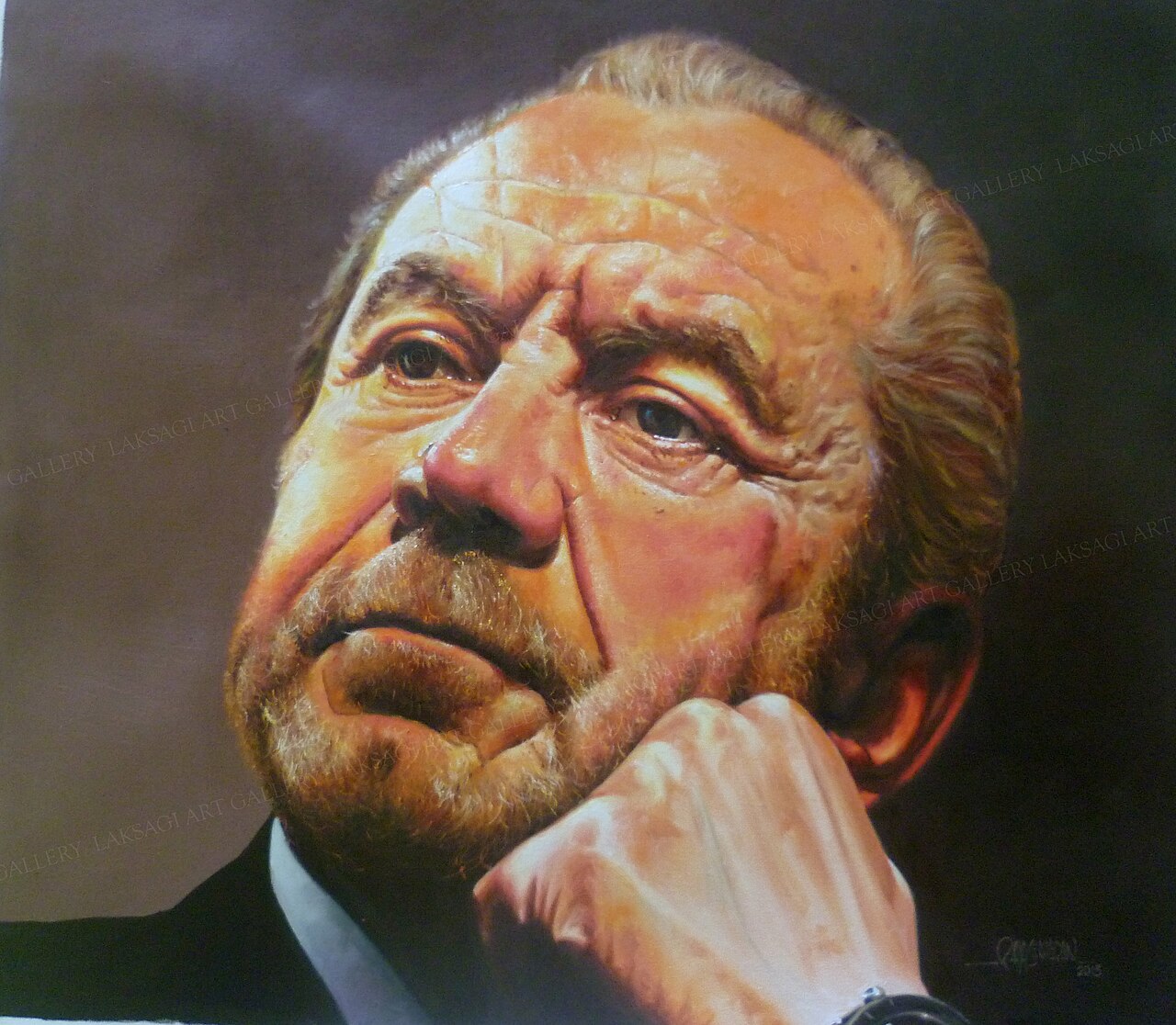
Alan Michael Sugar, Baron Sugar (born 24 March 1947), is a British businessman, entrepreneur, and television personality. He founded the consumer electronics company Amstrad in 1968 with £100 from his Post Office savings, initially selling car radio aerials and other electrical goods from a van he purchased for £50. The company’s name derived from his initials and the word “trading.” Amstrad went public on the London Stock Exchange in 1980, and throughout the 1980s it doubled its profit and market value annually. In 1984, Sugar launched the Amstrad CPC 464, an 8-bit home computer that sold three million units over eight years, competing with the Commodore 64 and Sinclair ZX Spectrum. The following year, the Amstrad PCW 8256 word processor offered a cheaper alternative to rivals like the Apple Macintosh Plus. In 1986, Amstrad acquired the rights to the Sinclair computer line and developed the PC1512, a popular PC-compatible machine in Europe. The 1990s brought challenges, including unreliable hard disks from Seagate that damaged Amstrad’s reputation; Seagate later paid $153 million in damages, reduced by $22 million in a settlement. Amstrad shifted focus to portable computers and telecommunications, releasing the PenPad PDA in 1993 and later the e-m@iler devices. In 2007, BSkyB bought Amstrad for £125 million, and Sugar stepped down as chairman in 2008. He was chairman and part-owner of Tottenham Hotspur Football Club from 1991 to 2001, selling his remaining stake in 2007 for £25 million. The Sunday Times Rich List estimated his fortune at £1.21 billion in 2021, ranking him 138th in the UK. Since 2005, Sugar has hosted the BBC reality competition *The Apprentice*, also hosting *The Celebrity Apprentice Australia* in 2021 and 2022. He was made a Labour peer in 2009, left the party in 2015, and later expressed support for the Conservatives.
- field
- Business, television
- nationality
- British
- known_for
- Founding Amstrad, hosting The Apprentice, chairing Tottenham Hotspur
Verified Timeline
Quick Facts
- Honorific Prefix
- The Right Honourable
- Office
- Enterprise Champion to the Business Secretary
- Prime Minister
- David Cameron / Theresa May
- 1Blankname
- Business Secretary
- 1Namedata
- Sajid Javid / Greg Clark
- Term Start
- 25 May 2016
- Term End
- 24 July 2019
- Prime Minister1
- Gordon Brown
- 1Namedata1
- Peter Mandelson
- Term Start1
- 5 June 2009
- Term End1
- 11 May 2010
- Office2
- Member of the House of Lords
Facts from the source article.
Lore & Background
Alan Sugar was born on 24 March 1947 in Hackney, East London, into a Jewish family. His father Nathan was a tailor in the garment industry of the East End. His maternal grandparents were born in Russia, and his paternal grandfather was born in Poland. His paternal grandmother, Sarah Sugar, was born in London to Polish parents. When young, his family lived in a council flat; he was nicknamed 'Mop head' due to his profuse curly hair, a name he still goes by. He attended Northwold Primary School and Brooke House Secondary School in Upper Clapton, Hackney, making extra money working at a greengrocers. After leaving school at 16, he worked briefly for the civil service as a statistician at the Ministry of Education. In 1968, aged 21, he set up Amstrad with £100 of Post Office savings, starting by selling radio aerials for cars and other electrical goods out of a van he bought for £50 and insured for £8. The company name was formed from his initials and the first four letters of 'trading': Alan Michael Sugar Trading. In 1980, Amstrad was listed on the London Stock Exchange. In 1985, Sugar had a major breakthrough with the launch of the Amstrad PCW 8256 word processor, retailing at over £300 but considerably cheaper than rivals like the Apple Macintosh Plus at $2,599. In 1986, Amstrad bought the rights to the Sinclair computer product line and developed the PC1512, a PC compatible computer popular in Europe. In 1988, Stewart Alsop II called Sugar and Jack Tramiel 'the world's two leading business-as-war entrepreneurs'. The 1990s proved difficult: the launch of a range of business PCs was marred by unreliable hard disks supplied by Seagate, causing high customer dissatisfaction and damaging Amstrad's reputation in the personal computer market, from which it never recovered. Seagate was ordered to pay Amstrad $153 million in damages, later reduced by $22 million in an out-of-court settlement. In 1990, Amstrad entered the gaming market with the GX4000, but it was a commercial failure, largely because of a poor selection of games and being superseded by Japanese consoles Mega Drive and Super NES. In 1993, Amstrad released the PenPad, a PDA, and bought into Betacom and Viglen to focus more on telecommunications. On 31 July 2007, broadcaster BSkyB agreed to buy Amstrad for about £125m. On 2 July 2008, Sugar stood down from Amstrad as chairman to focus on other business interests.
Reader's Guide
Alan Sugar's significance lies in his transformation of a small electronics trading business into a major consumer technology company, Amstrad, which helped popularise affordable home computers and word processors in the 1980s. His business approach, described by Stewart Alsop II as 'business-as-war', emphasised cost-cutting and aggressive pricing. In football, after a take-over battle with Robert Maxwell, Sugar teamed up with manager Terry Venables and bought Tottenham Hotspur in June 1991. His treatment of Tottenham as a business venture made him unpopular among fans. In nine years as chairman, Spurs did not finish in the top six and won just one trophy, the 1999 League Cup. After sacking Venables as chief executive in 1993, a legal battle ensued which Sugar won (see Re Tottenham Hotspur plc [1994] 1 BCLC 655). Sugar later said, 'I felt as though I'd killed Bambi.' In 1992, Sugar was the only representative of the then 'big five' (Arsenal, Everton, Liverpool, Manchester United and Tottenham Hotspur) who voted in favour of Sky's bid for Premier League television rights; his company Amstrad was developing satellite dishes for Sky at the time. During negotiations, Sugar called Sky CEO Sam Chisholm and angrily ordered him to 'blow [ITV] out of the water' with a much higher bid. In 1994, Sugar financed transfers of three 1994 FIFA World Cup players: Ilie Dumitrescu, Gica Popescu, and Jürgen Klinsmann, who in his first season was named FWA Footballer of the Year. When Klinsmann left for Bayern Munich in summer 1995, Sugar appeared on television holding Klinsmann's last Spurs shirt and said he would 'not wash his car with it', referring to foreigners as 'Carlos Kickaballs'. Klinsmann retaliated by calling Sugar 'a man without honour', saying 'He only ever talks about money. He never talks about the game.' Klinsmann re-signed for Tottenham on loan in December 1997. In October 1998, Teddy Sheringham's autobiography cited Sugar as the reason he left the club in 1997, accusing Sugar of lacking ambition and being hypocritical. Sugar appointed seven managers at Spurs: Peter Shreeves (1991), Doug Livermore and Ray Clemence (1992), Osvaldo Ardiles (1993), Gerry Francis (1994), and Christian Gross (1997), who lasted nine months as Spurs finished 14th in 1998.
Did You Know?
- Sugar was nicknamed 'Mop head' because of his profuse curly hair, a name he still goes by today.
- He set up Amstrad in 1968 with £100 of Post Office savings, selling radio aerials out of a van he bought for £50 and insured for £8.
- In 1988, Stewart Alsop II called Sugar and Jack Tramiel 'the world's two leading business-as-war entrepreneurs'.
- After sacking Terry Venables as Tottenham chief executive in 1993, Sugar said, 'I felt as though I'd killed Bambi.'
- Sugar was the only representative of the 'big five' Premier League clubs to vote in favour of Sky's bid for television rights in 1992, while his company Amstrad was developing satellite dishes for Sky.
The Tropical Sound and Its Signature Catalog
Buffett crafted a distinctive sonic identity that wove together country, rock, folk, and calypso into what became known as tropical music. This blend served as the musical backbone of a lifestyle philosophy centered on what he called "island escapism," inviting listeners to savor life and chase their passions. His catalog produced what fans and critics refer to as "The Big 8": a collection of signature tracks spanning 1973 to 1979, including "Margaritaville" (1977), "Come Monday" (1974), "Fins" (1979), "Volcano" (1979), "A Pirate Looks at Forty" (1974), "Cheeseburger in Paradise" (1978), "Why Don't We Get Drunk" (1973), and "Changes in Latitudes, Changes in Attitudes" (1977). Beyond that core set, songs like "Son of a Son of a Sailor" (1978) and "One Particular Harbour" (1983) extended his reach, while his 2003 duet "It's Five O'Clock Somewhere" with Alan Jackson demonstrated his ability to cross generational and genre boundaries. In 1975, he assembled the Coral Reefer Band, giving his live performances a consistent, full-bodied energy that complemented his studio recordings.
Gulf Coast Roots and the Long Road to Music
Born on Christmas Day 1946 in Pascagoula, Mississippi, Buffett grew up with the sea woven into his family story. His grandfather had captained a steamship out of Newfoundland, and his father worked as a marine engineer and sailor for the U.S. Army Corps of Engineers. Educated by Jesuits as a Catholic and serving as an altar boy, he first touched music playing trombone in the school band at St. Ignatius Catholic School in Mobile at age eight in the 1950s. The decisive spark arrived in 1961, when a folk ensemble performed in Biloxi; within a month he was strumming a Stella guitar at a hootenanny. College proved turbulent—he flunked out of Auburn after a year in April 1966, then completed a history degree at the University of Southern Mississippi in 1969, working as a shipyard electrician and welder along the way. Post-graduation, he busked on Decatur Street in New Orleans, played for drunken crowds in the Bayou Room nightclub on Bourbon Street, and briefly held an editorial assistant position at Billboard in Nashville. In November 1971, he went to Key West on a busking expedition and moved there in spring 1972, where he got involved in the literary scene and met his second wife.
From Songbook to Empire: Business and Fan Culture
Buffett never confined his creative energy to the recording studio. The "island escapism" ethos that permeated his lyrics became the blueprint for a sprawling commercial empire. He launched the Jimmy Buffett's Margaritaville restaurant chain and the Cheeseburger in Paradise concept (the latter now defunct), and extended his brand into hotels, casinos, liquor products, and retirement communities. His writing career also proved commercially successful, earning him bestselling-author status. The financial footprint of these ventures, combined with his music royalties, left an estate estimated at $275 million at the time of his death. Perhaps more telling than any balance sheet is the community he built around his work: devoted followers who call themselves "Parrotheads" created a shared identity rooted in his songs and philosophy. This fan culture transcended typical artist-audience dynamics, turning a catalog of tropical anthems into a participatory lifestyle brand that spanned dining, travel, and social connection.
Commercial Milestones and Posthumous Recognition
By the time Buffett passed in September 2023, his commercial record was formidable. Across more than 30 albums, eight earned gold certification and nine achieved platinum or multi-platinum status from the RIAA, while his worldwide certified sales surpassed 20 million units. "Margaritaville" earned a place at number 234 on the RIAA's "Songs of the Century" list, a testament to its cultural penetration decades after its 1977 release. Though he received two Grammy Award nominations during his career, the most significant institutional honor came after his death: in 2024, he was inducted into the Rock and Roll Hall of Fame in Cleveland, Ohio, in the Musical Excellence category. This posthumous recognition underscored how his work—blending country, rock, folk, and calypso into a singular tropical identity—had reshaped what popular music could sound like and what it could mean to its audience. His arc, from a 324-copy first album in 1970 to a $275 million estate, remains one of the most remarkable in American popular music.
Gallery


Frequently Asked Questions
What TV show made Alan Sugar a household name?
He is best recognised by the general public as the long-running host of the BBC's business reality series The Apprentice, in which he mentors and ultimately dismisses a contestant each week.
Why is Alan Sugar considered significant in British business culture?
His career bridges three very different arenas—founding a major tech firm, leading a top-flight football club, and fronting a hit TV programme—making him one of the few British figures to achieve mainstream fame in all three simultaneously.
More in Business Magnates And Industrialists 1-20
Spotted an error? Know more?
This is a living reference — every entry is fact-audited, and reader corrections feed straight into our audit queue. Suggest an edit · See this site's audit record