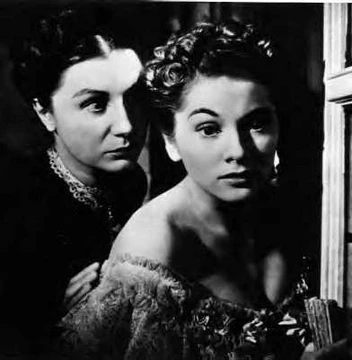
Endless Night (1972 film)
A newlywed couple builds a dream home on cursed land.
Endless Night (also known as Agatha Christie's Endless Night) is a 1972 British neo-noir horror-mystery film directed by Sidney Gilliat. It stars Hayley Mills, Britt Ekland, Per Oscarsson, Hywel Bennett, and George Sanders, and is based on Agatha Christie's 1967 novel. The film was the final project on which Sidney Gilliat and Frank Launder worked together for British Lion Films.
Quick Facts
- Director
- Sidney Gilliat
- Producer
- Leslie Gilliat
- Based on
- Endless Night, Agatha Christie
- Starring
- Hayley Mills
- Hywel Bennett
- Britt Ekland
- George Sanders
- Per Oscarsson
- Music
- Bernard Herrmann
- Cinematography
- Harry Waxman
- Editing
- Thelma Connell
- Studio
- British Lion Films
- EMI Films
- National Film Trustee Company
Facts from the source article.
Plot
Michael Rogers, a wistful young aspiring photographer from a working-class background, works as a chauffeur and lives with his mother in London. While driving, he discovers a spot on the Devon coast called Gypsy's Acre, where a dilapidated Victorian mansion sits. He dreams of building a new home there, designed by the famed Italian architect Santonix, whom he met through a client. While photographing the site, Michael meets Ellie Thomsen, a young American visiting England.
They explore the property and encounter Miss Townsend, an old woman who warns that Gypsy's Acre is cursed. Ellie leaves for Switzerland and Italy with Greta, her German tutor and personal assistant. In her absence, Michael learns Ellie is one of the richest young women in the world. When she returns, she admits she kept her wealth secret to avoid dissuading him.
She also reveals she arranged a meeting with Santonix and has purchased Gypsy's Acre. Though initially angered, Michael relents, and they marry in Wales. Ellie tries to keep the marriage secret from her stepmother Cora and other family, but the union makes international headlines. The family attorney, "Uncle" Andrew, tries to buy Michael off, but he refuses. The couple buys a local antique shop.
Production
Agatha Christie wrote the novel in six weeks, though she normally took three to four months. Launder and Gilliat had spent two years on a comedy about British divorce, Sex and the British, but shelved it when a change in law made the plot obsolete. They then adapted Christie's novel, with Gilliat directing and Launder producing. Their aim was a cinematic script with minimal dialogue and deliberate ambiguity.
The film was produced by Gilliat's brother Leslie. Financing came partly from the National Film Trustee Company and EMI Films. Filming took place in June 1971 at Christie's Auction House in London, the West Country, Il San Pietro di Positano in Italy, and Grim's Dyke. Gilliat later said he felt rusty returning to the set and had a horrible time.
The score was composed by Bernard Herrmann, who was brought in early at Gilliat's request. Herrmann initially planned a theremin but used a Moog synthesizer instead. Ellie's singing was dubbed by Shirley Jones.
Reception
The film received mixed reviews. Critics noted it was reasonably faithful to the novel but described it as a moody psychological study different from Christie's earlier thrillers. Performances were praised, particularly Per Oscarsson's role as the dying architect. One review stated the film lacked flair and that Gilliat had not directed for ten years. Christie was initially pleased with the involvement of Gilliat and the casting, but after seeing the film she was very disappointed, finding it flatter and less interesting as it progressed. She also disliked the brief erotic nudity by Britt Ekland in the final sequences. The initial British release was unsuccessful, and United Artists decided against releasing it in the United States, though it was released in Denmark and Finland in 1973.
More in British Horror Thriller Films
Spotted an error? Know more?
Reader corrections go straight into our review queue. Suggest an edit · How this site is sourced