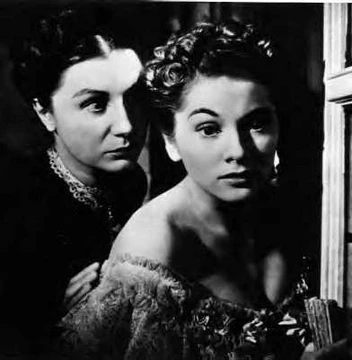
Eye of the Devil
A family inheritance veiled in ancient ritual and mystery.
J. Lee Thompson directed the 1966 mystery horror film Eye of the Devil, which features Deborah Kerr, David Niven, Donald Pleasence, and Sharon Tate. Based on Philip Loraine’s 1964 novel Day of the Arrow, the story unfolds in rural France, where a family estate hides dark, ritualistic secrets. Despite a poor box office performance, the movie later attracted a modest cult following.
Quick Facts
- Director
- J. Lee Thompson
- Producer
- John Calley; Martin Ransohoff
- Based on
- Day of the Arrow, Philip Loraine
- Screenplay
- Robin Estridge; Dennis Murphy
- Starring
- Deborah Kerr
- David Niven
- Donald Pleasence
- Sharon Tate
- David Hemmings
- Music
- Gary McFarland
- Cinematography
- Erwin Hillier
- Editing
- Ernest Walter
Facts from the source article.
Plot
Philippe de Montfaucon, Marquis de Bellenac, lives in Paris with his wife Catherine and their two children, Jacques and Antoinette. Summoned abruptly to his ancestral estate in Bordeaux, he receives a strange amulet from a sinister priest. After Jacques dreams that his father needs him, Catherine takes the children to the chateau. Upon arrival, archer Christian de Caray shoots a dove that falls at Catherine's feet.
Philippe's aunt Estelle calls Christian and his sister Odile "very wicked" and later dismisses Catherine. Late at night, Catherine witnesses Odile and Christian carrying the impaled dove into a candlelit room of robed figures, who present it to an altar and a seated figure. An old man warns Catherine to leave with her children. Philippe dismisses her concerns as superstition, speaking of his family's 1000-year history.
Odile enchants Jacques by changing a toad into a dove. Catherine grows disturbed by Christian and Odile's fixation on her son. With help from family friend Jean-Claude, she learns that twenty-two heads of the Montfaucon family have died in mysterious circumstances since the 1200s.
Production
Anthony Boucher praised Philip Loraine's novel Day of the Arrow in his New York Times column, comparing it to works by Daphne du Maurier and others. Martin Ransohoff of Filmways, who had a multi-picture deal with Metro-Goldwyn-Mayer, bought the film rights. Robin Estridge adapted his own novel for the screen, with Dennis Murphy sharing screenplay credit; Terry Southern did uncredited script work. Kim Novak was initially signed to play the lead, with David Niven co-starring.
Sharon Tate, under a seven-year contract to Ransohoff and known for a recurring role on The Beverly Hillbillies, made her feature film debut in Eye of the Devil. Sidney J. Furie was originally slated to direct but was replaced by Michael Anderson in August 1965; Anderson fell ill and was replaced by J. Lee Thompson. The title was changed from Day of the Arrow to 13 shortly before shooting. Alex Sanders, an English occultist and Wiccan, was hired as a consultant for pagan rites.
Principal photography began on 13 September 1965 at the Château de Hautefort and MGM British Studios in Borehamwood, England.
Release
Eye of the Devil was the last black-and-white film released by Metro-Goldwyn-Mayer. It opened regionally in the United States in 1967, premiering in Wisconsin on 6 September and screening in Los Angeles drive-in theaters by 21 September. The film reached New York City theaters on 7 December 1967. In the United Kingdom, it was released in London on 7 March 1968. Warner Home Video released it on DVD on 21 February 2011 via its Warner Archive service, and on Blu-ray on 26 October 2021 with a new 4K scan.
Reception
Eye of the Devil received little critical attention and was generally ignored by mainstream critics. It was not a commercial success, and later in 1967 it was listed as one of only three films by producer Martin Ransohoff that had not made money. Sharon Tate's debut did little for her career; American reviews, such as one in The New York Times, described her performance as "chillingly beautiful but expressionless." Non-American writers were more favorable, noting her screen presence and a "glittering future ahead of her," though her accent was dubbed.
More in British Horror Thriller Films
Spotted an error? Know more?
Reader corrections go straight into our review queue. Suggest an edit · How this site is sourced