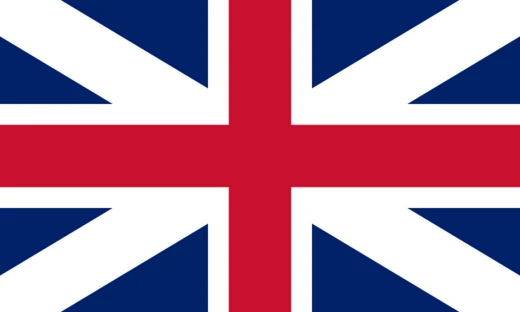
The empire on which the sun never sets
A phrase for empires where the sun always shines.
Last updated
The phrase describes empires so vast that daylight always falls somewhere within their borders.[1] It was first applied to the Spanish Empire and later to the British Empire.[1] The modern concept derives from earlier claims of universal rule by ancient Roman and Persian empires.[1]
What the cited sources add
An anonymous quote on libquotes.com gives a rejoinder: "I know why the sun never sets on the British Empire: God wouldn't trust an Englishman in the dark".[8]
References
- Wikipedia, "The empire on which the sun never sets" (CC BY-SA 4.0), which cites: Holslag, "A Political History of the World: Three Thousand Years of War and Peace", Penguin UK, May 2021; Lothar Höbelt, "Defiant Populist: Jörg Haider and the Politics of Austria", Purdue University Press, 2003, p. 1; Cropsey, "Seablindness: How Political Neglect Is Choking American Seapower and What to Do About It", Encounter Books, 2017, p. 13 (original not read by us) en.wikipedia.org
- Wikipedia, "The empire on which the sun never sets" (CC BY-SA 4.0), which cites: Isaac, "Empire and Ideology in the Graeco-Roman World: Selected Papers", Scripta Classica Israelica, 2017, p. 99–121; Parker, "Imprudent King: A New Life of Philip II", Yale University Press, 2014, p. 4 (we also read that source) en.wikipedia.org
- Wikipedia, "The empire on which the sun never sets" (CC BY-SA 4.0), which cites: Bartlett, "Familiar quotations", Little, Brown and Company, 1865, p. 388; Bacon, "The works of Francis Bacon, lord chancellor of England", Carey, 1841, p. 438; Duncan, "Miscellaneous papers, principally illustrative of events in the reigns of Queen Mary and King James VI", E. Khull, printer, 1834, p. 173 (original not read by us) en.wikipedia.org
- Wikipedia, "The empire on which the sun never sets" (CC BY-SA 4.0), which cites: Don Carlos, Act I, Scene 6. (original not read by us) en.wikipedia.org
- Wikipedia, "The empire on which the sun never sets" (CC BY-SA 4.0), which cites: Fouché, "The memoirs of Joseph Fouché", 1825, p. 313; Bartlett, "Familiar quotations", Little, Brown and Company, 2000, p. 495; Scott, "Life of Napoleon Buonaparte: With a Preliminary View of the French Revolution", Cadell, 1835, p. 23 (original not read by us) en.wikipedia.org
- Wikipedia, "The empire on which the sun never sets" (CC BY-SA 4.0), which cites: Wilson, "Noctes Ambrosianae No. 42", Blackwood's Edinburgh Magazine, April 1829, p. 527; Vance, "Imperial Rome and Britain's Language of Empire 1600–1837", History of European Ideas, 2000, p. 213, fn.3; Morris, "Farewell the Trumpets: An Imperial Retreat", 1978; Miller, "Star of the Borders", The Guardian, 9 August 2003; Kenny, "Ireland and the British Empire", Oxford University Press, 2006, p. 72, fn.22 (we also read that source) en.wikipedia.org
- Wikipedia, "The empire on which the sun never sets" (CC BY-SA 4.0), which cites: Büchmann, "Geflügelte Worte: Der Citatenschatz des deutschen Volkes", Haude und Spener (F. Weidling), 1895, p. 157; Bartlett, "Familiar quotations", Little, Brown and Company, 2000, p. 495 (original not read by us) en.wikipedia.org
- "Anonymous Quote", libquotes.com. facts only, no text reused. libquotes.com
Each numbered sentence above was checked against the source it cites before publication. Sentences citing Wikipedia adapt text from the English Wikipedia article The empire on which the sun never sets (contributors), used under CC BY-SA 4.0; this entry is available under the same licence. Other sources were used for facts only; no text or images are copied from them.
More in British Empire
Sources
Compiled from Wikipedia and the sources listed below. Text from Wikipedia is available under CC BY-SA 4.0; this entry is adapted from it.
- Wikipedia: The empire on which the sun never sets (CC BY-SA 4.0).
Spotted an error? Know more?
Reader corrections go straight into our review queue. Suggest an edit · How this site is sourced