Monopoly
One seller, no substitutes, market power.
Last updated

Smirkybec · CC BY-SA 4.0
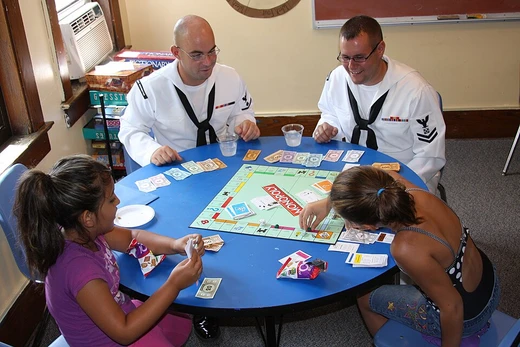
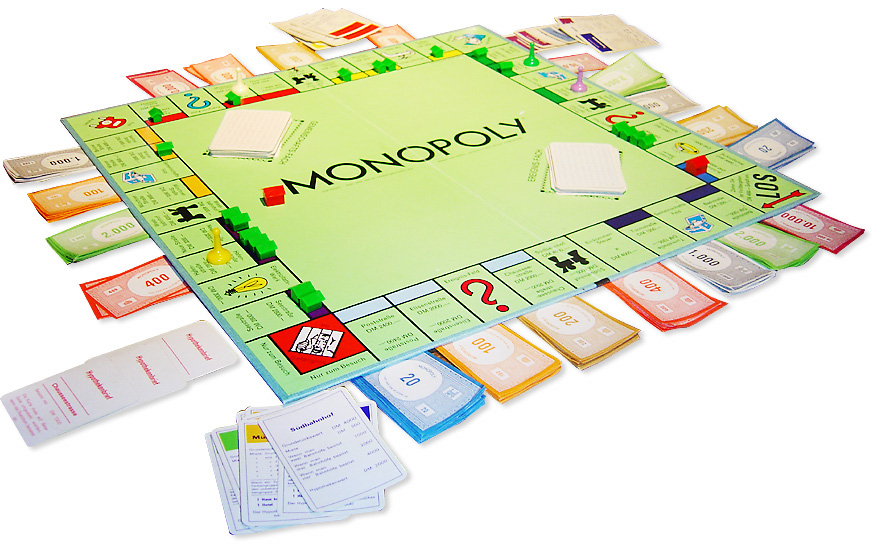
Monopoly is a multiplayer economics game where players roll dice, move around a square board, buy properties, and collect rent from opponents.[1] It has been licensed in more than 113 countries and printed in more than 46 languages, with an estimated 275 million copies sold worldwide.[2] The board game's title comes from the term for a single entity controlling a market.[3]
Making and release
Magie took out a patent in 1904 for a game with a square circuit, corner squares, and intervening spaces where players went round and round until the goal was reached.[4] Charles Darrow was introduced to The Landlord's Game by the Todds in 1932 and later distributed it himself as Monopoly.[5] Lizzie Magie, who opposed monopolies, created The Landlord's Game in 1903 in the US to show that an economy benefiting individuals surpasses one where monopolies control all wealth.[3] Parker Brothers purchased the copyrights to the game from Darrow, and subsequently acquired Magie's patent rights for $500.[6]
On November 5, 1935, Parker Brothers started selling the game, with F. O. Alexander providing the artwork.[7] Charles Darrow received U.S. patent number US 2026082 A on December 31, 1935, covering the board design, which was then assigned to Parker Brothers Inc.[7] In 1936, Parker Brothers started authorizing foreign sales of the game.[8]
What the cited sources add
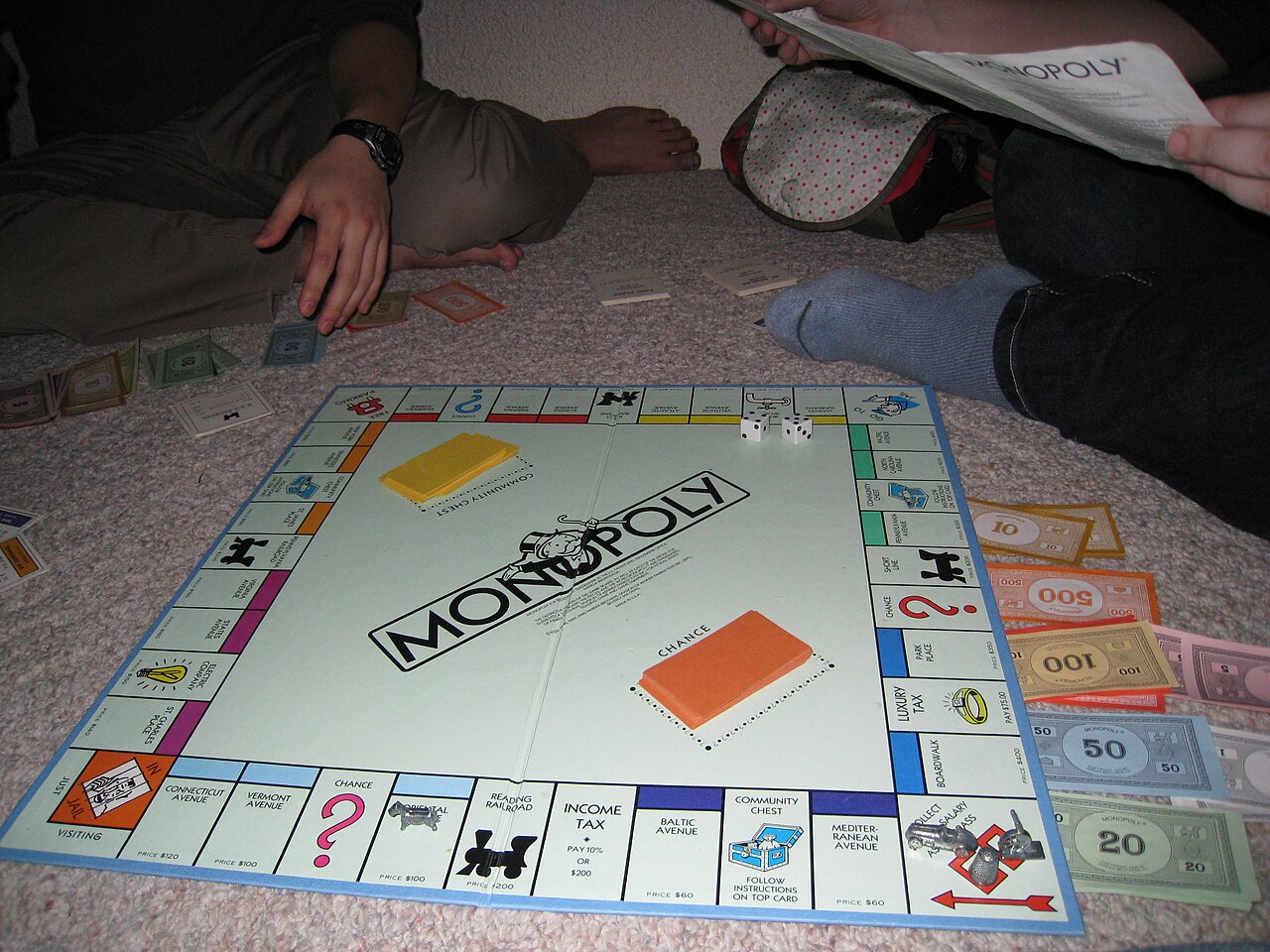
The Hidden Worlds of Monopoly account notes that the properties on the original board mirror the one-time real estate values of actual streets in Atlantic City, New Jersey.[1] The same source states that Baltic and Mediterranean, the cheapest properties, correlate to historically ethnic neighborhoods, while expensive zones like Park Place and Boardwalk were historically rich, white enclaves.[1] The Landlord's Game was an educational tool to teach players about taxes, criticizing landlords by showing how rents enrich them while impoverishing tenants.[1] During World War II, British intelligence created Monopoly boxes containing maps and tools to help POWs escape.[1]
The game is frequently used in economics and behavioral psychology settings, such as a University of California, Berkeley study demonstrating how privilege impacts personality.[1] The original Monopoly receives a 4.4 out of 10 rating from more than 35,000 voters on boardgamegeek.com.[1] The property name Marvin Gardens is an incorrect spelling of Marven Gardens, a name combining Margate and Ventnor; Parker Brothers officially recognized this error in 1995.[1][9]
References
- The Hidden Worlds of Monopoly From Atlantic City to high fashion to Karl Marx, the most recognizable board game has had serious cultural impact. by Adrienne Rap. facts only, no text reused. atlasobscura.com
- Wikipedia, "Monopoly (game)" (CC BY-SA 4.0), which cites: Leopold, "Monopoly: At 80, it just keeps 'Go'-ing", CNN, March 19, 2015 (original not read by us) en.wikipedia.org
- Wikipedia, "Monopoly (game)" (CC BY-SA 4.0), which cites: Pilon, "Monopoly's Inventor: The Progressive Who Didn't Pass 'Go'", The New York Times, February 13, 2015; "Monopoly's Forgotten Left-Wing Origins", February 28, 2024; Wagner, "Do not pass go: the tangled roots of Monopoly", New Statesman, June 24, 2015 (original not read by us) en.wikipedia.org
- Wikipedia, "Monopoly (game)" (CC BY-SA 4.0), which cites: Clare, "The Game Changers: How Playing Games Changed the World and Can Change You Too", Canongate Books, 2024, p. 256; Culin, "Chess and Playing-Card", Washington, 1898; Orbanes, "Monopoly: The World's Most Famous Game & How it Got that Way", Da Capo Press, 2006, p. 22; The Hidden Worlds of Monopoly From Atlantic City to high fashion to Karl Marx, the most recognizable board game has had serious cultural impact. by Adrienne Rap (we also read that source) en.wikipedia.org
- Wikipedia, "Monopoly (game)" (CC BY-SA 4.0), which cites: Pilon 2015, p. 90–92, 132–133; Clare, "The Game Changers: How Playing Games Changed the World and Can Change You Too", Canongate Books, 2024, p. 256; Thompson, "They made 36 million Corn Poppers. Here's how they pick the right ones for the Toy Hall of Fame", Midland Reporter-Telegram, October 23, 2024 (we also read that source) en.wikipedia.org
- Wikipedia, "Monopoly (game)" (CC BY-SA 4.0), which cites: Brady, "The Monopoly Book", David McKay Co, 1974; Chokshi, "A New Monopoly Game Celebrates Women, but What About the One Behind the Original?", The New York Times, September 12, 2019 (original not read by us) en.wikipedia.org
- Wikipedia, "Monopoly (game)" (CC BY-SA 4.0), which cites: "The Most Popular Game in History Almost Didn't Pass 'Go'"; Pilon, "Monopoly Was Designed to Teach the 99% About Income Inequality", Smithsonian Magazine, January 2015a; "Board Game Apparatus" (original not read by us) en.wikipedia.org
- Wikipedia, "Monopoly (game)" (CC BY-SA 4.0), which cites: Brian McMahon, "How board game helped free POWs", November 29, 2007 (original not read by us) en.wikipedia.org
- Wikipedia, "Monopoly (game)" (CC BY-SA 4.0), which cites: Orbanes, "'Monopoly: the world's most famous game & how it got that way'", Da Capo Press, 2006, p. 53; "Monopoly, Present at the Creation", NPR; The Hidden Worlds of Monopoly From Atlantic City to high fashion to Karl Marx, the most recognizable board game has had serious cultural impact. by Adrienne Rap (we also read that source) en.wikipedia.org
Each numbered sentence above was checked against the source it cites before publication. Sentences citing Wikipedia adapt text from the English Wikipedia article Monopoly (game) (contributors), used under CC BY-SA 4.0; this entry is available under the same licence. Other sources were used for facts only; no text or images are copied from them.
More in Board Games
Sources
Compiled from Wikipedia and the sources listed below. Text from Wikipedia is available under CC BY-SA 4.0; this entry is adapted from it.
- Wikipedia: Monopoly (game) (CC BY-SA 4.0).
Spotted an error? Know more?
Reader corrections go straight into our review queue. Suggest an edit · How this site is sourced