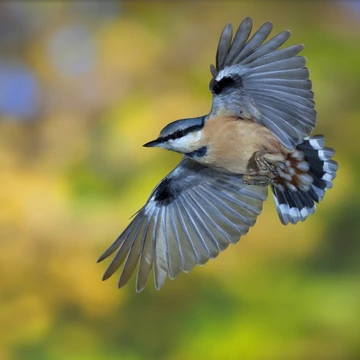
Antbird
Passerine birds of the Neotropics, known for ant-following and diverse forms.

The antbird family, Thamnophilidae, consists of over 230 species of passerine birds found across subtropical and tropical regions of Central and South America, ranging from Mexico to Argentina. These birds go by various names, including antshrikes, antwrens, antvireos, fire-eyes, bare-eyes, and bushbirds. Their closest relatives are the antthrushes and antpittas (family Formicariidae), as well as tapaculos, gnateaters, and ovenbirds. Despite what some common names suggest, they are not closely related to true wrens, vireos, or shrikes.
Antbirds are generally small birds with rounded wings and sturdy legs. Their plumage is mostly subdued in shades of grey, white, brown, and rufous, with males and females often differing in color and pattern. Some species flash white patches on their backs or shoulders as warnings to rivals. Most have heavy bills, often hooked at the tip.
The majority of antbirds live in forests, though a few inhabit other environments. Their diet consists mainly of insects and other arthropods, with small vertebrates taken occasionally. Most forage in the understory or midstory, but some feed in the canopy or on the ground. Many join mixed-species feeding flocks, and a few are core members of these groups. Around eighteen species specialize in following army ant swarms to catch the small invertebrates flushed out by the ants, while many others do so opportunistically.
Antbirds are monogamous, mate for life, and defend territories. They typically lay two eggs in a nest that hangs from branches or sits on a branch, stump, or ground mound. Both parents share incubation, brooding, and feeding duties. After the chicks fledge, each parent cares exclusively for one chick.
Thirty-eight species are threatened with extinction due to human activities. Antbirds are not hunted or captured for the pet trade. Their main threat is habitat loss, which leads to fragmentation and increased nest predation in smaller patches.
**Systematics**
The antbird family Thamnophilidae was once considered a subfamily (Thamnophilinae) within the larger Formicariidae, which included antthrushes and antpittas. That larger group was formerly called the "antbird family," with Thamnophilinae referred to as "typical antbirds." In this article, "antbird" and "antbird family" refer to Thamnophilidae.
Thamnophilidae was separated from Formicariidae based on differences in the breastbone and syrinx, as well as DNA–DNA hybridization studies by Sibley and Ahlquist. These antbirds belong to the infraorder Tyrannides (tracheophone suboscines), one of two infraorders in the suborder Tyranni. They are now thought to occupy a fairly basal position within this infraorder, relative to antthrushes, antpittas, tapaculos, gnateaters, and ovenbirds. The sister group of Thamnophilidae is believed to be the gnateaters, while ovenbirds, tapaculos, antthrushes, and antpittas represent a different early branch.
The family contains over 230 species, named antwrens, antvireos, antbirds, and antshrikes based on relative size (increasing in that order, with exceptions), not on any resemblance to true wrens, vireos, or shrikes. Members of the genus *Phlegopsis* are called bare-eyes, *Pyriglena* are fire-eyes, and *Neoctantes* and *Clytoctantes* are bushbirds. Although the family's systematics dates from the mid-19th century, when fewer than half the current species were known, comparisons of myoglobin intron 2, GAPDH intron 11, and mtDNA cytochrome *b* sequences have largely confirmed it. Two major clades exist—one containing most antshrikes and other larger, strong-billed species plus *Herpsilochmus*, and the other containing classical antwrens and more slender, longer-billed species. The monophyly of most genera has been confirmed.
Thamnophilidae includes several large or very large genera and many small or monotypic ones. Some difficult-to-place species appear to form a third, previously unrecognized clade. The results also supported earlier suspicions that some species, especially in *Myrmotherula* and *Myrmeciza*, need to be reassigned to other genera. However, due to the difficulty of sampling such a large number of often poorly known species, the placement of some genera remains uncertain.
**Morphology**
Antbirds range from small to medium-sized passerines. The largest, the giant antshrike, measures 45 cm (18 in) and weighs 150 g (5.29 oz), while the tiny pygmy antwren is just 8 cm (3 in) and weighs 7 g (0.25 oz). Generally, "antshrikes" are relatively large, "antvireos" are medium-sized and stocky, and "antwrens" include most smaller species; "antbird" genera vary greatly in size. Their short, rounded wings allow good maneuverability in dense undergrowth. Legs are large and strong, especially in species that are obligate ant-followers. These birds are well adapted to gripping vertical stems and saplings, which are more common than horizontal branches in the understory, giving them an advantage when following army ant swarms. The claws of ant-following species are longer than those of non-followers, and the soles of some species have tough projections that grip when the foot is clenched. Tarsus length is linked to foraging strategy: longer tarsi are typical in genera like *Thamnophilus* antshrikes, which forage by perch-gleaning.
- Family
- Thamnophilidae
- Range
- Subtropical and tropical Central and South America, from Mexico to Argentina
- Diet
- Primarily insects and other arthropods; occasionally small vertebrates
- Conservation status
- 38 species threatened with extinction due to habitat loss
- Distinctive feature
- Sexually dimorphic plumage; many have white feather patches on back or shoulders used for communication
Lore & Background
Antbirds are generally small birds with rounded wings and strong legs, and mostly sombre grey, white, brown, and rufous plumage that is sexually dimorphic. Most have heavy bills, often hooked at the tip, with a notch for holding insect prey. Some species communicate warnings by exposing white feather patches on their backs or shoulders. Most species live in forests, feeding in the understory and midstory, though a few feed in the canopy or on the ground. Around eighteen species specialise in following swarms of army ants to eat flushed invertebrates, and many others feed opportunistically in this way. Antbirds are monogamous, mate for life, and defend territories. They usually lay two eggs in a nest suspended from branches or supported on a branch, stump, or mound on the ground. Both parents share incubation and brooding, and after fledging each parent cares exclusively for one chick. The family is one of the suboscines, with simpler syrinxes than other songbirds, yet their songs are distinctive and species-specific, allowing field identification by ear. Most species have at least two call types: the loudsong, often used for territorial purposes, and the softsong, possibly related to pair-bond maintenance.
Reader's Guide
The antbird family Thamnophilidae was formerly considered a subfamily within Formicariidae, but was removed due to differences in the sternum and syrinx, and supported by DNA–DNA hybridization studies. They are now placed in the infraorder Tyrannides, occupying a fairly basal position, with gnateaters as their sister group. Two major clades exist: most antshrikes and larger strong-billed species, versus classical antwrens and more slender long-billed species. Some genera, particularly in Myrmotherula and Myrmeciza, need reassignment. Thirty-eight species are threatened with extinction due to human activities, primarily habitat loss leading to fragmentation and increased nest predation. Antbirds are not targeted by hunters or the pet trade. Their significance lies in their ecological roles as insectivores and ant-followers, and as a diverse model for studying evolution, behavior, and conservation in Neotropical forests.
Did You Know?
- Antbirds are not closely related to wrens, vireos, or shrikes, despite common names like antwren, antvireo, and antshrike.
- Around eighteen species specialise in following army ant swarms to eat flushed invertebrates.
- Both parents share incubation and brooding, and after fledging each parent cares exclusively for one chick.
- The sister group of the Thamnophilidae is thought to be the gnateaters.
Frequently Asked Questions
What exactly is an antbird?
Antbirds are a diverse group of small Neotropical songbirds in the family Thamnophilidae, found in subtropical and tropical forests stretching from Mexico all the way down to Argentina. They form their own distinct passerine lineage rather than belonging to any other familiar bird family.
What do antbirds eat and how do they hunt?
Their diet is overwhelmingly made up of insects and other arthropods, though they will occasionally pick off small vertebrates. They are well known for trailing army-ant swarms through the understory, snatching up prey that gets flushed out of leaf litter and low vegetation.
What makes antbird plumage so distinctive?
Many antbird species show striking sexual dimorphism, with males and females looking quite different from one another. A hallmark trait across the family is the flash of white patches on the back or shoulders, which they display as a visual signal to other birds.
Are antbirds endangered?
Habitat loss has pushed 38 antbird species onto threatened lists, making them one of the more vulnerable bird families in the Neotropics. Ongoing deforestation and land conversion across their Central and South American range remain the primary pressure on their populations.
Are antbirds related to wrens, vireos, or shrikes?
No—despite some overlapping common names, antbirds are not close relatives of any of those groups. They occupy their own evolutionary branch as the family Thamnophilidae, a lineage unique to the Neotropical region.
More in Birds 1-24
Spotted an error? Know more?
This is a living reference — every entry is fact-audited, and reader corrections feed straight into our audit queue. Suggest an edit · See this site's audit record