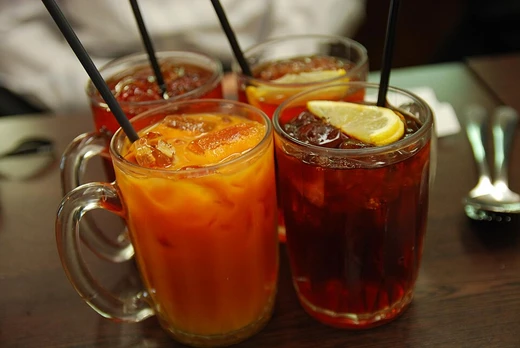
Bubble tea
Taiwanese tea drink with chewy tapioca pearls.
Last updated
Bubble tea—also called pearl milk tea, boba tea, or simply boba—is a tea-based drink that typically includes chewy tapioca balls, milk, and flavoring. It originated in Taiwan during the 1980s and later spread to regions with large East Asian diaspora communities. The drink comes in many flavors and varieties, but the most common are pearl black milk tea and pearl green milk tea, where "pearl" refers to the tapioca balls at the bottom.
Description
There are two main categories: teas without milk and milk teas. Both can use black, green, or oolong tea as a base. Milk teas often include powdered or fresh milk, but may also use condensed milk, almond milk, soy milk, or coconut milk. The earliest known bubble tea was a mix of hot Taiwanese black tea, tapioca pearls, condensed milk, and syrup or honey.
It is usually served cold. The tapioca pearls were originally made from cassava starch, but larger pearls later became standard. The name "boba," common in the United States but rare in Asia, comes from a nickname for Hong Kong actress Amy Yip.
Some cafés specialize in bubble tea, and major global chains include Chatime, CoCo Fresh Tea & Juice, Gong Cha, and Kung Fu Tea.
Bubble tea has many variations. The base tea is often black, green, oolong, or sometimes white tea. Another variation, yuenyeung, originated in Hong Kong and combines black tea, coffee, and milk.
Variants
Blended versions include ice cream–based drinks or smoothies with tea and fruit. Popular flavors include taro, mango, coffee, and coconut, with syrups or powders determining the flavor and color. Milkless teas often use fruit as a base, with flavors like mango, lychee, winter melon, and lemon.
Tapioca pearls are the most common topping, but other chewy spheres exist. Pearls are usually black from brown sugar.
Jelly toppings come in shapes like cubes, stars, or strips, with flavors such as coconut, konjac, lychee, grass jelly, mango, coffee, and green tea. Azuki bean or mung bean paste, aloe, egg pudding (custard), sago, and popping boba (spheres filled with fruit juice or syrup) are also popular. Some shops add milk or cheese foam on top, which gives a whipped-cream-like consistency and a saltier taste that balances the tea’s bitterness.
Customers can often choose the amount of ice or sugar in their drink. Ice levels range from no ice to more ice, and sugar levels are usually offered in 25% increments (0% to 100%), though these options vary by shop. Hot bubble tea is also available.
Alcoholic versions, sometimes called "boozy boba," have appeared in bars and specialty shops. These combine milk tea or fruit tea with spirits like vodka, rum, or soju. A sparkling vodka seltzer with four fruit flavors called "Boozy Boba" also exists.
In Southeast Asia, bubble tea is typically packaged in a plastic takeaway cup sealed with plastic or a rounded cap. Some newer brands use bottles or sealed plastic bags.
Most Taiwanese shops serve it in a plastic cup sealed with heated plastic cellophane, which allows the tea to be shaken without spilling. The seal is pierced with an oversized straw, called a boba straw, that is wide enough for the toppings to pass through. The tea can be prepared in batches during the day or the night.
Origins & The Name 'Boba'
Bubble tea was born in Taiwan during the 1980s, and its earliest known recipe was remarkably simple: hot Taiwanese black tea combined with tapioca pearls, condensed milk, and a sweetener such as syrup or honey. Those original pearls were crafted from cassava starch, but they were soon supplanted by larger spheres that gave the drink its now-familiar look.
The name 'boba,' widely used in the United States yet rarely heard in Asia, traces back to a nickname once attached to Hong Kong actress Amy Yip. From its island roots, the beverage traveled outward, finding enthusiastic audiences wherever sizable East Asian diaspora communities had taken hold. Today it goes by many names—pearl milk tea, tapioca milk tea, bubble milk tea—yet the core identity remains: a tea-based drink crowned with chewy spheres at the bottom, most often served cold and most often built on black or green tea.
A Universe of Toppings & Flavors
Beyond the classic black tapioca pearls—themselves colored by brown sugar—bubble tea shops offer a staggering array of add-ins. Jellies arrive in cubes, stars, or rectangular strips, flavored with coconut, konjac, lychee, grass jelly, mango, coffee, or green tea. Azuki and mung bean pastes, borrowed from traditional Taiwanese shaved-ice desserts, lend a subtle sweetness and extra texture. Aloe vera, custard, sago, and popping boba—tiny spheres bursting with mango, strawberry, coconut, kiwi, or honey-melon juice—round out the menu.
Some cafés crown the drink with a milk or cheese foam that softens the tea's bitterness and lets its sweetness return on the second sip. Flavor bases range from taro and coconut to yuenyeung, a Hong Kong-born blend of black tea, coffee, and milk. Fruit-forward versions lean on mango, lychee, winter melon, or lemon. In recent years, bars have even mixed the formula with vodka, rum, or soju, and a sparkling vodka seltzer branded 'Boozy Boba' now comes in four fruit flavors.
Brewing, Building & the Iconic Straw
Every cup of bubble tea is assembled with a degree of personalization that few other beverages match. Customers typically choose their ice level—none, less, normal, or more—and their sugar in 25-percent increments from zero to full, though no universal standard recipe governs these ratios. The tea base itself demands care: green tea is steeped at a gentler 80–85 °C for eight to ten minutes, while black tea requires water near 95–100 °C and a longer fifteen-to-twenty-minute brew to coax out its natural sweetness. Batches may be prepared during the day or the night before.
Once mixed, the drink is most often served cold in a plastic takeaway cup, sealed with a heated cellophane film that lets the barista shake the contents without spilling. The seal is then pierced with a wide 'boba straw,' deliberately oversized so that pearls, jellies, and other toppings can travel smoothly to the lips. In Southeast Asia the same cup might be capped with a rounded lid, and newer entrants experiment with bottles or sealed plastic bags to stand out on crowded shelves.
Global Chains & the Sugar Question
What began as a Taiwanese specialty has grown into a worldwide phenomenon, with dedicated cafés and major chains—Chatime, CoCo Fresh Tea & Juice, Gong Cha, and Kung Fu Tea—establishing a presence in countries around the globe. The drink's migration has largely followed East Asian diaspora corridors, embedding itself in the everyday beverage landscape of new continents. Yet bubble tea's rapid rise has not been free of controversy.
Its foundation in green or black tea carries genuine health benefits, but the standard preparation layers in substantial amounts of sugar and caloric density. Ongoing public debate centers on whether daily consumption at full sweetness could exacerbate chronic conditions. The tension is visible in the customization options themselves: the very fact that shops offer sugar in quarter-steps and allow customers to dial back sweetness suggests an industry aware of the criticism, even as the default recipe still leans sweet.
Frequently Asked Questions
What are Bubble tea's signature traits?
Its defining feature is the textural twist of chewy tapioca pearls suspended in a flavored milk-tea base, plus a wide menu of optional toppings like grass jelly, aloe vera, red bean, and popping boba. The two most beloved flavor profiles are pearl black milk tea and pearl green milk tea.
What are Bubble tea's core ingredients?
At its heart the drink blends brewed tea, milk, a flavoring agent, and chewy tapioca pearls. Optional add-ins such as grass jelly, aloe vera, red bean, or popping boba can be layered in for extra texture and taste.
More in Beverages & Drink Culture
Sources
Compiled from Wikipedia and the sources listed below. Text from Wikipedia is available under CC BY-SA 4.0; this entry is adapted from it.
- Wikipedia: Bubble tea (CC BY-SA 4.0).
Spotted an error? Know more?
Reader corrections go straight into our review queue. Suggest an edit · How this site is sourced