Kebab
Roasted meat dish originating in the Middle East.
Last updated

Lesya Dolyk · via Wikipedia: Kebab · CC BY-SA 2.0
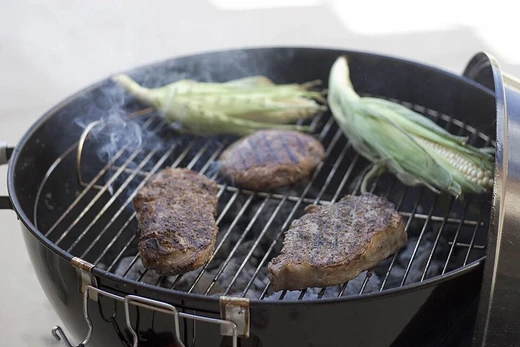
Kebab is a variety of roasted meat dishes that originated in the Middle East. It consists of cut-up meat, sometimes with vegetables and various accompaniments, typically cooked on a skewer over a fire, though some versions are oven-baked or prepared as a stew.
Lore & Background
The word kebab has ancient origins, likely entering English in the late 17th century from Arabic kabāb, partly via Hindi-Urdu, Persian, and Turkish. Linguists note possible derivation from Akkadian and Aramaic words meaning 'burn' or 'roast', with a prehistoric Proto-Afroasiatic root kab-. The Babylonian Talmud instructs that Temple offerings not be kabbaba (burned).
In the 10th-century Baghdadi cookbook Kitab al-Tabikh, kabāb is described as cut-up meat fried in a pan or grilled over a fire. The 14th-century Arabic dictionary Lisdan al-'Arab defines kabab as tabahajah, containing pieces of fried meat cooked in liquid. According to traveller Ibn Battuta, kebab was served in royal houses during the Delhi Sultanate and commoners ate it for breakfast with naan.
Kebab dishes have spread globally, with local variations such as Chinese chuan (from Uyghur cuisine), Greek souvlaki and gyros, and Persian chelow kabab. In West Germany, gyros made with pork was established as fast food before döner kebab became popular. The origin of the dish is a topic of sometimes heated debate between Greeks and Turks.
Reader's Guide
Kebab represents a diverse family of meat dishes that originated in the Middle East and spread across the world through Muslim influence and trade. Its significance lies in its adaptability: while traditional meat is lamb, regional recipes incorporate beef, goat, chicken, fish, or pork depending on religious prohibitions. The word itself carries deep linguistic history, with roots in Akkadian, Aramaic, and Proto-Afroasiatic languages. Kebab has become a global street food phenomenon, from the doner kebab fast food to Southeast Asian satays.
In English-speaking countries, it often refers to small cubes of meat on a skewer, while in the Middle East and Asia it encompasses a wide range of grilled meat dishes. The dish has sparked cultural debates, particularly between Greeks and Turks over the origins of souvlaki and gyros. Its legacy includes integration into local cuisines, such as Chinese Islamic cuisine's chuan and Persian chelow kabab, Iran's national dish.
Frequently Asked Questions
What exactly is Kebab?
Kebab is a family of roasted meat dishes that trace their roots to the Middle East. It features small cuts of meat, often paired with vegetables, threaded onto a skewer and cooked over an open flame, though oven-baked and stewed versions also exist.
Where and when does Kebab first appear in the record?
The earliest known written mention comes from the 10th-century Baghdadi cookbook Kitab al-Tabikh, making it one of the oldest documented meat preparations. A 14th-century Turkish text, the Kyssa-i Yusuf, also references the dish, showing its spread across the region.
What meats can go into a Kebab?
Lamb is the traditional choice, but beef, goat, chicken, fish, and even pork appear in various regional versions. Which meats are used often depends on local religious dietary rules.
More in Barbecue & Grilling
Sources
Compiled from Wikipedia and the sources listed below. Text from Wikipedia is available under CC BY-SA 4.0; this entry is adapted from it.
- Wikipedia: Kebab (CC BY-SA 4.0).
Spotted an error? Know more?
Reader corrections go straight into our review queue. Suggest an edit · How this site is sourced