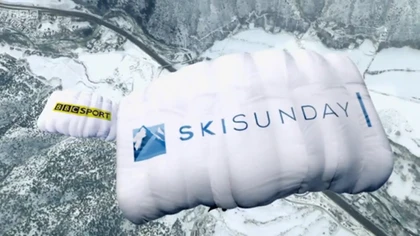
Bird's Eye View (TV series)
A BBC series filmed entirely from a helicopter.

European Space Agency · CC BY-SA 3.0 igo
In 1969, the BBC produced *Bird's Eye View*, a television series broadcast on BBC2. Edward Mirzoeff served as editor, and every shot was captured from a helicopter. A precursor special, *Bird's Eye View of Great Britain*, first aired on Christmas Eve 1967 and got a repeat the following year.
The series comprised these episodes:
*The Englishman's Home* by John Betjeman (5 April 1969; repeated 18 August 1971, 24 February 1974, 4 July 1983, 20 May 1987, 5 December 1992) *Man on the Move* by Correlli Barnett, narrated by Leo McKern (25 May 1969; repeated 25 August 1971, 3 March 1974) *A Green and Pleasant Land* by John Lloyd, narrated by Alan Dobie (22 June 1969; repeated 8 September 1971, 1 September 1972) *Portmeirion* by Clough Williams-Ellis (28 June 1969) *The Island Fortress* by John Terraine, narrated by Robert Lang (26 October 1969; repeated 31 August 1972, 10 March 1974, 24 May 1983, 6 June 1991) *John Bull's Workshop* by Correlli Barnett, narrated by Alan Dobie (30 November 1969; repeated 30 August 1972) *Beside the Seaside* by John Betjeman (25 December 1969; repeated 8 September 1972, 25 February 1973, 19 August 1977, 5 July 1983, 18 May 1987, 13 April 1989, 21 November 1992) *The Highlands and Islands of Scotland* by William Carrocher (25 January 1970; repeated 11 August 1971, 25 March 1973, 25 May 1983) *What a Lovely Day* by John Lloyd; main voice John le Mesurier (22 March 1970; repeated 3 April 1972) *Eastern Approach* by Stuart Hood, narrated by Gordon Jackson (17 May 1970; repeated 1 September 1971, 26 May 1983, 6 June 1989, 17 August 1990, 28 November 1992) *From Bishop Rock to Muckle Flugga* by William Carrocher (25 December 1970; repeated 5 September 1972, 20 January 1974, 10 October 1983, 12 May 1989, 12 December 1992) *Wales - the Western Stronghold* by Rene Cutforth (28 February 1971; repeated 4 September 1972, 19 May 1987, 19 December 1992) *Inis Fáil (Isle of Destiny)* by James Plunkett (17 March 1971; repeated 6 September 1972, 4 March 1973, 23 August 1992, 15 January 1993; co-produced with Raidió Teilifís Éireann) *A Land for All Seasons* by John Betjeman (18 April 1971; repeated 22 May 1972, 11 March 1973, 7 July 1983 and 17 May 1989, although the last transmission was not under the *Bird's Eye View* title) *Switzerland* by Herbert Meier (26 December 1971; co-produced with SRG SSR, RAI and Bayerischer Rundfunk)
Some epi
- Producer
- BBC
- First transmission
- 1969
- Last transmission
- 1969
- Channel
- BBC2
- Editor
- Edward Mirzoeff
- Filming method
- filmed entirely from a helicopter
Lore & Background
The series comprised multiple editions, each focusing on a distinct subject, such as The Englishman's Home by John Betjeman (first broadcast 5 April 1969) and Man on the Move by Correlli Barnett, narrated by Leo McKern (25 May 1969). Other editions included A Green and Pleasant Land by John Lloyd, Portmeirion by Clough Williams-Ellis, and The Island Fortress by John Terraine. The series also covered international topics, such as Switzerland by Herbert Meier, co-produced with SRG SSR, RAI, and Bayerischer Rundfunk.
Reader's Guide
Bird's Eye View is significant as an early example of a television series using helicopter-mounted cameras to provide sweeping aerial views of landscapes and architecture, a technique that was innovative for its time. The series featured contributions from notable writers and poets, including John Betjeman, who presented multiple editions. Its legacy includes repeated broadcasts of several editions over decades, with some episodes later made available on DVD and online platforms. The series helped popularize the aerial documentary format in British television.
Did You Know?
- The series was edited by Edward Mirzoeff.
- An initial special, Bird's Eye View of Great Britain, was shown on Christmas Eve 1967.
- The edition Inis Fáil (Isle of Destiny) was co-produced with Raidió Teilifís Éireann.
- Some editions are available on the BBC's website and on YouTube.
A Helicopter-Borne Vision
Bird's Eye View was a British television series produced by the BBC and initially broadcast on BBC2 between 1969 and 1971. What set it apart from other documentary programming of the era was its entirely aerial perspective: every frame was captured from a helicopter, giving viewers an unbroken bird's-eye view of the landscapes and settlements below. The series was edited by Edward Mirzoeff, who shaped the raw aerial footage into cohesive narratives. Before the full series launched, a preliminary Bird's Eye View of Great Britain aired on Christmas Eve 1967 and was repeated the following year, suggesting the BBC saw enough audience interest to commission a complete run. The helicopter-only approach meant the series could sweep across coastlines, industrial valleys, and rural expanses in a single continuous visual language, creating a distinctive viewing experience that no ground-based documentary could replicate at the time.
A Constellation of Writers and Narrators
The series drew on an impressive roster of essayists and broadcasters to script its episodes. John Betjeman contributed three editions, including The Englishman's Home, Beside the Seaside, and A Land for All Seasons, lending his characteristic literary warmth to the aerial imagery. Correlli Barnett wrote two episodes, Man on the Move and John Bull's Workshop, while John Lloyd penned A Green and Pleasant Land and What a Lovely Day. Other contributors included William Carrocher, who covered both the Scottish Highlands and the journey from Bishop Rock to Muckle Flugga, and Rene Cutforth, who explored Wales. The narration was equally varied: Leo McKern voiced Man on the Move, Alan Dobie handled two episodes, Robert Lang brought gravitas to The Island Fortress, John le Mesurier provided the main voice for What a Lovely Day, and Gordon Jackson narrated Eastern Approach. This breadth of literary and vocal talent ensured each episode carried a distinct personality while remaining unified by the shared aerial visual language.
Geographic and Thematic Range
Though rooted in Great Britain, the series' ambitions stretched well beyond a single nation. Episodes traversed England's industrial heartland in John Bull's Workshop, the pastoral beauty of A Green and Pleasant Land, and the military significance of The Island Fortress. Scotland received two dedicated episodes covering the Highlands and Islands and the maritime journey from Bishop Rock to Muckle Flugga. Wales was treated as a Western Stronghold in Rene Cutforth's contribution, while Inis Fáil (Isle of Destiny), co-produced with Raidió Teilifís Éireann, brought Ireland into the series. Even Switzerland was included in a December 1971 edition co-produced with SRG SSR, RAI, and Bayerischer Rundfunk. The thematic palette was equally diverse: Clough Williams-Ellis examined the model village of Portmeirion, Stuart Hood explored Eastern Approach, and James Plunkett reflected on Ireland's destiny. Together, these episodes painted a comprehensive portrait of the British Isles and a glimpse of continental Europe, all seen from above.
Longevity and Modern Availability
One of the most remarkable aspects of Bird's Eye View is its extraordinary broadcast longevity. Several episodes were repeated numerous times over more than two decades. Beside the Seaside, for instance, was retransmitted on at least seven occasions between 1972 and 1992, while The Englishman's Home enjoyed six repeats spanning from 1971 to 1992. Eastern Approach and From Bishop Rock to Muckle Flugga each accumulated five or more rebroadcasts, with the final transmissions occurring in the early 1990s. A Land for All Seasons was last shown in 1989, though notably not under the Bird's Eye View title. In the digital age, the series has found new life: some editions are accessible through the BBC's own website, the two 1969 John Betjeman-narrated episodes are available on DVD, and further episodes can be viewed on YouTube. This sustained availability, spanning from the original BBC2 broadcasts to contemporary streaming platforms, testifies to the enduring appeal of the series' unique aerial perspective.
Gallery

More in BBC Two original programming 1-24
Spotted an error? Know more?
Reader corrections go straight into our review queue. Suggest an edit · How this site is sourced