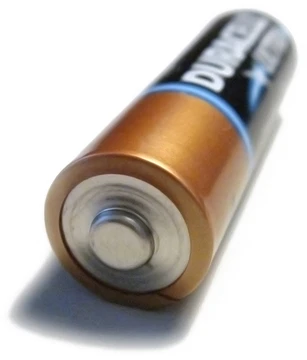
Aqueous battery
Safer, cheaper aqueous batteries have been in use since the 1860s.
Last updated
An aqueous battery is a type of electric battery that relies on a water-based solution as its electrolyte. This technology has been around since the 1860s. Compared to lithium-ion batteries, aqueous batteries are generally safer, more reliable, and cheaper, though most designs fall short in energy density and cycle life for demanding applications like grid storage and electric vehicles.
Commercial history
The lead-acid battery, invented in 1859 by Gaston Planté, took two decades of work by multiple inventors to commercialize with its diluted sulfuric acid electrolyte. The modern valve-regulated (sealed) version arrived in the 1930s. Alkaline batteries first appeared around 1900; nickel-cadmium batteries were later replaced by nickel-metal hydride in the 1980s, while the nickel-hydrogen battery, developed in the 1970s, remains in use for satellites. By the early 2020s, aqueous batteries made up half of the rechargeable battery market.
Key advantages over lithium-ion include safety and reliability—due to non-flammability from high water content (though overheating can still cause explosions), high tolerance for rough handling, and resistance to overcharging via the oxygen cycle. Low cost comes from cheap raw materials like sulfuric acid, manufacturing that doesn’t need oxygen-free environments, and minimal electronics thanks to inherent safety. Fast reaction rates enable quicker charging and discharging, with consistent performance across a wide temperature range.
Drawbacks include a narrow electrochemical window: water begins electrolyzing at 1.23 volts. Careful material choices can stretch this to 2.3 V, and high-concentration “water-in-salt” electrolytes reach 3 V, but in practice only lead-acid batteries hit 2 V; most production designs are limited to just over 1 V, severely limiting energy density.
Lithium-ion cells typically deliver 3.3–3.9 V, and their volumetric and mass energy densities are two to three times better. Water is also an aggressive solvent, causing solvation, dissociation, and corrosion of battery components, which restricts material choices and shortens lifespan. Cycle life is an order of magnitude lower.
Research
Research into aqueous batteries has surged since the 2000s, with a dramatic increase in publications after 2015.
Quick Facts
- First existence
- 1860s
- Typical voltage range
- slightly above 1 V to 2 V (lead-acid)
- Electrochemical window limit
- 1.23 V (can be stretched to 3 V with water-in-salt electrolyte)
- Energy density comparison
- 2-3 times lower than lithium-ion batteries
- Cycle life comparison
- an order of magnitude lower than lithium-ion batteries
Facts from the source article.
Lore & Background
The lead–acid battery was invented by Gaston Planté in 1859, although the commercialization of the diluted sulphuric acid electrolyte design took twenty years of work by multiple inventors. After an additional half a century the modern valve-regulated ("sealed") batteries appeared in the 1930s.
Alkaline batteries first appeared at the turn of the 20th century with the nickel–cadmium battery replaced by the nickel–metal hydride one in the 1980s; the nickel–hydrogen battery was developed in the 1970s and is still used in satellites. Until the 2010s, aqueous batteries also found a niche in high-power applications like cordless power tools, but developments in Li-ion chemistry enabled Li-ion batteries to replace them. In the early 2020s the aqueous batteries comprised half of the market for rechargeable batteries.
Reader's Guide
Aqueous batteries are notable for their long history and continued relevance despite the dominance of lithium-ion technology. Their safety and reliability stem from non-flammability due to high water content, though they can still explode if overheated. They offer high tolerance against mechanical mishandling and resistance to overcharging via the oxygen cycle.
Low cost is achieved through cheap raw materials such as sulphuric acid, manufacturing that does not require oxygen-free environments, and minimal electronics due to inherent safety. Fast reaction rates allow quicker charging and discharging with consistency over temperature ranges. However, their narrow electrochemical window—water starts electrolysing at 1.23 V—limits energy density; in practice only lead-acid batteries reach 2 V, while other designs are limited to slightly above 1 V. Water as an aggressive solvent causes corrosion and solvation, limiting material choices and battery lifetime.
Cycle life is an order of magnitude lower than lithium-ion batteries. Extensive research since the 21st century, with an astounding increase in publications since 2015, has led to material innovations that may allow aqueous batteries to evolve into a companion to lithium-ion batteries in transportation and electricity storage. Research directions include lithium-ion, sodium-ion, potassium-ion, zinc-ion, magnesium-ion, and aluminum-ion aqueous batteries.
More in Battery Types
Sources
Compiled from Wikipedia and the sources listed below. Text from Wikipedia is available under CC BY-SA 4.0; this entry is adapted from it.
- Wikipedia: Aqueous battery (CC BY-SA 4.0).
Spotted an error? Know more?
Reader corrections go straight into our review queue. Suggest an edit · How this site is sourced