The Avengers (soundtrack)
Score for the 2012 Marvel film, composed by Alan Silvestri.

Alan Silvestri, who had previously scored *Captain America: The First Avenger*, composed and conducted the score for *The Avengers*, making him the first composer to work on more than one Marvel Cinematic Universe film. He described the project as uniquely challenging because each character had their own established world, but the film ultimately required a unified musical identity for the team as a whole. The score was recorded at Abbey Road Studios in London. Director Joss Whedon called the music "old school," praising Silvestri’s ability to blend heightened emotion with specific, cue-driven character work. Silvestri reused themes from *Captain America: The First Avenger* and introduced new ones, including a lonely, plucked theme with an Eastern European flavor for Black Widow. The soundtrack album was released on May 1, 2012, by Hollywood Records. The physical release, handled by Hollywood Records, Marvel Music, and Intrada Records, included longer versions of several tracks and one extra track, "Interrogation."
A separate album, *Avengers Assemble (Music from and Inspired by the Motion Picture)*, was released the same day. It featured songs by various artists, including Soundgarden’s "Live to Rise," which was offered as a free download on iTunes for its first week. Indian rock band Agnee released a music video for "Hello Andheron," which served as the theme for the film’s Indian release. A cover of AC/DC’s "Shoot to Thrill" by Theory of a Deadman was originally planned but removed for unknown reasons. None of the songs on this album, except "Live to Rise," appear in the film.
Quick Facts
- Artist
- Alan Silvestri
- Released
- 2012-05-01
- Studio
- Abbey Road Studios
- Genre
- Film score
- Label
- Hollywood / Marvel Music
- Producer
- Alan Silvestri / David Bifano
- Prev Title
- Captain America: The First Avenger
- Prev Year
- 2011
- Next Title
- Flight
- Next Year
- 2012
Facts from the source article.
Lore & Background
In November 2011, Marvel announced that Alan Silvestri, who scored Captain America: The First Avenger, would write and compose the score for The Avengers, making him the first composer to score more than one movie in the Marvel Cinematic Universe. Silvestri stated that the experience was unique due to the challenge of giving each character weight while representing the collective entity of the Avengers. He recorded the score at Abbey Road Studios in London, England. Director Joss Whedon described the score as 'old school,' praising Silvestri's ability to provide heightened emotion and character-specific cues. Silvestri reprises his themes from Captain America: The First Avenger and introduced new ones, including a theme for Black Widow described as 'a lonely, plucked theme with an Eastern European flavor.'
Reader's Guide
The score album was released on May 1, 2012, simultaneously with a digital release and a physical release by Hollywood Records, Marvel Music, and Intrada Records. Several tracks on the physical release are longer than on the digital album, and it includes one additional track, 'Interrogation.' The separate soundtrack album, Avengers Assemble (Music from and Inspired by the Motion Picture), also released on May 1, 2012, features songs by various artists, including Soundgarden's 'Live to Rise' and Agnee's 'Hello Andheron.' A cover of AC/DC's 'Shoot to Thrill' by Theory of a Deadman was originally planned but removed for unknown reasons. None of the songs on that album, except 'Live to Rise,' are heard in the film. The score is significant as Silvestri's second Marvel Cinematic Universe score, establishing musical continuity across films.
Production & Creative Vision
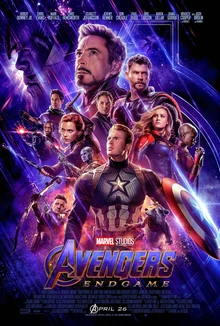
The making of this 2019 superhero epic was a massive undertaking from the very start. Originally teased back in October 2014 under the working name Avengers: Infinity War – Part 2, the project shed that subtitle before settling on its final identity. The Russo brothers—Anthony and Joe—stepped in as directors in April 2015, followed a month later by screenwriters Christopher Markus and Stephen McFeely. Principal photography kicked off in August 2017 at Pinewood Atlanta Studios in Fayette County, Georgia, with the production shooting back-to-back with its predecessor, Infinity War, and wrapping in January 2018. Beyond the Georgia soundstages, the crew captured exterior material across Metro and downtown Atlanta, New York state, Scotland, and England. With an estimated production budget landing between $356 and $400 million, the picture ranks among the costliest films ever greenlit. Marvel Studios produced the project while Walt Disney Studios Motion Pictures handled distribution, and the on-screen ensemble spans an extraordinary roster: Robert Downey Jr., Chris Evans, Mark Ruffalo, Chris Hemsworth, Scarlett Johansson, Jeremy Renner, Don Cheadle, Paul Rudd, Brie Larson, Karen Gillan, Danai Gurira, Benedict Wong, Jon Favreau, Bradley Cooper, Gwyneth Paltrow, and Josh Brolin all appear in the final cut.
Narrative Architecture & Story Culmination
As the twenty-second entry in the Marvel Cinematic Universe and the direct follow-up to Infinity War, this film was conceived as the grand denouement of a sprawling multi-year saga. The story picks up twenty-three days after Thanos's snap erased half of all living beings, then leaps five years forward when Scott Lang's escape from the Quantum Realm sparks a desperate time-travel plan. The surviving heroes—Stark, Banner, Rogers, Thor, Romanoff, and Rhodes—must retrieve the Infinity Stones from various points in the past to reverse the damage. Their missions send them to 2012 New York, 1970 Camp Lehigh, 2013 Asgard, and 2014 Morag and Vormir, revisiting settings and characters from earlier installments. The narrative carries enormous emotional weight: Romanoff sacrifices herself to secure the Soul Stone, Stark encounters his father Howard in a bittersweet 1970 sequence, and Thor reconnects with his mother Frigga. The film closes out multiple long-running character arcs, functioning as both a personal farewell and a franchise-wide reckoning. When 2014-Thanos arrives in the present with his army, the final confrontation draws in restored allies, the Guardians of the Galaxy, the Ravagers, and the full armies of Wakanda and Asgard, making the climax an ensemble spectacle.
Box Office Dominance & Critical Acclaim
The film's theatrical run was nothing short of historic. After a world premiere at the Los Angeles Convention Center on April 22, 2019, it hit U.S. screens on April 26 as the capstone of Phase Three. Critics responded with broad enthusiasm, singling out the direction, the ensemble acting, the musical score, the choreography of its action sequences, the visual effects, and the sheer emotional gravity of the storytelling. Reviewers frequently highlighted how the picture served as a satisfying culmination of the entire twenty-two-film narrative. At the box office, the numbers were staggering: the film collected nearly $2.8 billion globally, out-earning Infinity War's full theatrical run in just eleven days and establishing multiple box-office records in the process. From July 2019 until March 2021, it held the title of the highest-grossing film of all time, a record it ultimately ceded to James Cameron's Avatar (2009). On the awards circuit, the picture earned a nomination for Best Visual Effects at the 92nd Academy Awards, alongside a long list of other industry accolades that recognized its technical and artistic achievements.
Enduring Legacy & Future Chapters
Beyond its immediate cultural impact, the film's story continues to ripple through the franchise. It marked the definitive conclusion of Phase Three and brought closure to several major character arcs that had been building since the MCU's inception. The official title was not confirmed until December 2018, just months before release, underscoring how closely the studio guarded its identity. Looking ahead, the narrative's reach extends well past its 2019 release window. An extended cut, subtitled Encore, is slated for a theatrical re-release in September 2026. That special screening is positioned as a lead-in to two upcoming sequels: Avengers: Doomsday, scheduled for December 2026, and Avengers: Secret Wars, set for 2027. These future entries promise to reopen the story threads the original film closed, suggesting that the characters and themes introduced across the twenty-two-film run will continue to evolve. For audiences who experienced the 2019 release as a generational event, the prospect of returning to theaters for the Encore version and the new installments offers a rare chance to revisit that emotional climax and see where the saga goes next.
Frequently Asked Questions
Who composed The Avengers (soundtrack)?
Alan Silvestri wrote and conducted the score, extending the work he had begun on Captain America: The First Avenger. That prior credit made him the first composer to score more than one MCU film.
Where was The Avengers (soundtrack) recorded?
The full score was tracked at Abbey Road Studios in London.
What makes The Avengers (soundtrack) notable in MCU history?
It marked the first instance of a single composer scoring multiple Marvel Cinematic Universe films. Silvestri also noted the particular difficulty of weaving each character's established musical world into one unified team identity.
What is the associated album for The Avengers (soundtrack)?
The companion release is Avengers Assemble (Music from and Inspired by the Motion Picture), issued by Hollywood Records on May 1, 2012.
How did director Joss Whedon describe the Avengers soundtrack?
Whedon called the music "old school" and singled out Silvestri's talent for pairing heightened emotion with tightly written, cue-driven themes.
More in Avengers 1-24
Spotted an error? Know more?
Reader corrections go straight into our review queue. Suggest an edit · How this site is sourced