Avengers Campus
Marvel-themed lands in three Disney parks.

Avengers Campus is a Marvel-themed land found at Disney California Adventure and Walt Disney Studios Park in Disneyland Paris, with a version called Stark Expo in development for Hong Kong Disneyland. These areas were not built simultaneously; the Hong Kong Disneyland version was announced later and remains in development. They draw inspiration from the Marvel Cinematic Universe but exist within a separate reality called the "Marvel Theme Park Universe," an alternate timeline parallel to Earth-199999 (the MCU designation) in the Marvel multiverse, where the Blip from *Avengers: Infinity War* and the events that followed never happened. Walt Disney Imagineering designed the lands alongside Marvel Studios and Marvel Themed Entertainment.
Spread across three continents, each Marvel-themed area serves as a "Super Hero campus" for its region, aiming to help guests become heroes themselves. While the attractions and entertainment vary between locations, they share a common storyline that ties them together.
At Disney California Adventure, the campus sits on what was once shared land between a Stark Industries plant and a Strategic Scientific Reserve complex. It replaced A Bug's Land, which closed on September 5, 2018. The Web Slingers: A Spider-Man Adventure attraction uses the same show building that previously housed It's Tough to Be a Bug!. The area also absorbed the nearby Guardians of the Galaxy – Mission: Breakout! ride, which had opened in 2017 in Hollywood Land. At the 2017 D23 Expo, Disney announced that Spider-Man and the Avengers would join the Guardians of the Galaxy attraction as part of a new superhero-themed area. Originally scheduled to open on July 18, 2020, the launch was delayed due to park closures from the COVID-19 pandemic and two stay-at-home orders from California Governor Gavin Newsom. In late December 2020, Disney set a 2021 opening window. The area finally opened on June 4, 2021.
On February 28, 2022, a plaque honoring Stan Lee was placed near an entrance, surrounded by blue planters, marking what would have been his 100th birthday in December 2022. The plaque reads: "We dedicate Avengers Campus to the incomparable Stan Lee.
Quick Facts
- Theme
- Marvel Cinematic Universe
- Rides
- 6 (2021)
Facts from the source article.
Lore & Background
Avengers Campus at Disney California Adventure is centered around an Avengers campus located on the former shared grounds of a Stark Industries plant and Strategic Scientific Reserve complex. The area takes up the space previously occupied by A Bug's Land, with Web Slingers: A Spider-Man Adventure using the same show building that previously housed It's Tough to Be a Bug!. The adjacent Guardians of the Galaxy – Mission: Breakout! attraction, which opened in 2017 in Hollywood Land, was absorbed into the area. A Bug's Land closed on September 5, 2018, to make way for the new area.
Reader's Guide
Avengers Campus represents a significant expansion of Marvel-themed experiences across Disney parks on three continents. At Disney California Adventure, the area replaced A Bug's Land and integrated the existing Guardians of the Galaxy – Mission: Breakout! attraction. The Paris version, Marvel Avengers Campus, opened on July 20, 2022, on the former Backlot area, featuring a re-theme of Rock 'n' Roller Coaster Starring Aerosmith into Avengers Assemble: Flight Force. Hong Kong Disneyland's version, Stark Expo, is under development as part of Tomorrowland. The lands share a common narrative within the Marvel Theme Park Universe, an alternate timeline where the Blip did not occur. Notable future attractions include Avengers Infinity Defense and Stark Flight Lab, both opening in 2028 at Disney California Adventure, with Robert Downey Jr. reprising his role as Tony Stark for both.
Did You Know?
- Due to a 1994 contract with Universal Parks & Resorts, Disney cannot use the 'Marvel' name in the park's branding or attractions at Disney California Adventure.
- On February 28, 2022, a plaque was dedicated at Avengers Campus honoring Stan Lee, with a similar plaque for Jack Kirby erected in August 2026.
- Deadpool appeared at Avengers Campus in July 2024, marking the first time Disney Parks featured a live character experience from an R-rated film.
- The music for the themed land at Disney California Adventure was arranged by John Paesano.
Origins: Assembling Earth's Mightiest Heroes
The Avengers concept was born in 1963 when writer-editor Stan Lee and artist-co-plotter Jack Kirby set out to assemble a team drawn entirely from Marvel's existing roster of solo heroes. Their debut in The Avengers #1, bearing a September 1963 cover date, introduced the group under the banner "Earth's Mightiest Heroes," with Iron Man, Ant-Man, the Hulk, Thor, and the Wasp as the founding five. This approach mirrored DC Comics' Justice League model: rather than inventing characters who existed solely to fill a team slot, the Avengers pulled together already-established stars. In-story, the team's formation was almost accidental. Loki's schemes against his brother Thor inadvertently drove teenager Rick Jones to rally the scattered heroes for a single battle. Once the threat was neutralized, Ant-Man observed how seamlessly the five had cooperated and proposed making it permanent; the Wasp supplied the name. This foundational choice—prioritizing individual identity over collective identity—would define the team's character for decades to come.
A Roster in Constant Flux
From the very second issue, the Avengers proved that no lineup would stay fixed for long. Ant-Man rebranded as Giant-Man, and the Hulk walked out after sensing the fear his unstable temperament inspired in his teammates. By issue #4, Captain America—rescued from decades frozen in ice—had been folded in and retroactively granted "founding member" status, a move that so angered the Hulk he sought vengeance against the group. The roster continued to churn: in issue #16, every member except Captain America resigned, and three former villains (Hawkeye, Scarlet Witch, and Quicksilver) took their places, earning the era the nickname "Cap's Kooky Quartet." The team's structure deliberately mixed marquee solo-book stars like Iron Man with lesser-known figures such as Wonder Man, Tigra, and Quicksilver, giving the latter valuable exposure. Later additions included the Black Panther, who saved the team from the Grim Reaper and Klaw, and the android Vision. Pym also cycled through identities, becoming Yellowjacket before marrying the Wasp. This perpetual reshuffling kept the team feeling alive and unpredictable.
Creative Evolution Across Three Decades
The original Avengers series, published bi-monthly through its sixth issue and monthly thereafter, ran an impressive 402 issues from September 1963 to September 1996. Its creative team shifted frequently, reflecting the natural evolution of the medium. Jack Kirby departed after issue #8, handing the art to Don Heck, who was later succeeded by John Buscema in 1967. On the writing side, Roy Thomas took over from Stan Lee in 1966, steering the team through new territory: Hercules joined the roster, the Black Knight and Black Widow operated as allies, and Spider-Man was even offered membership. The 1970s brought ambitious storylines like the Kree-Skrull War, a nine-part saga featuring Captain Marvel, and the "Celestial Madonna" arc, which wove Mantis's origins into cosmic mythology and culminated in the Vision and Scarlet Witch's wedding. The series also spawned annuals, miniseries, and a brief giant-size quarterly sister publication. Their base of operations, Avengers Mansion in New York City, was funded by Tony Stark, maintained by butler Edwin Jarvis, and housed the team's five-engine Quinjet.
Beyond the Printed Page
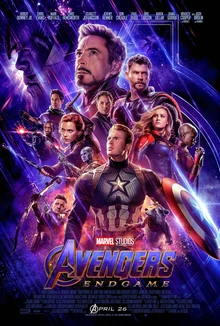
While the Avengers first captured imaginations on the printed page, their reach extended far beyond comic book shelves. The team appeared across multiple animated television series and direct-to-video films, broadening their audience well before the modern blockbuster era. The most transformative leap came in 2008, when Marvel Studios launched its interconnected film franchise—the Marvel Cinematic Universe—building toward a team-up that finally materialized in The Avengers, released in 2012. That film served as the culmination of a carefully constructed cinematic universe and opened the door to subsequent ensemble entries in the series. The Avengers' adaptability across media reflects a core strength of the original comic concept: because the team is an all-star collection of pre-existing, individually rich characters rather than a fixed unit, it can be reassembled, reinterpreted, and recontextualized in virtually any format. From Silver Age panels to silver screens, the "Earth's Mightiest Heroes" label has remained a flexible brand, capable of carrying new stories while honoring the 1963 foundation laid by Lee and Kirby.
Frequently Asked Questions
What is Avengers Campus?
Avengers Campus is a Marvel-themed land inside select Disney parks where guests can walk through a world built around MCU characters and stories. It was designed by Walt Disney Imagineering in partnership with Marvel Studios and Marvel Themed Entertainment.
Where can I visit Avengers Campus?
You can experience it at Disney California Adventure in California and at Walt Disney Studios Park in Paris. A separate version called Stark Expo is still in development for Hong Kong Disneyland and has not yet opened to the public.
When did Avengers Campus first open?
The California location welcomed its first guests on June 4, 2021. The Paris and future Hong Kong versions were not all built or announced at the same time, so each park's opening schedule differs.
What are the main attractions in Avengers Campus?
The headline rides include Web Slingers: A Spider-Man Adventure, Guardians of the Galaxy – Mission: Breakout!, and Avengers Assemble: Flight Force. Together they cover the Spider-Man, Guardians, and core Avengers storylines from the films.
Is Avengers Campus part of the MCU canon?
It exists in its own alternate timeline called the Marvel Theme Park Universe, which runs parallel to Earth-199999 (the MCU's canonical designation). In that parallel reality, events like the Blip from Infinity War unfolded differently than they did in the main film series.
More in Avengers 1-24
Spotted an error? Know more?
Reader corrections go straight into our review queue. Suggest an edit · How this site is sourced