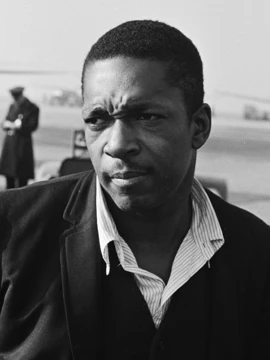
Giuseppi Logan
Last updated

via Wikipedia: Giuseppi Logan · see source
A self-taught pianist and drummer, Giuseppi Logan took up reeds at twelve. Born in Philadelphia, he played with Earl Bostic by fifteen and studied at the New England Conservatory. Moving to New York in 1964, he became part of the free jazz scene. He died on April 17, 2020, at a nursing facility in Far Rockaway, Queens from COVID-19.
Biography
Giuseppi Logan was a multi-instrumentalist who played alto and tenor saxophone, bass clarinet, flute, piano, and oboe. Before leading his own quartet, he worked with Archie Shepp, Pharoah Sanders, and Bill Dixon. His first quartet featured pianist Don Pullen, bassist Eddie Gómez, and percussionist Milford Graves; when Pullen left, Dave Burrell took over. Logan also played in Byard Lancaster’s band and toured and recorded with Patty Waters.
He made two albums for ESP-Disk and later appeared on a Roswell Rudd record for Impulse!. A 1965 ESP-Disk press release announced a third album, ESP-1018, titled The Giuseppi Logan Chamber Ensemble in Concert, but it was never released—possibly because of Logan’s increasingly erratic behavior—and the catalog number went to an album by The Fugs. A short film by Edward English captures vintage footage of Logan. Few anecdotes survive, but those that do show his strong influence.
Bill Dixon recalled that in the summer of 1964, Logan was studying with him and playing in his concerts; Dixon believed he was the only trumpeter who could handle Logan’s music. Logan would tilt his head back to keep his throat open for more air and took pride in reaching the fourth octave on alto. Dixon noted that Logan’s note placement, his distinctive sound, and the way his group supported him made him a unique improviser, and that he had strong, original views about music.
ESP-Disk's Bernard Stollman said Logan did an awful lot of drugs, burned out, flipped out, and never came back; he also said Logan was mentally ill to some degree and attacked him once randomly. During Logan's first session for ESP 1007, Logan turned to Stollman and said 'if you rob me, I'll kill you.' Stollman also described a moment when the tape ran out during a stunningly beautiful piece; without a pause, Logan said 'take it back to before where it stopped and we'll take it from there,' and they resumed exactly where they left off.
Milford Graves recalled that he gave Logan his record date with ESP-Disk in 1965. Logan vanished from the music scene in the early 1970s; in 2008 he was filmed by a Christian mission group after returning to New York from years in and out of institutions in the Carolinas. Filmmaker Suzannah Troy made short films of Logan practicing in Tompkins Square Park. He performed a comeback gig at the Bowery Poetry Club in February 2009.
On April 6, 2009, he performed at Local 269 in NYC. In 2010, he released a comeback record on Tompkins Square Records with Matt Lavelle, Dave Burrell, Warren Smith and Francois Grillot.
In October 2011, he recorded six songs with younger experimental musicians. Around 2011 he was shot and ended up in a home in Far Rockaway, Queens. He died on April 17, 2020, at a nursing facility in Far Rockaway, Queens from COVID-19.
Did You Know?
- Logan taught himself piano and drums before switching to reeds at age 12.
- He played with Earl Bostic at age 15.
Frequently Asked Questions
When was Giuseppi Logan born?
Giuseppi Logan was born on 22 May 1935.
When was Giuseppi Logan active?
Giuseppi Logan was active from 1940 to 2020.
More in Avant-garde Jazz Flautists
Test yourself
Three questions drawn from this entry’s sources. Pick an answer to check it.
Answers checked against the source article
Sources
Compiled from Wikipedia and the sources listed below. Text from Wikipedia is available under CC BY-SA 4.0; this entry is adapted from it.
- Wikipedia: Giuseppi Logan (CC BY-SA 4.0).
Spotted an error? Know more?
Reader corrections go straight into our review queue. Suggest an edit · How this site is sourced