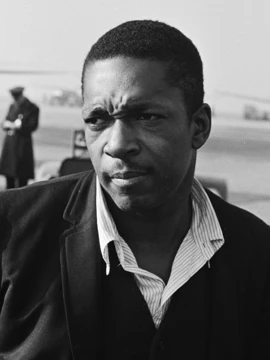
Sam Rivers (jazz musician)
Last updated
Sam Rivers was an American jazz musician and composer who performed on multiple instruments, including flute, though he was best known as a tenor saxophonist. He gained prominence during the mid-1960s free jazz movement and was a significant figure in that genre.
Early life
Rivers was born in El Reno, Oklahoma. His father, a gospel musician who sang with the Fisk Jubilee Singers and the Silverstone Quartet, exposed him to music early.
His grandfather was Marshall W. Taylor, a religious leader from Kentucky. During a Navy stint in California in the 1940s, Rivers performed with blues singer Jimmy Witherspoon. He moved to Boston in 1947, studying at the Boston Conservatory with Alan Hovhaness and performing with Quincy Jones, Herb Pomeroy, and Tadd Dameron.
Blue Note era
In 1959 Rivers began performing with 13-year-old drummer Tony Williams. He briefly joined the Miles Davis Quintet in 1964 on Williams's recommendation, appearing on the live album Miles in Tokyo. His tenure was short due to prior Boston engagements and his avant-garde style, which was too advanced for Davis at the time; Wayne Shorter replaced him.
Rivers signed with Blue Note Records, recording four albums as leader and appearing as sideman on recordings by Tony Williams, Andrew Hill, and Larry Young. His first Blue Note album, Fuchsia Swing Song (1964), featured Jaki Byard and employed an inside-outside approach, where the performer leaves the harmonic framework but retains a hidden link to return seamlessly. The ballad Beatrice from that album became a standard, recorded by Joe Henderson and Stan Getz.
Loft era
During the 1970s Rivers and his wife Beatrice ran Studio Rivbea, a jazz loft in New York City's NoHo district on Bond Street. Critic John Litweiler called it the most famous of the lofts, and it exemplified artists creating their own performance spaces free of nightclub or concert hall constraints.
Recordings from the loft were issued as Wildflowers on the Douglas label. In 1971 Clifford Thornton recruited Rivers to lead a student world-music/free-jazz ensemble at Wesleyan University. Rivers recorded several albums for Impulse!, including Streams, Hues, Sizzle, and Crystals, and appeared on Dave Holland's Conference of the Birds with Anthony Braxton and Barry Altschul.
Later career
In the early 1990s Rivers moved to Florida with his wife, expanding his orchestra compositions with a reading band in Orlando that became the longest-running incarnation of the RivBea Orchestra. He performed regularly with his trio featuring bassist Doug Mathews and drummer Anthony Cole (later Rion Smith). From 1996 to 1998 he toured and recorded three projects for Nato Records in France with pianist Tony Hymas. In 1998, with Steve Coleman's assistance, he recorded two Grammy-nominated big-band albums for RCA Victor, Culmination and Inspiration, the latter reworking Dizzy Gillespie's Tanga.
Later albums include Portrait (solo), Vista (trio with drummers Adam Rudolph and Harris Eisenstadt), and Aurora (2005). Rivers died from pneumonia on December 26, 2011, in Orlando. From 2019 to 2022, NoBusiness Records issued six live albums from his archive.
More in Avant-garde Jazz Flautists
Sources
Compiled from Wikipedia and the sources listed below. Text from Wikipedia is available under CC BY-SA 4.0; this entry is adapted from it.
- Wikipedia: Sam Rivers (jazz musician) (CC BY-SA 4.0).
Spotted an error? Know more?
Reader corrections go straight into our review queue. Suggest an edit · How this site is sourced