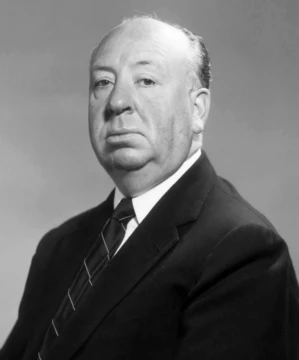
Zheng Junli
Chinese actor and director of classic films, persecuted during the Cultural Revolution.
Last updated
Zheng Junli (December 6, 1911 – April 23, 1969) was a Chinese actor and director from Shanghai who became a major figure during the golden age of Chinese cinema. His films The Spring River Flows East and Crows and Sparrows are regarded as classics. He was harshly persecuted during the Cultural Revolution and died in prison.
Republic of China
Born into a poor family of Cantonese fruit-sellers in Shanghai, Zheng developed an early passion for reading and performing arts. In 1928, he studied at the Nanguo she drama school under progressive dramatists Tian Han and Ouyang Yuqian. During the 1930s, he worked as a contract actor for the Lianhua Film Company, playing roles such as the love interest Yu Haichou in New Women alongside Ruan Lingyu. By the mid-1930s, he was one of Shanghai's biggest film stars.
In 1941, Zheng directed Long Live the Nations, the first Chinese propaganda film aimed at fostering unity among ethnic minorities in border regions, produced through the Kuomintang-controlled China Motion Picture Studio. After the Sino-Japanese War, he shifted focus to directing. He co-directed The Spring River Flows East (1947) with Cai Chusheng and made the anti-Kuomintang film Crows and Sparrows (1948), which later won a first-class Excellent Movie Award (1949–1955) from the PRC's Minister of Culture in 1957.
People's Republic of China
Zheng welcomed the new Chinese Communist Party government. As a left-wing director, he initially benefited, moving his family from a run-down dormitory at Kunlun Studio to Shanghai's best residential area, opposite Soong Ching-ling's house. After Mao Zedong raised issues about CCP cadres entering cities at the 2nd meeting of the 7th National Congress, Zheng quickly made The Married Couple, starring Zhao Dan and Jiang Tianliu. The film depicted a cadre abandoning his village wife for a city girl, failing to resist a "sugar-coated bullet." It was banned before public release.
Zheng served on the Art Commission of Shanghai Film Studio and supported the production of The Life of Wu Xun. This film was harshly criticized by the CCP, and Zheng felt guilty. His earlier film The Married Couple was also criticized, putting him under great pressure. To denounce The Life of Wu Xun, Jiang Qing and her followers researched in Shandong, finding the peasant rebel Song Jingshi of the "Black Flag Army." They promoted Song as a revolutionary example.
Did You Know?
- Zheng Junli was the first person to introduce Constantin Stanislavski's performing system into China.
- He translated Richard Boleslavsky's Acting: The First Six Lessons using an English dictionary, then double-checked with a Russian-English dictionary.
More in Auteur Directors
Test yourself
Three questions drawn from this entry’s sources. Pick an answer to check it.
Answers checked against the source article
Sources
Compiled from Wikipedia and the sources listed below. Text from Wikipedia is available under CC BY-SA 4.0; this entry is adapted from it.
- Wikipedia: Zheng Junli (CC BY-SA 4.0).
Spotted an error? Know more?
Reader corrections go straight into our review queue. Suggest an edit · How this site is sourced