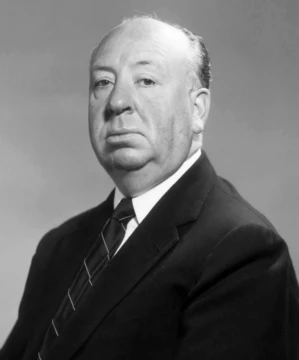
Vsevolod Pudovkin
Soviet film director who co-created the Kuleshov effect and developed montage theories.
Last updated

via Wikipedia: Kuleshov effect · see source
His masterpieces are often contrasted with those of Sergei Eisenstein, as Pudovkin focused on the courage and resilience of individuals.[1] Pudovkin, a Soviet filmmaker and theorist of montage, worked as a director, writer, and performer.[1] He was the third of six children born to a Russian family in Penza.[2]
Life and work
In 1928, Pudovkin, Sergei Eisenstein and Grigori Aleksandrov signed the Manifest of Sound, debating sound's tension with the image.[3] Illarion Yepifanovich Pudovkin, his father, was a manager and door-to-door salesman who originated from peasant stock in the Penza Governorate.[2] In captivity, he learned languages and created illustrations for books.[4] After the conflict ended, he left his engineering career and entered filmmaking, initially working as a writer, performer, set designer, and later as an assistant to Lev Kuleshov.[4]
Anna Zemtsova became his wife in 1924; he credited her with supporting his filmmaking ambitions.[5] The Order of Lenin was conferred upon him in 1935.[3]
What the cited sources add
Wallflower Press published "Early Soviet Cinema" in 2000, also cited for his contrast with Eisenstein.[6][1] According to that same guide, A Simple Case (1932) and The Deserter (1933) are considered inferior to his earlier films.[7][3]
References
- Wikipedia, "Vsevolod Pudovkin" (CC BY-SA 4.0), which cites: Schnitzer, Luda, "Cinema in Revolution", Da Capo Press, 1973; Gillespie, David C., "Early Soviet Cinema", Wallflower, 2000; "The Encyclopaedia Britannica guide to Russia : the essential guide to the nation, its people, and culture", Robinson, 2009, p. 208–213 (we also read that source) en.wikipedia.org
- Wikipedia, "Vsevolod Pudovkin" (CC BY-SA 4.0), which cites: Vsevolod Pudovkin (1976). Collection of Works in Three Volumes. Volume 3. — Moscow: Iskusstvo, p. 288-289, 322, 489; Alexander Karaganov (1983). Vsevolod Pudovkin. — Moscow: Iskusstvo, 272 pages, p. 3 (original not read by us) en.wikipedia.org
- Wikipedia, "Vsevolod Pudovkin" (CC BY-SA 4.0), which cites: "The Encyclopaedia Britannica guide to Russia : the essential guide to the nation, its people, and culture", Robinson, 2009, p. 208–213 (we also read that source) en.wikipedia.org
- Wikipedia, "Vsevolod Pudovkin" (CC BY-SA 4.0), which cites: Bryher, "Film Problems Of Soviet Russia", Riant Chateau TERRITET Switzerland, 1922, p. 44 (original not read by us) en.wikipedia.org
- Wikipedia, "Vsevolod Pudovkin" (CC BY-SA 4.0), which cites: Rollberg, P., "Historical dictionary of Russian and Soviet cinema", Scarecrow Press, 2009; Ryabchikova, "The Disappearing Theoretician: From Anna Li to A.N. Pudovkina", Apparatus. Film, Media and Digital Cultures of Central and Eastern Europe, 2018-08-10 (original not read by us) en.wikipedia.org
- Open Library record, ISBN 1903364043 ("Early Soviet Cinema- Innovation, Ideology and Propaganda (Short Cuts)"). CC0 (metadata); book content not read. openlibrary.org
- Open Library record, ISBN 9781593398507 ("The Britannica Guide to Russia"). CC0 (metadata); book content not read. openlibrary.org
Each numbered sentence above was checked against the source it cites before publication. Sentences citing Wikipedia adapt text from the English Wikipedia article Vsevolod Pudovkin (contributors), used under CC BY-SA 4.0; this entry is available under the same licence. Other sources were used for facts only; no text or images are copied from them.
More in Auteur Directors
Sources
Compiled from Wikipedia and the sources listed below. Text from Wikipedia is available under CC BY-SA 4.0; this entry is adapted from it.
- Wikipedia: Vsevolod Pudovkin (CC BY-SA 4.0).
Spotted an error? Know more?
Reader corrections go straight into our review queue. Suggest an edit · How this site is sourced