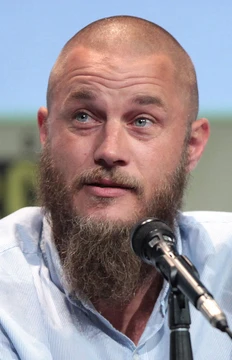
Andrew Johns
Rugby league Immortal and former Newcastle Knights captain.

via Wikipedia: Andrew Johns · see source
Andrew Gary Johns, nicknamed Joey, is an Australian former professional rugby league footballer from the 1990s and 2000s, widely regarded as one of the game's all-time greats. He captained the Newcastle Knights, playing a club-record 249 games and leading them to their only two premierships in 1997 and 2001. For Australia, he played 21 Tests across two World Cups and one Kangaroo tour. In State of Origin, he appeared in 23 matches for New South Wales, captaining the Blues to a series win in 2003 and sharing a record four man-of-the-match awards with Peter Sterling.
He also played for Country Origin in 1995 and 2003. Johns retired on 10 April 2007 at age 32 due to a bulging disc in his neck, which risked serious spinal injury from further contact. He is one of only four players to win the Golden Boot Award more than once and one of only two to win the Dally M Medal three times. He finished his career as the highest points scorer in Australian first-grade premiership history with 2,176 points.
In 2008, Rugby League Week named him the Greatest Player of the last 30 years, ahead of Wally Lewis, Brad Fittler, and Darren Lockyer. On 28 September 2012, he was named the eighth Immortal of rugby league.
Quick Facts
- Full name
- Andrew Gary Johns
- Born
- 19 May 1974
- Birthplace
- Cessnock, New South Wales, Australia
- Height
- 179 cm / 5 ft 10 in
- Weight
- 89 kg / 196 lb
Facts from the source article.
Did You Know?
- Andrew Johns shares a record 4 man-of-the-match awards for New South Wales State of Origin players with Peter Sterling.
- In 2008, Rugby League Week named Johns the Greatest Player of the last 30 years, beating Wally Lewis (#2), Brad Fittler (#3), and Darren Lockyer (#4).
Football career
Andrew Johns began playing junior rugby league in his home town of Cessnock, New South Wales for the Cessnock Goannas. Four years later, at 19, he was tested off the bench during the 1993 season in a handful of games. The following year, in the last pre-season trial for the 1994 season, Matthew Rodwell sustained a knee injury, handing Johns his opportunity. He was named in the starting line-up against the South Sydney Rabbitohs and in his debut match amassed 23 points, winning Man of the Match.
He soon formed a winning partnership with his older brother Matthew, who had played for the Knights since 1991. In the 1995 ARL season, in the absence of Super League-aligned players, Johns was selected for New South Wales in the 1995 State of Origin series. That year he made his debut for the Kangaroos in the 1995 World Cup in England, playing as a halfback and named man of the match in the decider against England at Wembley Stadium. He was awarded Most Valuable Player of the tournament.
The following year Johns was moved to halfback for State of Origin, with selectors favouring Geoff Toovey at hooker. During the 1997 ARL season, Johns guided the Knights to their first grand final appearance against the Manly Warringah Sea Eagles. Despite suffering three broken ribs and a punctured lung a fortnight earlier, he played. With less than a minute remaining and scores tied at 16-all, Johns went out of position into dummy half, ran down a narrow blind side, and slipped a pass to Darren Albert for the match-winning try with six seconds left, securing Newcastle's first premiership.
In 1998, Johns was awarded his first Dally M Medal. He had one of his worst goal-kicking games in Game 1 of the 1998 State of Origin series, as NSW lost by one point despite scoring more tries. After the retirement of Paul Harragon and his brother Matthew joining Wigan, Johns captained Newcastle to another Grand Final victory in 2001, defeating Parramatta 30–24. He was awarded the Clive Churchill Medal and went on the 2001 Kangaroo tour, top points scorer in the Ashes series and man of the match in the second Test.
In 2002, Johns captained Newcastle in the World Club Challenge loss to Bradford, scoring a try and kicking three goals. He was awarded the captaincy of both New South Wales and Australia, winning Player of the Series against Great Britain. The Knights narrowly missed the minor premiership on points difference, but Johns broke a bone in his back in the first week of the finals, and the Knights lost to the Sydney Roosters 38–12. Despite the injury, he was named Dally M Medal winner for a record third time.
Johns suffered a serious neck injury in 2003, an ACL knee injury keeping him out of most of 2004, and broke his jaw in early 2005. During the 2003 Rugby Union World Cup, Wales assistant coach Scott Johnson got Johns to assist with pre-match preparation. In 2004, Johns was the centre of controversy after receiving a massive offer from rugby union to switch codes; the Waratahs made an offer far larger than any league club could offer, but after the NRL CEO and Channel Nine contributed money and a promise of a commentary position, Johns decided to stay in league, influenced by his son.
He was also approached by the Welsh Rugby Union due to his Welsh heritage. As Game 2 of the 2005 State of Origin series approached, the Blues were down 0–1 and Johns was selected to replace Brett Kimmorley.
Cricket career
In June 2006, while still playing rugby league, Johns was announced to play Twenty20 cricket for New South Wales. He made his professional cricket debut on 7 January 2007 against South Australia in Newcastle, where a short-pitched delivery was pulled to the boundary but the catch was dropped. In his second match against Tasmania at Stadium Australia in Sydney, he scored nine runs, ending his short cricket career.
After retirement
After retiring, Johns joined the New Zealand team for a match against the Northern Union celebrating the All Golds tour, completing the match uninjured despite his neck injury, but declined another offer. He became a commentator for Channel 9 and Monday Night Football on Triple M radio. In Round 6 of 2007, Newcastle held farewell celebrations, renaming the new East grandstand of EnergyAustralia Stadium the Andrew Johns Stand, and retiring his number 7 jersey for the match.
Later that year the Knights named Johns as captain for their Team of the Era. In June 2007, the Australian Rugby Union hired him as the Wallabies in-play kicking coach for the 2007 Tri Nations Series. He married Cathrine Mahoney on 27 October 2007. In the 2008 pre-season, he began part-time coaching with the Parramatta Eels, working with halves Brett Finch and Tim Smith, and also worked with the Newcastle Knights and the Canterbury-Bankstown Bulldogs in similar skills coaching roles.
Achievements, awards and accolades
In February 2008, Johns was named in Australia's 100 Greatest Players (1908–2007) and later as halfback in Australian rugby league's Team of the Century. He was also named in New South Wales' team of the century as halfback. His records include most points in a match (34 v Canberra, 29 July 2001), most goals in a match (11 v Canberra, 19 March 2006), most points in a season (279 in 2001), and most points for the club (2,176). He retired as the highest individual point scorer in premiership history with 2,176 points.
He won the Dally M Medal three times (1998, 1999, 2002), the Golden Boot twice (1999, 2001), and the Clive Churchill Medal in 2001. He was voted #1 in Rugby League Week's Modern Masters Top 30 Players of the Past 30 Years. He was inducted into the Sport Australia Hall of Fame on 11 October 2012, and in 2025 was an inaugural inductee of the Stadium Australia Hall of Fame. He also received the Australian Sports Medal.
More in Australian Businesspeople in the Drink Industry
Spotted an error? Know more?
Reader corrections go straight into our review queue. Suggest an edit · How this site is sourced