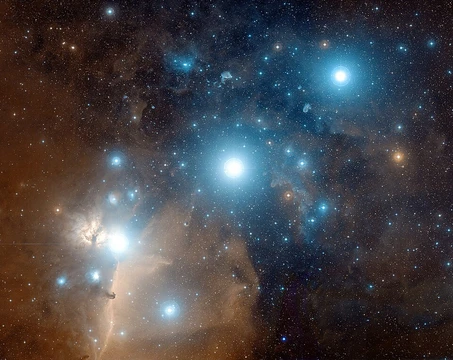
Astrograph
A telescope designed exclusively for astrophotography and sky surveys.

An astrograph, also called an astrographic camera, is a telescope built exclusively for taking pictures of the sky. Its main jobs are wide-field surveys and spotting objects like asteroids, meteors, and comets. The rise of photography in the mid-1800s sparked designs made just for astrophotography, and these instruments became common in the 1900s. They used chemicals sensitive to light to capture images on glass plates or film. Many observatories of that era kept an astrograph alongside tools like transit telescopes, large refractors, chronometers, and solar instruments. Astrographs were often used to map the night sky; one famous project was the Carte du Ciel. A notable discovery made with an astrograph was the then-planet Pluto, found not by looking through the eyepiece but by comparing images with a blink comparator. By the late 1900s, electronic detectors and digital storage became more common.
**Design**
Most research astrographs are refractors, though larger reflecting designs exist, such as the Ritchey-Chrétien and catadioptrics like the Schmidt camera. Key specs are the objective’s diameter and f-ratio, which set the field of view and image scale on the plate or CCD. The objective is usually modest in size, around 20 to 50 cm (8 to 20 inches). The focal plane is often shaped to work with a specific plate or detector. The objective is designed to produce a large (for example, 17 by 17 inches), flat, and distortion-free image. Some astrographs are even tuned to focus certain wavelengths—early ones were corrected for blue light to match the photographic emulsions of the time. Wide-angle astrographs with short f-ratios capture huge sky areas, while those with higher f-ratios are used for precise measurements. Many observatories have a so-called normal astrograph, with an aperture around 13 inches (330 mm) and a focal length of 11 feet (3.4 m). Its purpose is to produce images with a standard scale of about 60 arcseconds per millimeter.
**Applications**
**Astrometry:** Astrographs used in astrometry record images to map object positions over large sky areas. These maps are published in catalogs for further study or as reference points for deep-space imaging.
**Stellar classification:** For stellar classification, astrographs sometimes come as a double astrograph—two identical telescopes on one mount.
- Aperture range
- 20 to 50 cm (8 to 20 in)
- Normal astrograph aperture
- 13 inches (330 mm)
- Normal astrograph focal length
- 11 feet (3.4 m)
- Normal astrograph image scale
- approximately 60 arcsecs/mm
- Pluto discovery astrograph aperture
- 13 inches (330 mm)
- Pluto discovery astrograph f ratio
- f/5.3
- Pluto discovery plate size
- 14-by-17-inch (360 mm × 430 mm)
Lore & Background
Astrographs were often used to make surveys of the night sky, with one famous project being Carte du Ciel. Discoveries using an astrograph include the then-planet Pluto, which was found not by looking through the telescope but by using a blink comparator with images taken by an astrograph. By the late 20th century, electronic detectors became more common, with data stored electronically.
Most research astrographs are refractors, though reflecting designs such as the Ritchey-Chrétien and catadioptrics like the Schmidt camera exist. The objective diameter and f-ratio determine field of view and image scale. The focal plane is often designed to work with a specific shaped plate or CCD, and objectives may be corrected for specific wavelengths (e.g., blue light to match early photographic emulsions). Wide-angle astrographs with short f-ratios photograph huge sky areas, while higher f-ratio astrographs are used for precise measurements. Many observatories have 'normal astrographs' with a 13-inch aperture and 11-foot focal length, producing a standard image scale of about 60 arcsecs/mm.
Reader's Guide
Astrographs have been central to astrometry, stellar classification, and the discovery of astronomical objects. In astrometry, they record images used to map positions of objects over large sky areas, published in catalogs for further study or as reference points. For stellar classification, double astrographs (two identical telescopes on one mount) photograph the same field simultaneously in two colors (usually blue and yellow), each with a non-achromatic objective matched to a color-sensitive plate. Two-color photography allows measurement of star color and magnitude, revealing temperature and distance. Comparing images taken decades apart reveals proper motion of nearby stars.
In discovery, taking two exposures of the same sky section days or weeks apart enables finding asteroids, meteors, comets, variable stars, novae, and unknown planets. A blink comparator highlights objects that moved or changed brightness. Clyde Tombaugh's 1930 discovery of Pluto used Lowell Observatory's 13-inch f/5.3 refractor astrograph, recording images on 14-by-17-inch glass plates. In amateur astronomy, many commercial and homemade telescopes labeled 'astrographs' use designs such as apochromatic refractors, Cassegrain reflectors, and Newtonian reflectors, often requiring field flatteners or coma correctors, and are built with thermally stable materials and heavy-duty mounts for accurate tracking.
Did You Know?
- Astrographs were used in the Carte du Ciel project, a famous sky survey.
- Pluto was discovered using a blink comparator with images from an astrograph, not by direct observation.
- Normal astrographs have an aperture of about 13 inches and a focal length of 11 feet, producing an image scale of 60 arcsecs/mm.
- Double astrographs photograph the same sky field simultaneously in two colors, typically blue and yellow.
A Dedicated Instrument for Capturing the Sky
The astrograph is a telescope built for one singular purpose: photographing the night sky. Unlike general-purpose research instruments, these cameras were engineered from the ground up to record images of celestial objects rather than to be viewed through an eyepiece. The concept emerged in the mid-nineteenth century as photographic chemistry matured enough to make long-exposure sky imaging practical, and the design remained a staple of observatories throughout the twentieth century. During that era, astrographs sat alongside transit telescopes, large refractors, precision chronometers, and solar instruments as essential equipment at major observatories worldwide. They were particularly valued for wide-field surveys of the sky and for detecting transient or moving objects such as asteroids, meteors, and comets. The recording medium was typically a glass photographic plate or, in some cases, photographic film, both of which relied on light-sensitive chemical emulsions. By the late twentieth century, the shift to electronic detectors and digital data storage gradually replaced the glass-plate workflow, though the fundamental optical mission of the astrograph remained unchanged.
Optical Engineering for a Flat, Distortion-Free Image
Most research-grade astrographs employ refractor optics, though larger reflecting designs like the Ritchey-Chrétien and catadioptric systems such as the Schmidt camera also appear in this class. The two governing parameters are the objective's diameter and its f-ratio, which together dictate both the field of view and the image scale projected onto the detector. Objectives in this category are typically modest in size, ranging from roughly 20 to 50 centimeters. A defining engineering challenge is producing a focal plane that is simultaneously large, perfectly flat, and free of distortion—sometimes spanning as much as 17 by 17 inches. The shape of that focal plane is often tailored to match a specific photographic plate or CCD detector. Early designs were even corrected to focus particular wavelengths, such as blue light, to align with the sensitivity of available photographic emulsions. Shorter f-ratios favor photographing vast swaths of sky, while higher f-ratios serve more precise measurement work. A widely adopted standard, the "normal astrograph," features an aperture near 13 inches and a focal length around 11 feet, yielding an image scale of approximately 60 arcseconds per millimeter.
Hunting for Moving and Hidden Objects
One of the astrograph's most celebrated roles is the discovery of previously unknown or transient celestial bodies. The standard technique involves photographing the same patch of sky on two separate occasions, days or even weeks apart, and then comparing the two images with a device called a blink comparator. Objects that have shifted position—asteroids, comets, meteors—or that have changed brightness—variable stars, novae—stand out immediately against the static background of distant stars. A fast-moving object may even leave a visible streak in a single long exposure. The most famous example of this method is Clyde Tombaugh's 1930 identification of Pluto. Working at Lowell Observatory, Tombaugh systematically imaged the region of sky near the ecliptic using a 13-inch, three-element refractor astrograph with an f/5.3 ratio. The instrument recorded its images on 14-by-17-inch glass plates, and it was by comparing successive plates with a blink comparator that the then-unknown dwarf planet finally revealed itself.
Mapping the Sky and Classifying the Stars
Beyond discovery, astrographs serve as precision tools for astrometry and stellar classification. In astrometric work, the recorded images are used to chart the positions of objects across broad regions of the sky, and the resulting maps are published as reference catalogs for future deep-space imaging. For stellar classification, observatories sometimes deploy a double astrograph—two identical telescopes sharing a single mount—so that the same field of sky can be captured simultaneously in two colors, typically blue and yellow. Each telescope may carry a non-achromatic objective tuned to a specific wavelength, paired with a color-sensitive black-and-white plate. Alternatively, a single telescope can make two sequential exposures through different filters. The color information reveals a star's temperature, while the measured brightness gives its magnitude; together these allow astronomers to estimate distance. When the same field is re-photographed decades later, the shift of a nearby star against the fixed backdrop of distant galaxies exposes its proper motion.
Frequently Asked Questions
What is an astrograph?
An astrograph is a telescope purpose-built solely for photographing the night sky rather than for visual observation. It specializes in wide-field imaging and is the instrument of choice for cataloging asteroids, comets, and meteors.
What are the typical specifications of a standard astrograph?
A classic astrograph usually pairs a 13-inch (330 mm) aperture with an 11-foot (3.4 m) focal length, producing an image scale of roughly 60 arcseconds per millimeter. Across the broader range of models, apertures span from 20 to 50 cm (8 to 20 in).
Which astrograph was used to discover Pluto?
The discovery of Pluto relied on a 13-inch (330 mm) astrograph operating at an f/5.3 focal ratio. That instrument captured the comparative photographic plates that revealed the dwarf planet's slow drift against the background stars.
How did astrographs record images before digital sensors existed?
Early astrographs projected starlight onto glass plates or film coated with light-sensitive chemical emulsions. Practical photography in the mid-1800s made these dedicated instruments feasible, and they became standard observatory equipment by the 1900s.
Why did observatories keep an astrograph alongside other telescopes?
Astrographs filled a specific imaging niche—high-resolution, wide-field sky surveys—that visual tools like transit telescopes or large refractors simply could not perform. Pairing them with chronometers, solar instruments, and other gear gave an observatory a complete toolkit for both measurement and photography.
More in Astrophotography, Part 3 1-24
Spotted an error? Know more?
Reader corrections go straight into our review queue. Suggest an edit · How this site is sourced