
Aomori
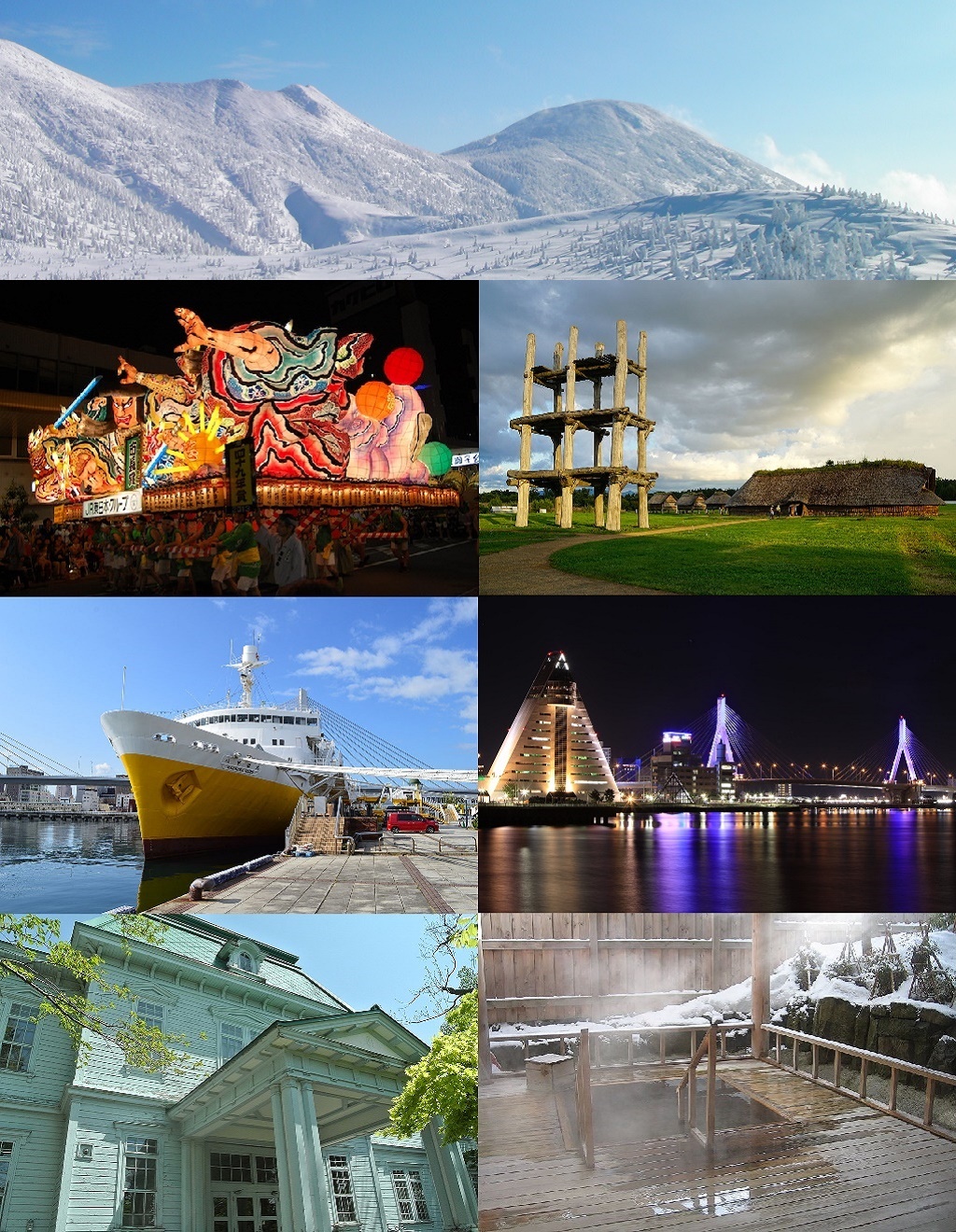
Capital of Aomori Prefecture, known for heavy snowfall and Jōmon sites.

水だらけのプール · CC BY-SA 4.0
Aomori (青森, Aomori), officially known as Aomori City, serves as the capital of Aomori Prefecture in Japan’s Tōhoku region. As of August 1, 2023, its estimated population was 264,945 across 136,781 households, with a density of 321 people per square kilometer over an area of 824.61 km². It is one of Japan’s 62 core cities and forms the heart of the Aomori metropolitan area.
The name “Aomori” combines *ao* (blue or green) and *mori* (forest), meaning “green forest.” It likely refers to a small, forested hill used by fishermen as a landmark. The Hirosaki Domain first established a port settlement under this name in 1624.
The area has been inhabited since prehistoric times, with major Jōmon period sites like Sannai-Maruyama (5500–4000 BC) and Komakino (around 4000 BC) near the city center. These large settlements reshaped scholarly understanding of Jōmon civilization. During the Heian period, the region belonged to the Northern Fujiwara clan but remained home to the Emishi people. After the Northern Fujiwara fell in the Kamakura period, the Nambu clan controlled the area, followed by the rival Tsugaru clan during the Sengoku period, whose main castle was in Namioka. In the Edo period, the core of modern Aomori was a small port village called Utō in the Hirosaki Domain. In 1626, daimyō Tsugaru Nobuhira ordered the town rebuilt and renamed it Aomori, though the name only became common after 1783. The link between Utō and Aomori is debated, as no contemporary written records confirm it; some evidence suggests both settlements coexisted. Only in 1909 did a local scholar assert that Utō became Aomori.
After the Meiji Restoration, feudal domains were replaced by prefectures, with six initially created in what is now Aomori Prefecture. These merged into Hirosaki Prefecture in July 1871, but due to longstanding tensions between the former Tsugaru and Nambu territories, the capital moved from Hirosaki to the more central Aomori immediately afterward, and the prefecture was renamed Aomori Prefecture on September 23, 1871. Aomori gained town status within Higashitsugaru District on April 1, 1889, under the modern municipality system, and became a city on April 1, 1898.
A ferry service to Hakodate in Hokkaido began in 1872. The Tōhoku Main Line connected Aomori to Tokyo by rail in September 1891, and the Ōu Main Line along the Sea of Japan coast opened in December 1894. Aomori’s growth stemmed from its role as prefectural capital and its importance as a rail and ferry terminus—the Seikan Ferry officially launched in 1908. The Imperial Japanese Army’s 8th Division was stationed here from 1896. In the winter of 1902, 199 of 210 soldiers died during a cold-weather exercise crossing the Hakkōda Mountains, an event known as the Hakkōda Mountains incident. A large fire destroyed much of the town on May 3, 1910. Port facilities expanded in 1924, bus services began in 1926, and scheduled air services started in 1937. During World War II, an American air raid on the night of July 28–29, 1945, killed 1,767 people and destroyed 88% of the city.
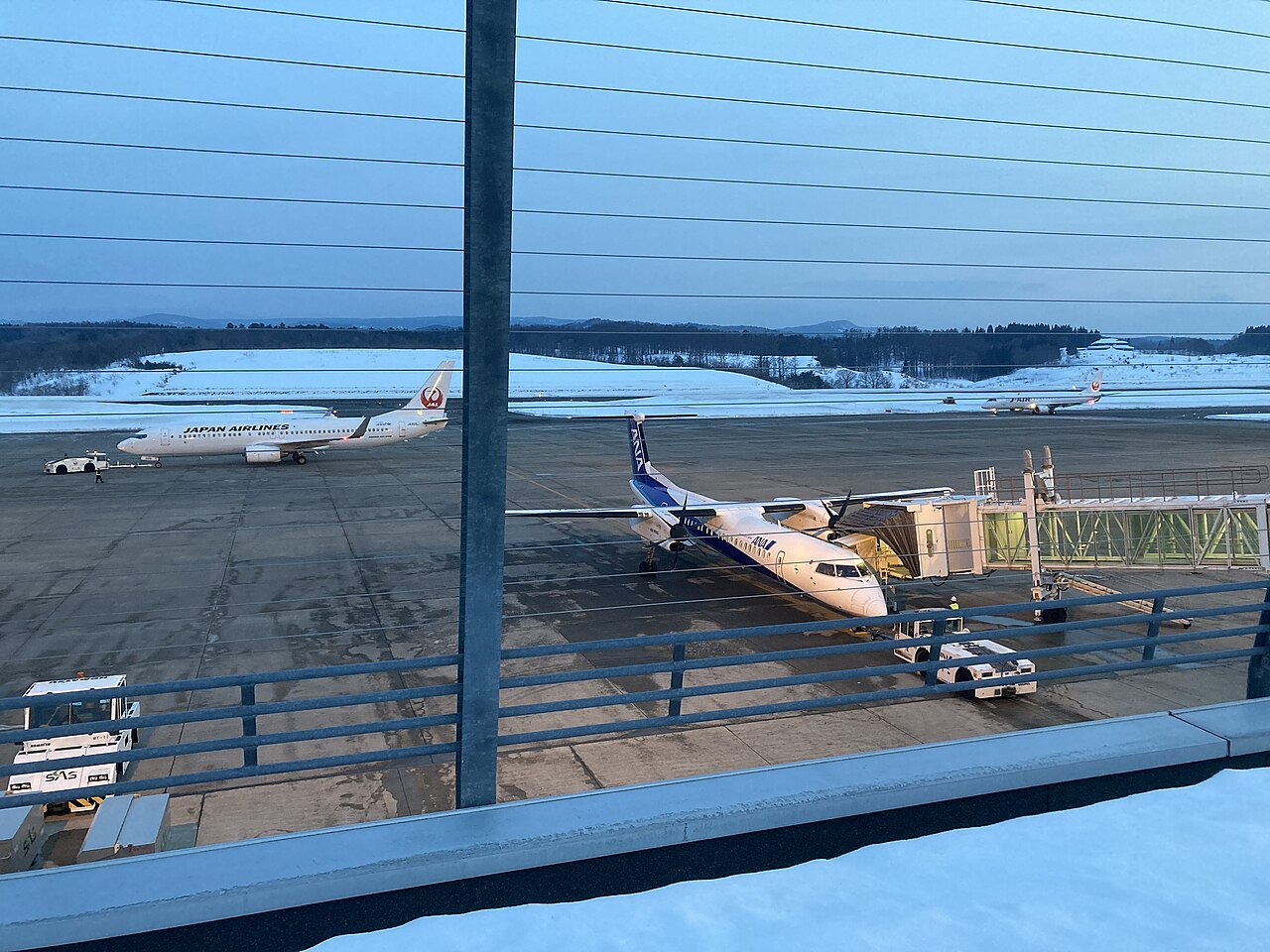
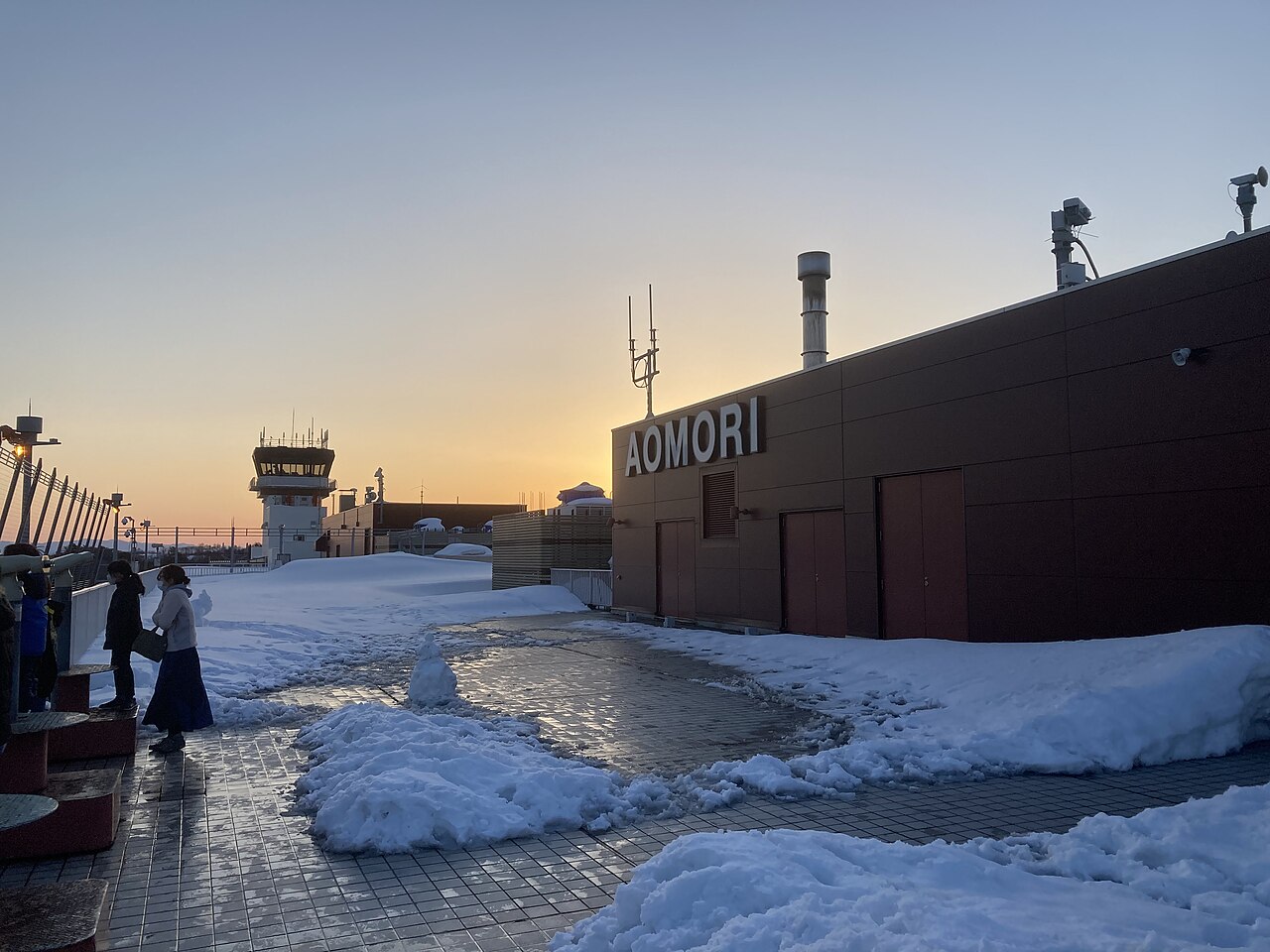
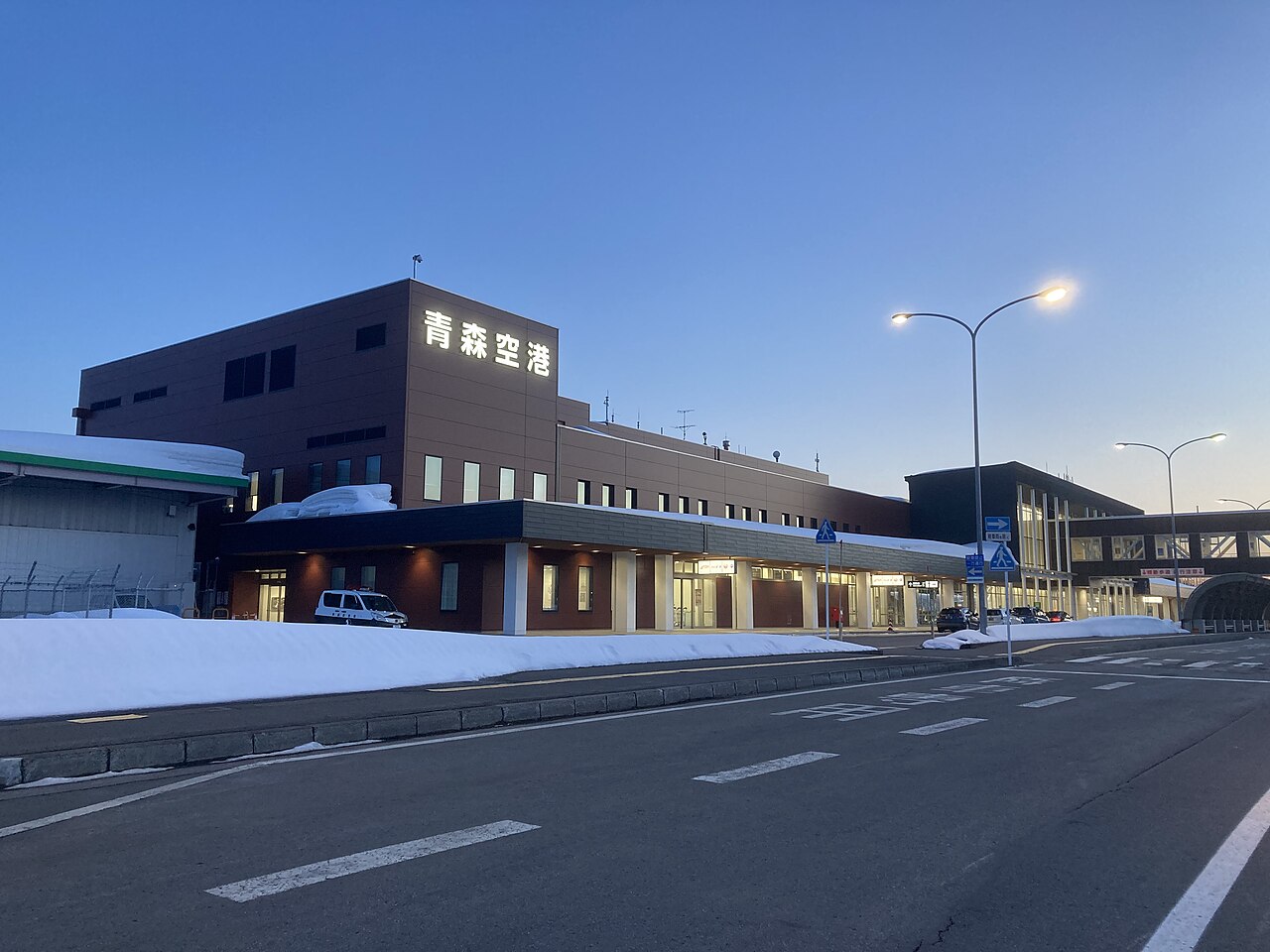
Post-war, Aomori rebuilt as a political and commercial hub. The Tsugaru Line railway opened between Aomori and Kanita Stations in 1951. Aomori Airport opened in nearby Namioka in 1964, and the Tōhoku Expressway linked the city to Tokyo in 1979. Construction on a new airport within city limits began in 1982; the landmark pyramidal Aomori Prefecture Tourist Center opened in 1986, and the new airport was completed on July 19, 1987. Aomori became a core city on October 1, 2002, gaining greater local autonomy. On April 1, 2005, it absorbed the town of Namioka, though a portion of Namioka was transferred to Fujisaki on September 1, 2007.
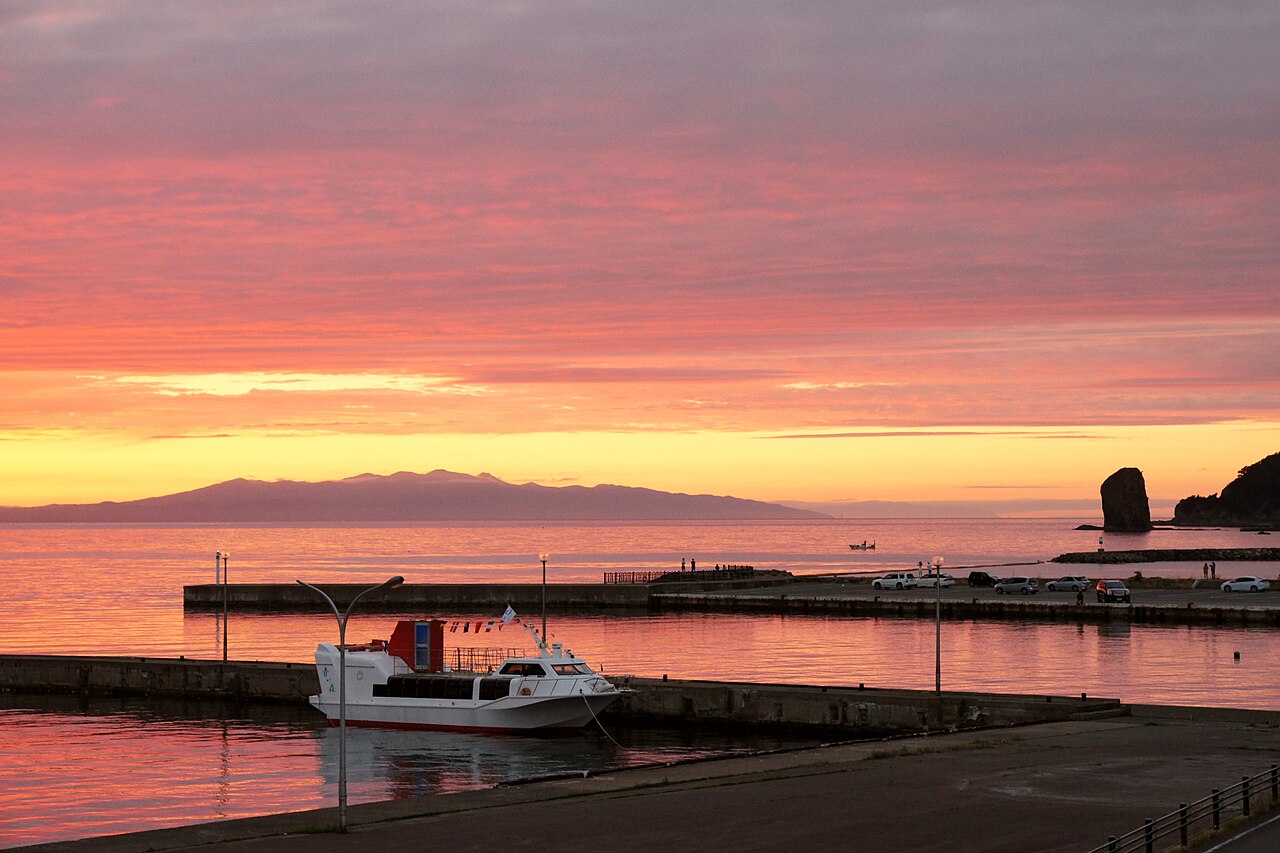
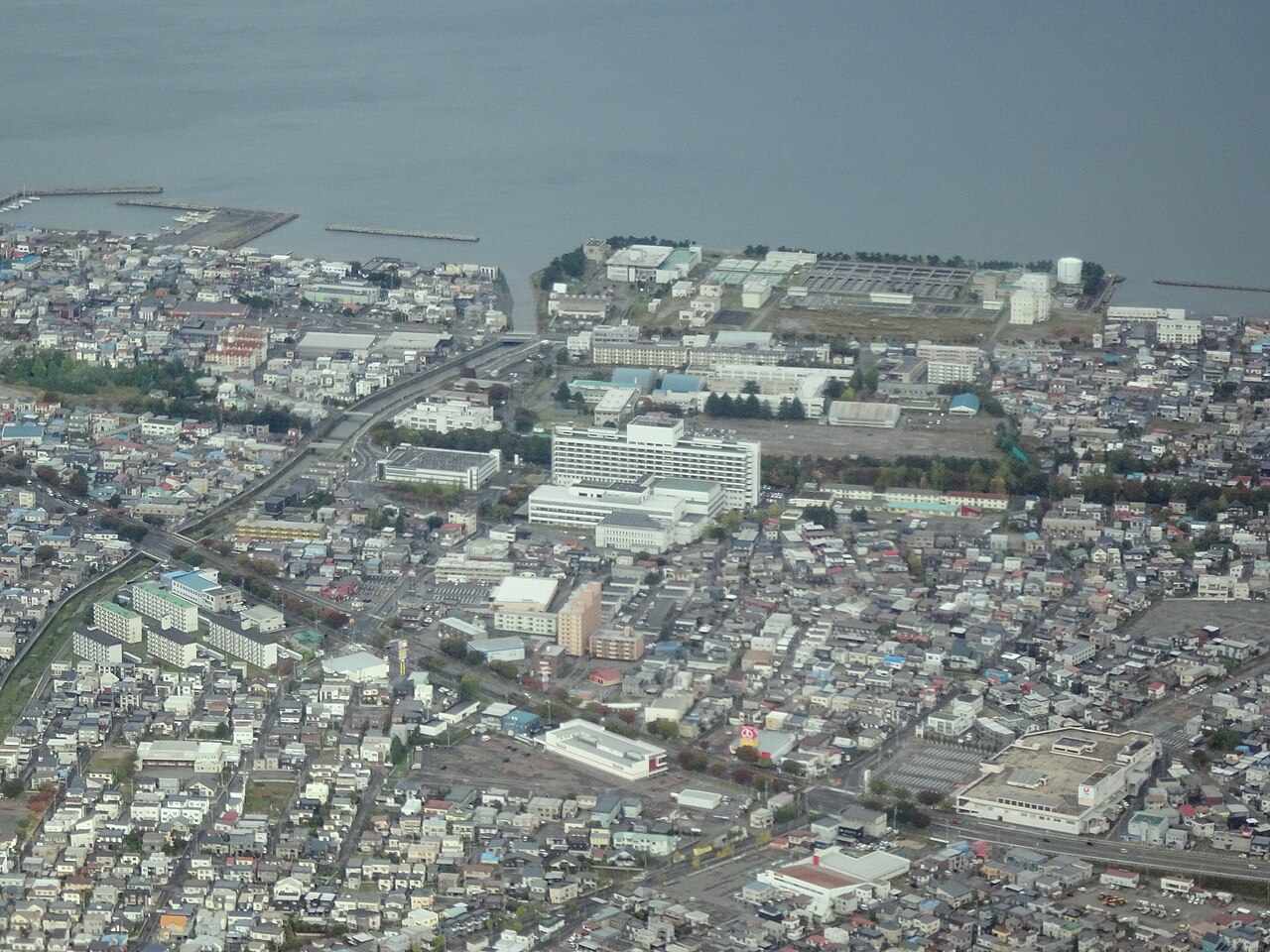
Geographically, Aomori lies in central Aomori Prefecture, the northernmost prefecture on Honshu, in the northeastern part of the Tsugaru region. It sits on the Aomori Plain, facing Aomori Bay (part of Mutsu Bay) to the north, with the Hakkōda and Higashidake Mountains (the northern end of the Ōu Mountains) to the south and east. Two large rivers, the Komagome and its tributary the Arakawa, flow through the city. Parts of the southeast are also within city limits.
- Prefecture
- Aomori Prefecture
- Region
- Tōhoku, Japan
Lore & Background
The large scale of these settlements revolutionized theories on Jōmon period civilization. During the Heian period, the area was part of the holdings of the Northern Fujiwara clan, but remained inhabited by the Emishi people well into the historic period. After the fall of the Northern Fujiwara in the Kamakura period, the territory was part of the domain assigned to the Nambu clan, and into the Sengoku period, it came under the control of the rival Tsugaru clan, whose main castle was located in Namioka. The Hirosaki Domain first established a port settlement originally called Utō. After the Meiji Restoration, the feudal domains were abolished and replaced with prefectures.
Reader's Guide
Aomori’s significance is rooted in its dual role as the capital of Aomori Prefecture and a critical transport nexus. Historically, the city developed from a minor port settlement established by the Hirosaki Domain, later rebuilt and renamed under the daimyō Tsugaru Nobuhira. Its modern growth was propelled by its designation as the prefectural capital after the Meiji Restoration, a move made to mediate historic rivalries between former Tsugaru and Nambu territories. The city’s importance as a transport hub was cemented by the opening of rail lines connecting it to Tokyo and the Sea of Japan coast, alongside the Seikan Ferry service to Hokkaido, which began in the late 19th and early 20th centuries. Ecologically, Aomori sits on the Aomori Plain facing Aomori Bay, with the Hakkōda Mountains to the south and east; parts of the city lie within Towada-Hachimantai National Park, making it a year-round tourist destination. The area has been settled since prehistoric times, with major Jōmon period sites like Sannai-Maruyama revolutionizing theories on that civilization. In the post-war period, after suffering devastating destruction in an air raid that claimed over 1,700 lives and destroyed most of the city, Aomori was rebuilt as the region’s political and commercial center. It gained core city status in the early 2000s, granting greater local autonomy, and later expanded by absorbing the neighboring town of Namioka.
Did You Know?
- The name Aomori is composed of ao (blue/green) and mori (forest), literally meaning 'green forest', likely originating from a small forest on a hill used by fishermen as a landmark.
Ancient Roots: The Jōmon Revolution
The land that now hosts Aomori City carries traces of human habitation stretching back thousands of years before any written record. Archaeologists have uncovered numerous Jōmon-period sites across the area, but two stand out for their extraordinary scale. What made these discoveries seismic was not merely their age but their size: the sheer scale of these prehistoric settlements forced scholars to rethink long-held assumptions about what Jōmon-era communities could achieve. Rather than small, scattered bands of hunter-gatherers, the evidence pointed toward organized, sizable settlements with complex social structures. For a city whose official founding is usually traced to the seventeenth century, this deep archaeological layer reminds residents and visitors alike that Aomori's story as a place of human gathering is far older than any daimyō's decree. The Jōmon sites remain a point of local pride and a reminder that the Aomori Plain has drawn people to its shores and forests for millennia.
From Fishermen's Landmark to Prefectural Seat
The name Aomori literally translates to "green forest," a compound of ao meaning blue or green and mori meaning forest or woods. The origin story is simple: a small patch of trees on a nearby hill served as a navigational landmark for local fishermen. The city's political significance leapt forward after the Meiji Restoration.
Tragedy and Rebuilding
Aomori's modern history is punctuated by repeated catastrophes that tested the city's capacity to recover. Yet Aomori rebuilt itself as the region's political and commercial hub.
A Landscape of Water, Mountain, and Steam
Aomori sits in the heart of the Tsugaru region, the western half of Japan's northernmost Honshu prefecture, and is centered on the broad Aomori Plain. To the north, the city opens onto Aomori Bay, a branch of the larger Mutsu Bay, while the Hakkōda and Higashidake Mountains—the northernmost reaches of the Ōu range—rise to the south and east. Two significant rivers, the Komagome and its tributary the Arakawa, thread through the urban area, shaping both the topography and the agricultural character of the plain. The city's natural diversity extends well beyond its core: in the southeast, portions of Aomori fall within Towada-Hachimantai National Park, a destination that draws visitors across all four seasons, while the northeast hosts the Asamushi-Natsudomari Prefectural Natural Park. Hot springs are a particular draw, with Sukayu Onsen nestled at the foot of Mount Hakkōda and the coastal Asamushi Onsen offering a different kind of thermal experience.
Gallery
Frequently Asked Questions
What is Aomori known for?
The city is recognized for its heavy winter snowfall and for being the site of significant Jōmon-period archaeological remains. It also functions as the central hub of the Aomori metropolitan area.
More in Asian Cities 1-24
Spotted an error? Know more?
This is a living reference — every entry is fact-audited, and reader corrections feed straight into our audit queue. Suggest an edit · See this site's audit record