
Kawanabe Kyōsai
Japanese painter and caricaturist, first political caricaturist of Japan.

via Wikipedia: Yōkai · see source
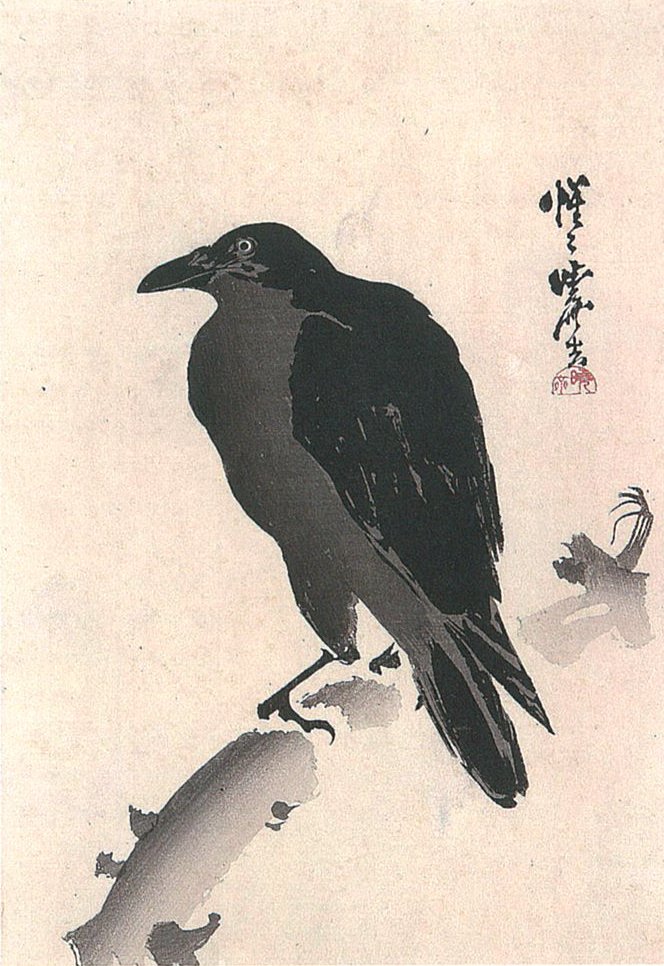
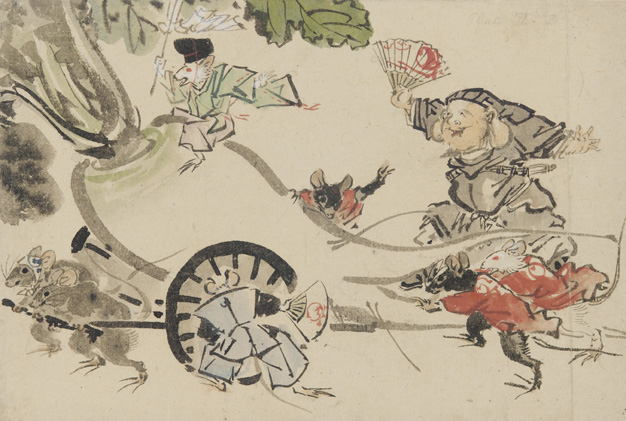
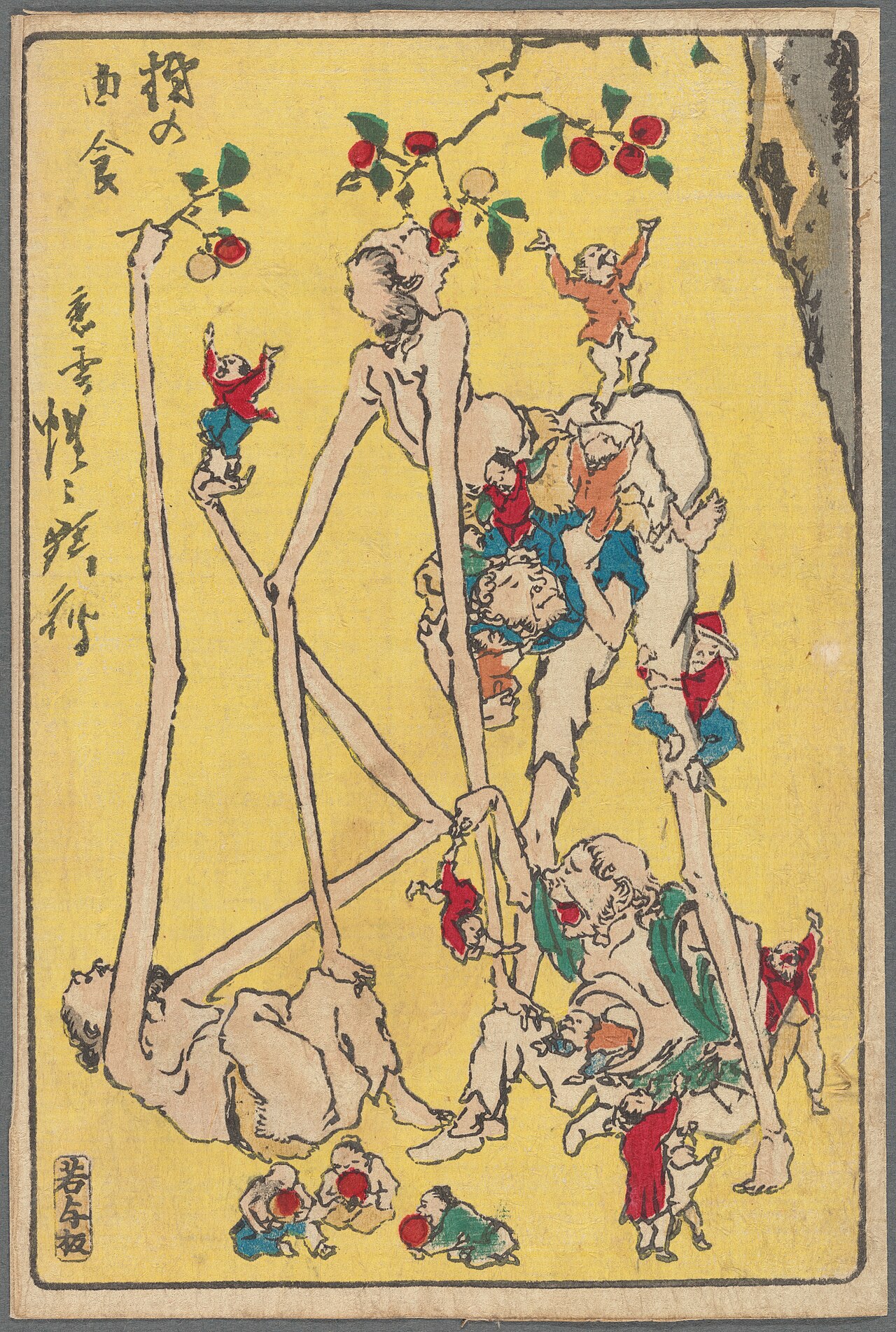
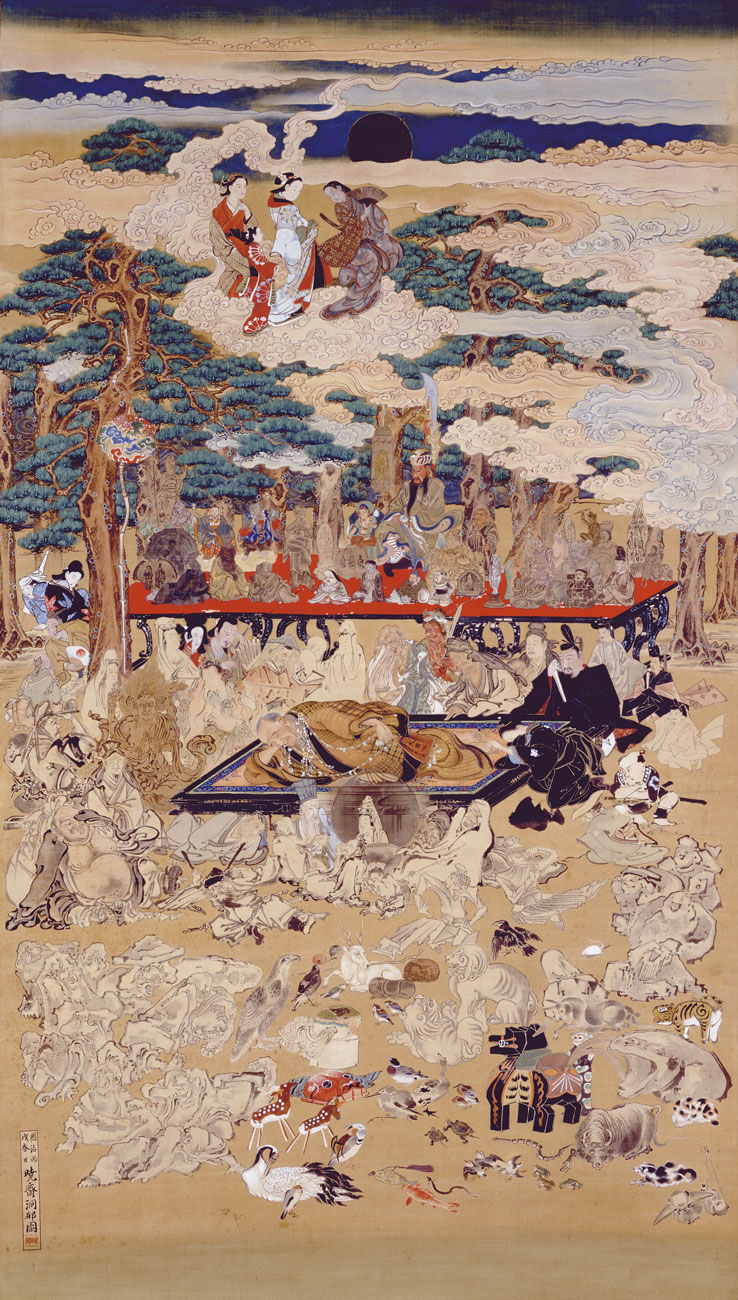
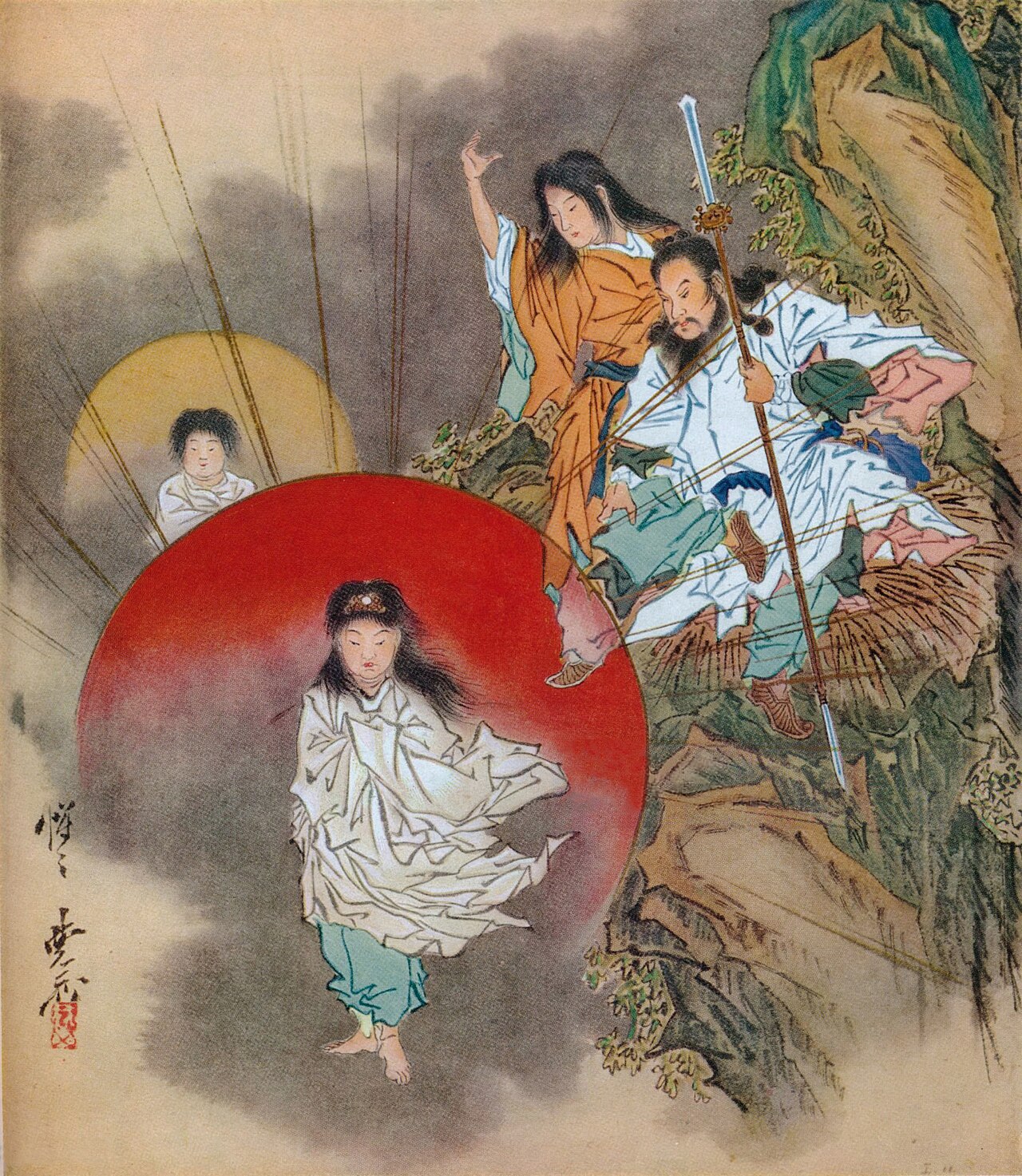
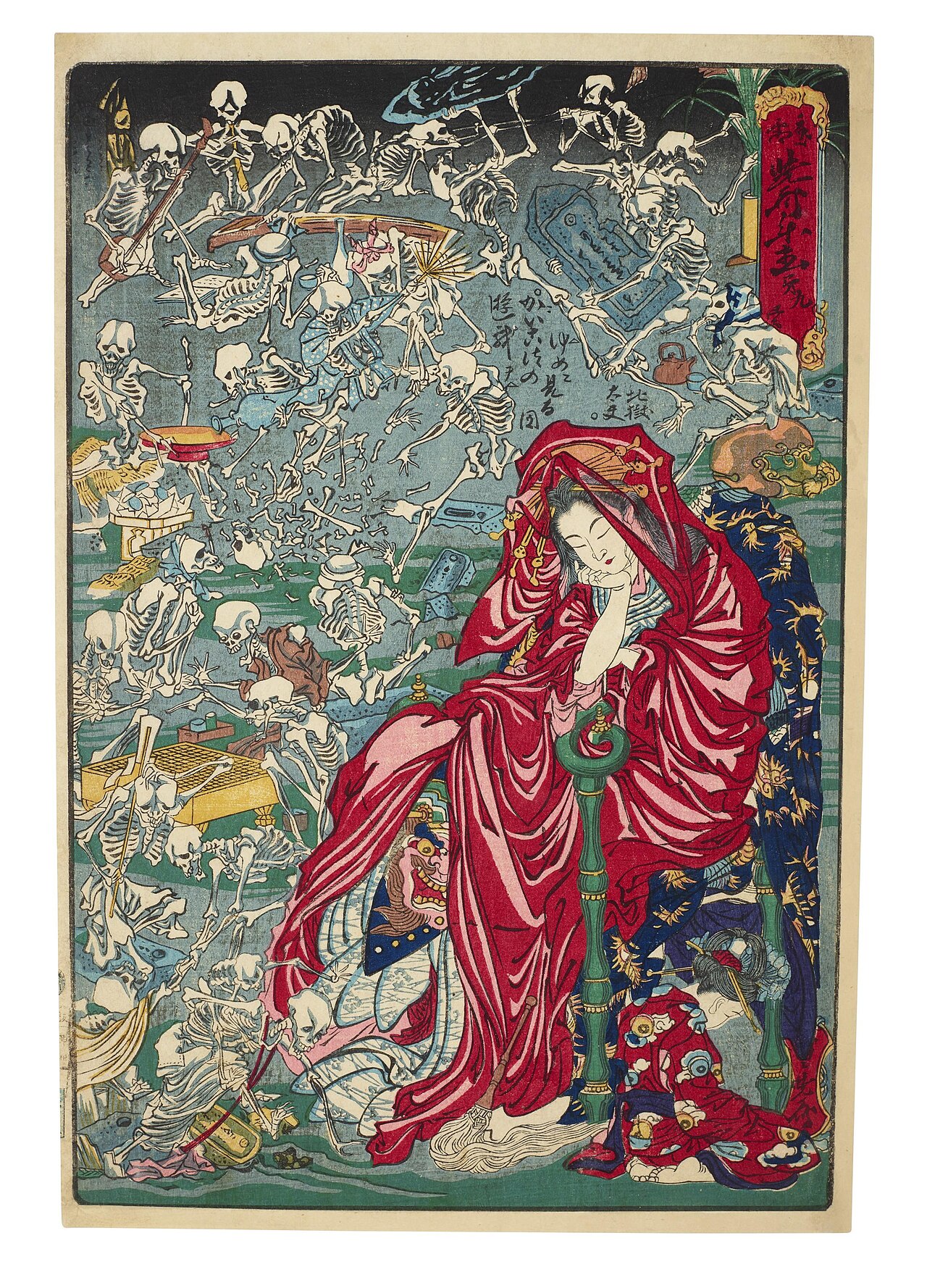
Kawanabe Kyōsai was a Japanese painter and caricaturist active during the late Edo period and the Meiji period, witnessing Japan’s transformation from a feudal society into a modern state. Born in Koga as the son of a samurai, he experienced a formative shock at age nine when he discovered a severed human head in the Kanda River. He briefly worked under the ukiyo-e artist Utagawa Kuniyoshi before receiving formal training in the Kanō school under Maemura Tōwa, who nicknamed him “The Painting Demon.” Kyōsai soon abandoned the formal Kanō traditions for the greater freedom of the popular school. During the political upheavals surrounding the 1867 revolution, he gained renown as a caricaturist. His extremely long handscroll titled “The Battle of the Farts” is considered a caricature of this turbulent period. He was arrested three times and imprisoned by shogunate authorities, and later, after the Meiji Emperor assumed power, another caricature critical of the new movement led to his arrest by the opposing party. Kyōsai’s collaboration with writer Kanagaki Robun began after the 1855 Edo earthquake; a catfish sketch by Kyōsai accompanying Robun’s account became his first single-sheet ukiyo-e woodblock print, leading to a series of similar namazu-e. In 1874, they created what is considered the first manga magazine, *Eshinbun Nipponchi*, which was heavily influenced by Charles Wirgman’s *Japan Punch* but lasted only three issues. Kyōsai is regarded as the greatest successor of Hokusai, though not his pupil, and as Japan’s first political caricaturist. His work, noted for its fantastic exuberance and excellent draughtsmanship, often drew on Japanese folklore, Noh plays, nature, and religion. His daughter, Kawanabe Gyōsui, became a significant eccentric artist, teaching nihonga and producing prints and bird-and-flower paintings. A collection of his works is held by the British Museum, and the Kawanabe Kyōsai Memorial Museum was established in Warabi, Saitama. He died of gastric cancer, according to physician Erwin Bälz. A crater on Mercury is named in his honor.
- field
- Painting, caricature
- nationality
- Japanese
Quick Facts
- Birth Name
- Shūzaburō
- Birth Date
- 18 May 1831
- Birth Place
- Koga Ishimachi, Shimousa Province, (currently Koga City, Ibaraki Prefecture), Japan
- Death Date
- df=yes · 1889 · 4 · 26 · 1831 · 5 · 18
- Death Place
- Zuirinji Temple, Tokyo, Japan
- Resting Place
- Taitō Ward, Tokyo
- Education
- Utagawa Kuniyoshi, Kanō Eitoku
- Movement
- Ukiyo-e, Japanese Zen, Nihonga
- Field
- Painting, drawing, portraits
- Family
- Kawanabe Kyōsui (daughter)
Facts from the source article.
Lore & Background
Kawanabe Kyōsai was a Japanese painter and caricaturist active from the Edo period into the Meiji era, witnessing Japan’s transformation from a feudal state to a modern nation. Born in Koga, the son of a samurai, he experienced a formative shock at age nine when he retrieved a severed human head from the Kanda river. He briefly worked with ukiyo-e artist Utagawa Kuniyoshi before receiving formal training in the Kanō school under Maemura Tōwa, who gave him the nickname “The Painting Demon.” Kyōsai soon left these formal traditions for the greater freedom of the popular school. During the political upheavals surrounding the 1867 revolution, he gained renown as a caricaturist, producing a very long handscroll titled “The battle of the farts” that satirized the turmoil. He was arrested three times by shogunate authorities, and after the Meiji emperor assumed power, another caricature criticizing the new government led to his arrest by the opposing party. His collaboration with writer Kanagaki Robun began after the 1855 Edo earthquake, when a sketch of a catfish by Kyōsai accompanied Robun’s account and became his first single-sheet ukiyo-e woodblock print; its success led to a series of similar catfish images known as namazu-e. Kyōsai is considered the greatest successor of Hokusai (though not his pupil) and Japan’s first political caricaturist. His work mirrored his life in its wild, undisciplined nature, occasionally reflecting his love of drink, and compensated for any lack of dignity or power with fantastic exuberance and technically excellent draughtsmanship. In 1874, he created what is considered the first manga magazine, *Eshinbun Nipponchi*, with Kanagaki Robun, though it lasted only three issues. Beyond caricatures, he painted many pictures and sketches drawing on Japanese folklore, Noh plays, nature, and religion, such as “The Temptation of Shaka Niorai” and “The Goddess Kwannon on a dragon.” A fine collection of his works is held in the British Museum, with examples also at the National Art Library in South Kensington and the Guimet Museum in Paris. The Kawanabe Kyōsai Memorial Museum was established in 1977 in Warabi, Saitama Prefecture. His daughter, Kawanabe Gyōsui, became a significant eccentric artist in the late 19th century, teaching nihonga at Joshibi University and producing prints and kachō-ga. Kyōsai died of gastric cancer, and a crater on
Reader's Guide
Kawanabe Kyōsai’s significance rests on his dual role as a virtuoso of traditional Japanese painting and as Japan’s first political caricaturist. Living through the transition from the Edo period to the Meiji period, he witnessed Japan’s shift from a feudal society to a modern state and used his art to comment on the resulting upheaval. His caricatures, such as a very long handscroll titled “The battle of the farts,” are seen as satirical responses to the political foment surrounding the revolution of 1867. This willingness to critique authority led to his arrest three times by shogunate officials, and later, after the Emperor Meiji assumed power, another caricature brought him before the police of the new regime. His collaboration with writer Kanagaki Robun began after the 1855 Edo earthquake, when a sketch of a catfish he made for Robun’s account became his first single-sheet ukiyo-e woodblock print; its success led to a series of similar catfish images. Together, they created what is considered the first manga magazine in 1874, *Eshinbun Nipponchi*, which was heavily influenced by the British cartoonist Charles Wirgman’s *Japan Punch* but lasted only three issues. Beyond satire, Kyōsai painted extensively from Japanese folklore, Noh plays, nature, and religion, producing works such as *The Temptation of Shaka Niorai* and *The Goddess Kwannon on a dragon*. Art historian Timothy Clark described him as an individualist and independent, perhaps the last virtuoso in traditional Japanese painting. His technical draughtsmanship was excellent, and his work, though lacking Hokusai’s dignity, compensated with fantastic exuberance. A crater on Mercury has been named in his honor.
Did You Know?
- At age nine, Kyōsai picked up a human head separated from a corpse in the Kanda river.
- His Kanō school teacher Maemura Tōwa gave him the nickname 'The Painting Demon.'
- A crater on Mercury has been named in his honor.
Gallery
Frequently Asked Questions
Who is Kawanabe Kyōsai?
Kawanabe Kyōsai (1831–1889) was a Japanese painter and caricaturist who worked across the late Edo and early Meiji periods. He is widely credited as Japan's first political cartoonist and is often called the last great virtuoso of traditional Japanese painting.
Was Kawanabe Kyōsai a student of Hokusai?
No, despite being frequently labeled Hokusai's greatest successor, Kyōsai was never actually his pupil. He forged his own independent style and is remembered as a true individualist in the history of Japanese art.
What is Eshinbun Nipponchi?
Eshinbun Nipponchi, launched in 1874, is recognized as Japan's first manga magazine and was produced by Kyōsai. It paired illustrated political satire with written commentary, effectively creating a new genre of visual journalism.
Why is Kawanabe Kyōsai considered important in Japanese art history?
He bridged traditional ukiyo-e painting and modern satirical illustration during a period of sweeping national change. His work helped establish political cartooning as a legitimate art form and influenced the trajectory of Japanese visual culture into the modern era.
What kind of political caricatures did Kawanabe Kyōsai produce?
Kyōsai drew sharp satirical portraits of government officials and social conventions during the Edo-to-Meiji transition. His cartoons gave a visual voice to public frustration and are credited with pioneering the political cartoon in Japan.
More in Asian And Middle Eastern Artists 1-24
Spotted an error? Know more?
This is a living reference — every entry is fact-audited, and reader corrections feed straight into our audit queue. Suggest an edit · See this site's audit record