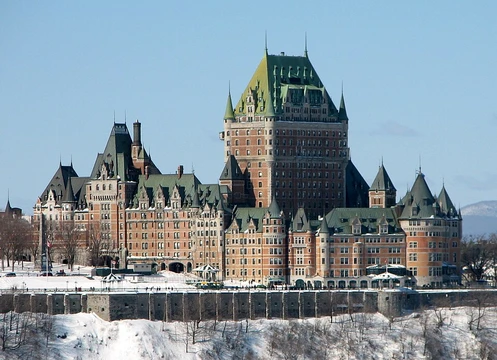
Gothic Revival architecture
A movement reviving medieval Gothic architecture in the 19th century.

Gothic Revival, also called Victorian Gothic or Neo-Gothic, is an architectural style that slowly gathered momentum from the late 1600s before exploding into popularity during the early 1800s, especially in England. Its serious, scholarly fans aimed to bring back the look of medieval Gothic buildings, hoping to rival or even replace the neoclassical styles that were then dominant. The style borrowed medieval details like decorative patterns, finials, pointed lancet windows, and hood moulds. By the mid-1800s, it had become the leading architectural style across the Western world, but it started to fade from fashion in the 1880s and early 1890s.
In England, the movement’s roots were partly tied to philosophical shifts linked to Catholicism and a revival of high church, or Anglo-Catholic, beliefs—a reaction against the growth of religious nonconformism. This Anglo-Catholic tradition of faith and style gained a strong following in the third quarter of the 1800s. Gothic Revival buildings varied widely in how closely they stuck to medieval ornament and construction methods. Some used little more than pointed window frames and a few neo-Gothic touches on otherwise fully 19th-century structures, built with modern materials and techniques. A key example was the use of iron, and after the 1880s, steel—materials never found in genuine medieval buildings.
As the style rose in England, interest spread across Europe, Australia, Asia, and the Americas. The 1800s and early 1900s saw huge numbers of Gothic Revival structures built worldwide. But its influence had peaked by the 1870s. New movements—some related, like the Arts and Crafts movement, and some directly opposed, like Modernism—gained ground. By the 1930s, Victorian-era architecture was mostly condemned or ignored. A later revival of interest came in the late 1900s, marked in the United Kingdom by the founding of the Victorian Society in 1958.
**Roots**
The rise of evangelicalism in the 1700s and early 1800s sparked a reaction in England’s high church movement, which stressed the continuity between the established church and the pre-Reformation Catholic church. Architecture, through the Gothic Revival, became a key tool for this high church cause. The movement was also supported by “medievalism,” which grew out of antiquarian interest in old survivals and curiosities. As industrialisation advanced, a backlash against machine production and factory appearance emerged. Figures like Thomas Carlyle and Augustus Pugin, who championed the picturesque, criticised industrial society and portrayed pre-industrial medieval times as a golden age. For Pugin, Gothic architecture embodied Christian values that classicism had displaced and industrialisation was destroying.
Gothic Revival also carried political weight. The “rational” and “radical” Neoclassical style was linked to republicanism and liberalism (seen in its use in the United States and, to a lesser extent, in Republican France). In contrast, the more spiritual, traditional Gothic Revival became tied to monarchism and conservatism. This was reflected in the style chosen for rebuilt government centres: the British Parliament’s Palace of Westminster in London, the Canadian Parliament Buildings in Ottawa, and the Hungarian Parliament Building in Budapest.
In English literature, the architectural Gothic Revival and classical Romanticism gave rise to the Gothic novel genre, starting with Horace Walpole’s *The Castle of Otranto* (1764). It also inspired a 19th-century genre of medieval poetry rooted in the pseudo-bardic poems of “Ossian.” Works like Alfred, Lord Tennyson’s “Idylls of the King” recast modern themes in medieval settings of Arthurian romance. In German literature, the Gothic Revival also had literary foundations.
**Survival and Revival**
Gothic architecture began at the Basilica of Saint Denis near Paris and the Cathedral of Sens in 1140, ending with a final flourish in the early 1500s in buildings like Henry VII’s Chapel at Westminster. Yet Gothic did not die out completely in the 1500s. It lingered in ongoing cathedral-building projects, at Oxford and Cambridge Universities, and in church construction in increasingly isolated rural areas of England, France, Germany, the Polish–Lithuanian Commonwealth, and Spain.
**Britain and Ireland**
St Columb’s Cathedral in Derry, completed in 1633 in a Perpendicular Gothic style, can be considered an example of “Gothic Survival.” Similarly, Gothic survived in some urban settings in the later 1600s, as seen at Oxford and Cambridge, where additions and repairs to Gothic buildings were thought more fitting to the original style than contemporary Baroque.
In contrast, Dromore Cathedral, built in 1660–1661 right after the Protectorate ended, revived Early English forms. This choice demonstrated the restitution of the monarchy and claimed Ireland for the English crown. Around the same time, the Great Hall of Lambeth Palace—despoiled by the Puritans—was rebuilt in a mix of Baroque and older Gothic forms, signalling the restitution of the Anglican Church. These two buildings can be seen as heralding the onset of Gothic Revival architecture, decades before it became mainstream.
- field
- Architecture
- nationality
- Primarily English, with international spread
- known_for
- Revival of medieval Gothic architectural forms
- peak_period
- First half of the 19th century to 1870s
- decline_began
- 1880s and early 1890s
Lore & Background
Gothic Revival architecture, also known as Victorian Gothic or Neo-Gothic, is an architectural movement that emerged as a widespread force in the first half of the 19th century, primarily in England, after a gradual development beginning in the late 17th century. Its proponents sought to revive medieval Gothic architecture, intending to complement or replace the prevailing neoclassical styles. The style draws upon medieval features such as decorative patterns, finials, lancet windows, and hood moulds. By the mid-19th century, it had become the dominant architectural style in the Western world, though its popularity began to wane in the 1880s and early 1890s. The movement’s roots in England were intertwined with philosophical and religious movements, particularly a re-awakening of high church or Anglo-Catholic belief reacting against the growth of religious nonconformism. Gothic Revival architecture varied greatly in its faithfulness to medieval ornamental styles and construction principles; some buildings used little more than pointed window frames and neo-Gothic decoration on otherwise 19th-century plans, employing contemporary materials like iron and, after the 1880s, steel. The style spread from England to the rest of Europe, Australia, Asia, and the Americas, resulting in a vast number of structures worldwide. The influence of the revival peaked by the 1870s, with new movements like the Arts and Crafts movement and Modernism gaining ground, leading to widespread condemnation of Victorian architecture by the 1930s. A later revival of interest occurred in the late 20th century, exemplified in the United Kingdom by the founding of the Victorian Society in 1958. Politically, the Gothic Revival became associated with monarchism and conservatism, in contrast to the neoclassical style’s links to republicanism and liberalism, a distinction reflected in the choice of Gothic for rebuilt government centers such as the British Parliament’s Palace of Westminster, the Canadian Parliament Buildings, and the Hungarian Parliament Building.
Reader's Guide
By the middle of the 19th century, Gothic Revival had become the pre-eminent architectural style in the Western world, only to begin falling out of fashion in the 1880s and early 1890s. Its influence peaked by the 1870s, after which new movements like the Arts and Crafts movement and Modernism gained ground. By the 1930s, Victorian-era architecture was generally condemned or ignored. Gothic Revival architecture varied considerably in faithfulness to medieval ornamental styles and construction principles, sometimes using contemporary materials like iron and steel in ways never seen in medieval exemplars. The movement spread from England to Europe, Australia, Asia, and the Americas, leading to the construction of very large numbers of Gothic Revival structures worldwide.
Did You Know?
- Gothic Revival is also referred to as Victorian Gothic or Neo-Gothic.
- The movement became widespread in the first half of the 19th century, mostly in England.
- Gothic Revival architecture sometimes used iron and, after the 1880s, steel in ways never seen in medieval exemplars.
More in Architectural Styles And Landmarks 1-24
Spotted an error? Know more?
This is a living reference — every entry is fact-audited, and reader corrections feed straight into our audit queue. Suggest an edit · See this site's audit record