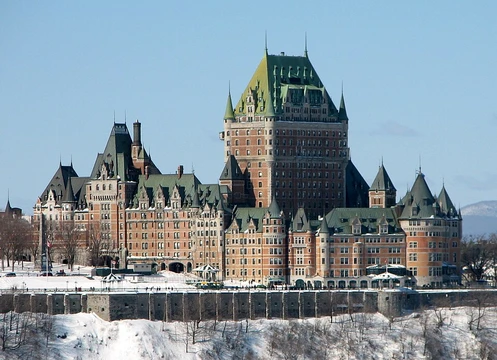
Renaissance architecture
European architecture reviving classical Greek and Roman principles.

Renaissance architecture refers to the building style that emerged across Europe from the early 1400s into the early 1500s, marked by a deliberate revival of ancient Greek and Roman ideas and physical forms. It came after Gothic architecture and later gave way to Baroque and neoclassical styles. The movement began in Florence, where Filippo Brunelleschi helped pioneer the approach, and it soon spread to other Italian cities. From there, it reached different parts of Europe at various times and with uneven influence.
The style emphasized symmetry, proportion, geometry, and the orderly arrangement of parts—principles drawn from classical antiquity, especially surviving Roman structures. Features like columns, pilasters, lintels, semicircular arches, hemispherical domes, niches, and aediculae replaced the irregular shapes and complex proportions of medieval buildings. Wealthy patrons, such as the Medici family and the Catholic Church, funded projects that showcased both religious devotion and political authority. Architects like Brunelleschi, Leon Battista Alberti, and later Andrea Palladio transformed cityscapes with domes, columns, and balanced facades. Although Renaissance architecture thrived most in Italy, its influence spread to France, Spain, and the Low Countries, where it adapted to local customs. Public buildings, churches, and palaces became symbols of civic pride and imperial strength, linking humanist ideals with the ambitions of empire.
The term "Renaissance" comes from the Italian word *rinascita*, meaning rebirth, first used in Giorgio Vasari’s 1550 book *Lives of the Most Excellent Painters, Sculptors, and Architects*. The French historian Jules Michelet was the first to use the term "Renaissance," but the Swiss historian Jacob Burckhardt gave it a lasting definition in his 1860 work *The Civilization of the Renaissance in Italy*, which shaped modern understanding of the period. Paul Letarouilly’s 1840 folio of measured drawings, *Édifices de Rome moderne*, also helped revive interest in the era. Erwin Panofsky’s 1960 book *Renaissance and Renascences in Western Art* further explored the subject. Contemporaries recognized the style as *all’antica*, meaning "in the ancient manner" of the Romans.
Historians typically divide the Italian Renaissance into three phases. The word "Renaissance" in architectural history usually refers to the period from 1400 to about 1525, or later outside Italy, since the late 1300s produced few buildings considered part of the movement. The first phase, the Quattrocento (roughly 1400–1500), or Early Renaissance, saw architects explore classical order and formulate rules. They adopted classical details and ornamentation, and organized space through proportional logic and geometry rather than medieval intuition. A key example is Brunelleschi’s Basilica of San Lorenzo in Florence. The High Renaissance (around 1500–1525) involved more confident use of classical ideas. Donato Bramante, the most representative architect of this phase, applied classical forms to contemporary buildings, as in his Tempietto di San Pietro in Montorio (1503), inspired by circular Roman temples, though he was not rigidly bound to ancient models. His style dominated 16th-century Italian architecture. The Mannerist period (about 1520–1600) saw architects experiment with solid and spatial relationships, moving away from Renaissance harmony toward freer, more imaginative rhythms. Michelangelo, the best-known Mannerist architect, often used the giant order—a large pilaster stretching from the base to the top of a facade—as in his design for the Piazza del Campidoglio in Rome. Before the 20th century, "Mannerism" had negative connotations, but it is now used neutrally to describe this historical phase.
As the Renaissance style spread from Italy, most other European countries developed a Proto-Renaissance style before constructing fully realized Renaissance buildings. Each region then blended its own architectural traditions with the new style, creating diverse Renaissance buildings across Europe. Within Italy, the evolution into Mannerism—through the divergent work of Michelangelo, Giulio Romano, and Andrea Palladio—led to the Baroque style.
- field
- Architecture
- period
- Early 15th to early 16th centuries
- origin
- Florence, Italy
- key_innovators
- Filippo Brunelleschi, Leon Battista Alberti, Andrea Palladio
- key_patrons
- Medici family, Catholic Church
- preceded_by
- Gothic architecture
- succeeded_by
- Baroque architecture, neoclassical architecture
Lore & Background
Renaissance architecture is the European building style that emerged between the early 15th and early 16th centuries, consciously reviving elements of ancient Greek and Roman thought and material culture. It followed Gothic architecture and preceded Baroque and neoclassical styles. Developed first in Florence, with Filippo Brunelleschi as a key innovator, the style quickly spread to other Italian cities and later to France, Spain, and the Low Countries, where it adapted to local traditions. The movement was supported by wealthy patrons such as the Medici family and the Catholic Church, who commissioned buildings to display both religious devotion and political power. The style emphasizes symmetry, proportion, geometry, and the regularity of parts, drawing from classical antiquity, particularly ancient Roman architecture. Orderly arrangements of columns, pilasters, and lintels, along with semicircular arches, hemispherical domes, niches, and aediculae, replaced the complex proportional systems and irregular profiles of medieval buildings. Architects like Brunelleschi, Leon Battista Alberti, and later Andrea Palladio revolutionized urban landscapes with domes, columns, and harmonious facades. Public buildings, churches, and palaces became symbols of civic pride and imperial strength, linking humanism with empire-building. The term "Renaissance" derives from the Italian *rinascita*, meaning rebirth, first used by Giorgio Vasari in 1550.
Reader's Guide
Renaissance architecture emphasizes symmetry, proportion, geometry, and the regularity of parts, as demonstrated in classical antiquity and particularly ancient Roman architecture. Orderly arrangements of columns, pilasters, and lintels, as well as semicircular arches, hemispherical domes, niches, and aediculae, replaced the more complex proportional systems and irregular profiles of medieval buildings. While it flourished most in Italy, its influence spread across Europe, reaching France, Spain, and the Low Countries, adapting to local traditions. Public buildings, churches, and palaces became symbols of civic pride and imperial strength, linking humanism with empire-building. The style was recognized by contemporaries in the term 'all'antica', or 'in the ancient manner' (of the Romans).
Did You Know?
- The prime example of Quattrocento architecture is the Basilica of San Lorenzo, Florence, by Filippo Brunelleschi.
Frequently Asked Questions
Who is Renaissance architecture?
Renaissance architecture is the European building style that flourished from the early 15th through the early 16th centuries, consciously reviving classical Greek and Roman design principles after the Gothic era. It originated in Florence, Italy, and then spread across the continent over the following decades.
What are Renaissance architecture's powers/role?
Its defining traits include symmetry, proportion, and the deliberate use of columns, arches, and domes drawn from ancient Roman and Greek vocabulary. Key innovators such as Filippo Brunelleschi, Leon Battista Alberti, and Andrea Palladio pushed the style forward with bold structural solutions and theoretical writings on proportion.
How does Renaissance architecture's story end?
The style gradually gave way to the more theatrical Baroque architecture in the late 16th and early 17th centuries, though its classical vocabulary continued to inspire later movements like neoclassicism. In most regions the transition was a slow stylistic drift rather than a single dramatic break.
Why is Renaissance architecture important?
It marked the first time in European building history that architects treated design as a rational, mathematical discipline rooted in antiquity rather than a purely decorative craft. Patrons like the Medici family and the Catholic Church funded landmark cathedrals, palaces, and villas whose templates are still studied in architecture schools today.
Who are Renaissance architecture's key allies?
The Medici banking family in Florence and the Catholic Church served as its most powerful patrons, commissioning the projects that defined the style. Without their financial backing, innovators like Brunelleschi and Palladio would not have had the large-scale commissions needed to test and refine their ideas.
More in Architectural Styles And Landmarks 1-24
Spotted an error? Know more?
This is a living reference — every entry is fact-audited, and reader corrections feed straight into our audit queue. Suggest an edit · See this site's audit record