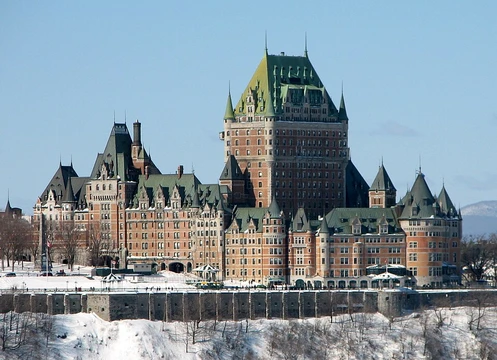
French architecture
French architecture spans styles from Gallo-Roman to Gothic.

French architecture covers the building styles that began in France or were adapted and refined within its borders. The story starts with the Gallo-Roman period. Roman builders initially copied Greek designs, but later developed their own distinctive approach by using arches, vaults, and domes—elements rarely seen before. This shift, sometimes called the Roman Architectural Revolution, was made possible by the invention of concrete. Dense urban populations and wealth pushed Romans to find new building solutions. Their skill with vaults, arches, and materials allowed them to create massive public structures. In France, notable examples include the Alyscamps in Arles, a large Roman cemetery just outside the old town. Its name comes from the Latin *Elisii Campi* (Elysian Fields). It was one of the ancient world’s most famous burial grounds, remained in use through the Middle Ages, and is mentioned by Ariosto in *Orlando Furioso* and by Dante in the *Inferno*. Its prestige declined after Saint Trophimus’ relics were moved to the cathedral in 1152. Another example is the Maison Carrée in Nîmes.
During the Pre-Romanesque period, the unification of the Frankish kingdom under Clovis I and his successors created a need for churches, especially monasteries, which became centers of Merovingian power. Church plans often followed the Roman basilica layout but also borrowed from as far away as Syria and Armenia. In the east, most buildings were timber; in the west and south, stone was more common for important structures. Most major churches were later rebuilt, but many Merovingian plans have been reconstructed through archaeology. Bishop Gregory of Tours described the basilica of Saint-Martin in Tours, built by Saint Perpetuus around 460–490. He called it one of the most beautiful Merovingian churches, with 120 marble columns, towers at the east end, and mosaics. It featured vertical emphasis and a combination of block-units that created a complex interior and a rich exterior silhouette—hallmarks of later Romanesque style. A key Frankish innovation was placing the saint’s sarcophagus or reliquary behind the altar, raised and visible, sometimes in the apse—something with no Roman precedent. Other lost buildings, such as the Merovingian foundations of Saint-Denis, St. Gereon in Cologne, and the Abbey of Saint-Germain-des-Prés in Paris, were similarly ornate.
Romanesque architecture emerged in parts of France during the 10th century, before the Abbey of Cluny’s later influence. This early style, sometimes called “First Romanesque” or “Lombard Romanesque,” is marked by thick walls, little sculpture, and rhythmic ornamental arches known as Lombard bands. Angoulême Cathedral shows Byzantine influence from Constantinople, with domes roofing the main spaces, requiring very thick walls and massive piers. Its radiating chapels around the apse are a typical French feature that evolved into the chevette. Notre-Dame in Domfront, Normandy, is a cruciform church with a short apsidal east end; its nave has lost its aisle, and the crossing tower rises in two stages topped by a pyramidical spire common in France, Germany, and Norman England. The Abbey of Fongombault reflects Cluniac influence, with a clear cruciform plan, a chevette of chapels, a crossing tower, and transepts ending in gables. Saint-Étienne in Caen has one of northern France’s best-known Romanesque facades: three portals, simple windows between buttresses on tall towers. Begun in the 1060s, it was a prototype for Gothic facades; its spires and pinnacles date from the early 13th century. The Trinité Church in Caen emphasizes its central portal and upper windows, with tower decoration starting lower than at Saint-Étienne, giving them weight. Its upper balustrades are later Classical additions. The facade of Le Puy-en-Velay in Haute-Loire features complex openings and blind arcades that became typical of French Gothic facades, enriched by polychrome brick patterns, including checkerboard, also seen in Spanish churches. Open arches screen the aisle profiles, possibly for bells. Angoulême Cathedral’s facade is richly decorated with dressed stone and sculpture, its arches arranged in a distinctive manner.
- field
- Architecture
- nationality
- French
- known_for
- Development of Gothic architecture, Romanesque styles, and Gallo-Roman structures
Lore & Background
French architecture encompasses styles that originated in France or were developed within its territories. During the Gallo-Roman period, Roman architecture initially adopted Greek forms but later evolved a distinctive style through the widespread use of arches, vaults, and domes, made possible by the invention of concrete. Notable surviving examples in France include the Alyscamps, a large Roman necropolis outside Arles, and the Maison Carrée in Nîmes. The Pre-Romanesque period, under the Merovingian dynasty, saw the construction of churches and monasteries that often continued Roman basilica plans while also incorporating influences from as far as Syria and Armenia. A key Frankish innovation was the placement of a saint’s sarcophagus or reliquary raised and axially behind the altar, a feature with no Roman precedent. The basilica of Saint-Martin in Tours, described by Bishop Gregory of Tours, was a richly adorned structure with marble columns, towers at the east end, and mosaics, exemplifying the vertical emphasis and complex internal space that would later define Romanesque architecture. The Romanesque style in France, sometimes called “First Romanesque,” is characterized by thick walls, a lack of sculpture, and rhythmic ornamental arches known as Lombard bands. Angoulême Cathedral shows Byzantine influence with its domed spaces, while the Abbey of Fongombault displays the Cluniac influence with a cruciform plan, a chevette of chapels, and a crossing tower. The facade of Saint-Étienne in Caen, begun in the 1060s, became a prototype for Gothic facades with its three portals and simple window arrangement between buttresses.
Reader's Guide
French architecture's significance lies in its evolution from Roman foundations to distinctive medieval styles. The Romanesque style, developing in the 10th century, featured thick walls, Lombard bands, and domed spaces, as seen in Angoulême Cathedral and the Abbey of Fongombault. Notable Gothic structures include the Abbey Church of St Denis, Chartres Cathedral, and Notre-Dame de Paris. The Southern Gothic style, characterized by a large nave and no transept, is exemplified by Notre-Dame-de-Lamouguier in Narbonne. French architecture's legacy includes its influence on ecclesiastical and civic building design across Europe.
Did You Know?
- The Alyscamps in Arles is a large Roman necropolis, one of the most famous in the ancient world, and is mentioned by Dante in the Inferno.
- The Romanesque style in France sometimes called 'First Romanesque' or 'Lombard Romanesque', is characterized by thick walls and rhythmic ornamental arches known as Lombard bands.
- French Gothic architecture is divided into four styles: Early Gothic, High Gothic, Rayonnant, and Late Gothic or Flamboyant style.
More in Architectural Styles And Landmarks 1-24
Spotted an error? Know more?
This is a living reference — every entry is fact-audited, and reader corrections feed straight into our audit queue. Suggest an edit · See this site's audit record