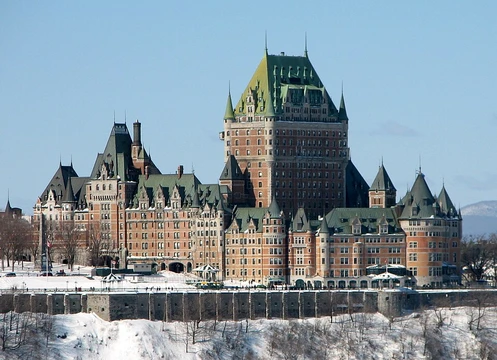
Façade
The front part or exterior of a building.

A façade is the front or outer face of a building. The word comes from French, where *façade* means "frontage" or "face." In architecture, the façade is often the most important design element, because it establishes the building's overall character. From an engineering standpoint, it also matters greatly for energy efficiency. Historic façades are frequently protected by local zoning laws or other regulations that heavily restrict—or completely ban—any changes to them. Outside of architecture, "façade" refers to a deceptive or misleading outward appearance.
The term entered English as a loanword from French, which itself derived from Italian *facciata*, ultimately from the post-classical Latin word for "face." The earliest recorded use in English dates to the mid-seventeenth century. In architectural history, it was common during the Georgian period to give existing houses in English towns a fashionable new frontage. For instance, a building in Bath that appears Georgian may only have a thin outer layer from that era, while interior rooms retain older Jacobean plasterwork. Similar practices occurred elsewhere: in Santiago de Compostela, a shallow building was constructed to match the square’s architectural order, and the cathedral’s main ornate façade conceals an older, earlier portal behind it.
In modern high-rise construction, exterior walls are often suspended from concrete floor slabs, as seen in curtain walls and precast concrete systems. These façades are typically made of aluminum or stainless steel, though more expensive materials like titanium have been used occasionally. Fire protection is a critical design concern, as aluminum can melt within minutes of a fire’s start. Fire stops for building joints and sprinkler systems on each floor improve safety. The use of flammable polymers in newer materials has increased the risk of façade fires. Building codes may also limit the percentage of window area in exterior walls. On film sets and in theme parks, many buildings are only façades—cheaper, non-structural fronts held up by supports, often not subject to building codes.
- field
- Architecture
- known_for
- Front part or exterior of a building; sets design tone; impacts energy efficiency; often regulated for historical preservation
- etymology
- Loanword from French façade, from Italian facciata, from faccia meaning 'face', ultimately from post-classical Latin facia
Lore & Background
It was quite common in the Georgian period for existing houses in English towns to be given a fashionable new façade. For example, in the city of Bath, The Bunch of Grapes in Westgate Street appears to be a Georgian building, but the appearance is only skin deep and some of the interior rooms still have Jacobean plasterwork ceilings. This new construction has happened also in other places: in Santiago de Compostela the three-metre-deep Casa do Cabido was built to match the architectural order of the square, and the main Churrigueresque façade of the Santiago de Compostela Cathedral, facing the Plaza del Obradoiro, is actually encasing and concealing the older Portico of Glory. In modern high-rise buildings, the exterior walls are often suspended from the concrete floor slabs. Examples include curtain walls and precast concrete walls. The façade can at times be required to have a fire-resistance rating, for instance, if two buildings are very close together, to lower the likelihood of fire spreading from one building to another. In general, the façade systems that are suspended or attached to the precast concrete slabs will be made from aluminum (powder coated or anodized) or stainless steel. In recent years more lavish materials such as titanium have sometimes been used, but due to their cost and susceptibility to panel edge staining these have not been popular. On a film set and within most themed attractions, many of the buildings are only façade, which are far cheaper than actual buildings, and not subject to building codes (within film sets). In film sets, they are simply held up with supports from behind, and sometimes have boxes for actors to step in and out of from the front if necessary for a scene. Within theme parks, they are usually decoration for the interior ride or attraction, which is based on a simple building design.
Reader's Guide
The façade is a fundamental architectural element, serving both aesthetic and functional roles. From a design standpoint, it sets the tone for the entire building, making it a primary focus for architects. Engineering considerations are equally critical, as the façade significantly impacts a building's energy efficiency. Historical façades are often protected by local zoning regulations or laws that restrict or forbid alteration, preserving architectural heritage. The concept extends beyond architecture: 'façade' is also used to describe a deceptive outward appearance. The practice of adding a new façade to an older building was common in the Georgian period, as seen in Bath, and in Santiago de Compostela, where a Churrigueresque façade conceals the older Portico of Glory. In modern high-rise construction, façades are often suspended from concrete slabs, using materials like aluminum or stainless steel, with fire safety a key design consideration. The use of flammable new materials like polymers has increased façade fire risks. Film sets and theme parks frequently use façades as cost-effective, non-code-compliant structures for visual effect. Overall, the façade is a versatile and historically significant component of building design.
Did You Know?
- The word 'façade' is a loanword from French, ultimately from post-classical Latin facia, meaning 'face'.
- In the Georgian period, existing houses in English towns were often given a fashionable new façade; for example, The Bunch of Grapes in Bath appears Georgian but has Jacobean plasterwork ceilings inside.
More in Architectural Styles And Landmarks 1-24
Spotted an error? Know more?
This is a living reference — every entry is fact-audited, and reader corrections feed straight into our audit queue. Suggest an edit · See this site's audit record