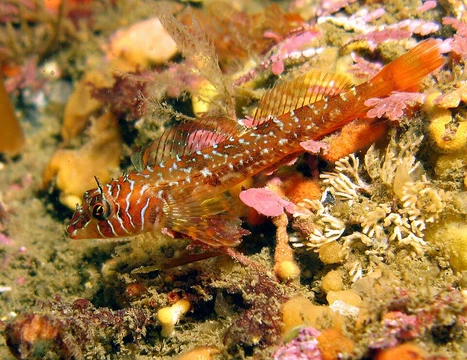
Sea slug
Shell-less marine gastropods with vivid colors and diverse defenses.

Sea slug is a common name for a variety of marine invertebrates that resemble terrestrial slugs to varying degrees. The vast majority of creatures called sea slugs are gastropods—marine snails that, through evolutionary processes, have either completely lost their shells or possess a shell that is significantly reduced, internal, or too small to retract into. This shell loss has occurred independently many times within the class Gastropoda, both in the sea and on land. The name is most frequently applied to nudibranchs, a large group of shell-less gastropods known for their brilliant and often eye-catching coloration, but it also encompasses several other groups. These include the sacoglossans, or sap-sucking slugs, which are often green and can perform kleptoplasty—absorbing chloroplasts from eaten algae to photosynthesize sugars. Headshield slugs and bubble snails, grouped in the clade Cephalaspidea, are also called sea slugs, as are the sea hares (clade Aplysiomorpha), which possess a small, flat, internal proteinaceous shell. Even the pelagic sea butterflies and sea angels (pteropods) are sometimes referred to as sea slugs, especially the shell-less Gymnosomata. Additionally, one unusual group of air-breathing, shell-less marine pulmonates in the family Onchidiidae falls under this common name.
Sea slugs display enormous variation in body shape, color, and size. Most are partially translucent, and reef-dwelling species often exhibit bright colors that serve as warnings to predators, advertising toxic stinging cells (nematocysts) or an offensive taste. Like all gastropods, they possess a radula, a structure of small, razor-sharp teeth. Most have a pair of sensory tentacles called rhinophores on the head, used primarily for smell, with a small eye at the base of each. Many species also have feathery structures called cerata on their backs, which function as gills. Every genuine sea slug species depends on a specific prey animal, such as jellyfish, bryozoans, sea anemones, plankton, or other sea slugs. Some, like species in the genus *Glaucus*, store and use stinging cells from their prey in their cerata. Others, like the Pyjama slug, use striking colors to advertise a foul chemical taste. The lettuce sea slug (*Elysia crispata*) has lettuce-like ruffles that increase surface area for photosynthesis. Headshield slugs use their shovel-shaped heads to burrow
- common_name
- Sea slug
- taxonomic_groups
- Nudibranchia, Sacoglossa, Cephalaspidea, Aplysiomorpha, Thecosomata, Gymnosomata, Onchidiidae
- habitat
- Marine (some freshwater and one land transition)
- key_features
- Often shell-less, bright colors, rhinophores, cerata, radula
- known_for
- Warning coloration, nematocyst storage, kleptoplasty, chemical defenses
Lore & Background
Sea slugs encompass many evolutionary lineages of marine gastropods that have independently lost or reduced their shells. The most familiar are nudibranchs, which have no shell at all and often display brilliant colors. Other groups include sacoglossans (sap-sucking slugs), headshield slugs, sea hares (with a small internal shell), and pelagic pteropods like sea butterflies and sea angels. One unusual group, the pulmonate Onchidiidae, are air-breathing sea slugs. Many sea slugs have specialized defenses. Reef-dwelling species often have bright colors that warn predators of toxic stinging cells (nematocysts) or foul taste. Some, like Glaucus atlanticus, store nematocysts from their prey. The lettuce sea slug (Elysia crispata) uses kleptoplasty, absorbing chloroplasts from algae to photosynthesize. Sea hares can eject ink or secrete slime. Most sea slugs have rhinophores for smell and cerata that function as gills. They are generally specialized predators, each species depending on a specific prey such as jellyfish, bryozoans, sea anemones, or other sea slugs. Some species have transitioned to freshwater or land.
Reader's Guide
Sea slugs are significant as a striking example of convergent evolution, where shell loss has occurred many times independently within Gastropoda. Their vivid coloration and chemical defenses have made them model organisms for studying predator-prey interactions and aposematism. The use of kleptoplasty by sacoglossans represents a unique form of photosynthesis in animals. The large nerve cells of Aplysia californica have been instrumental in neurobiology research, contributing to understanding learning and memory. Their ecological roles as specialized predators and prey link them to diverse marine food webs. The term 'sea slug' remains a common name applied to multiple, often unrelated groups, reflecting both popular familiarity and taxonomic complexity. Their presence in reef, pelagic, and even freshwater and terrestrial habitats underscores their adaptive versatility.
Did You Know?
- Most sea slugs are gastropods that have lost or reduced their shells over evolutionary time.
- Some sea slugs, like Glaucus atlanticus, store stinging cells from their prey in their cerata.
- The lettuce sea slug (Elysia crispata) uses kleptoplasty to photosynthesize using chloroplasts from algae.
- The California black sea hare (Aplysia vaccaria) can reach 75 cm in length and weigh 14 kg.
Frequently Asked Questions
What is a Sea slug?
A Sea slug is a common name for shell-less or reduced-shell marine gastropods that look a lot like their land-dwelling slug relatives. They span several taxonomic groups, including nudibranchs, sacoglossans, sea hares, and headshield slugs, and they inhabit oceans around the world.
Why are Sea slugs so brightly colored?
Their vivid coloration often serves as a warning signal to predators that the animal is toxic or unpalatable. This aposematic display lets them advertise their chemical defenses rather than relying on camouflage.
How do Sea slugs defend themselves?
Many species store stinging nematocysts stolen from jellyfish or other cnidarian prey and deploy them against their own attackers. Others produce noxious chemicals from specialized glands, and some use kleptoplasty—borrowing stolen chloroplasts—to photosynthesize and sustain themselves.
What is kleptoplasty and which Sea slugs use it?
Kleptoplasty is the process of incorporating functional chloroplasts from ingested algae into the slug's own tissues to carry out photosynthesis. It is most well documented in sacoglossan Sea slugs, which can remain nourished by the stolen organelles for weeks or even months.
Are all Sea slugs the same type of animal?
No—'Sea slug' is an umbrella common name covering several distinct gastropod lineages, including Nudibranchia, Sacoglossa, Cephalaspidea, Aplysiomorpha, Thecosomata, Gymnosomata, and Onchidiidae. They share a general soft, often shell-less body plan with rhinophores, but their evolutionary origins and specializations differ widely.
More in Aquatic Invertebrates 1-24
Spotted an error? Know more?
This is a living reference — every entry is fact-audited, and reader corrections feed straight into our audit queue. Suggest an edit · See this site's audit record