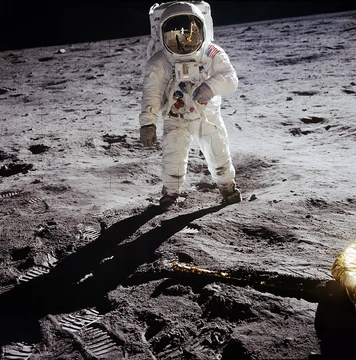
Colombia lunar sample displays
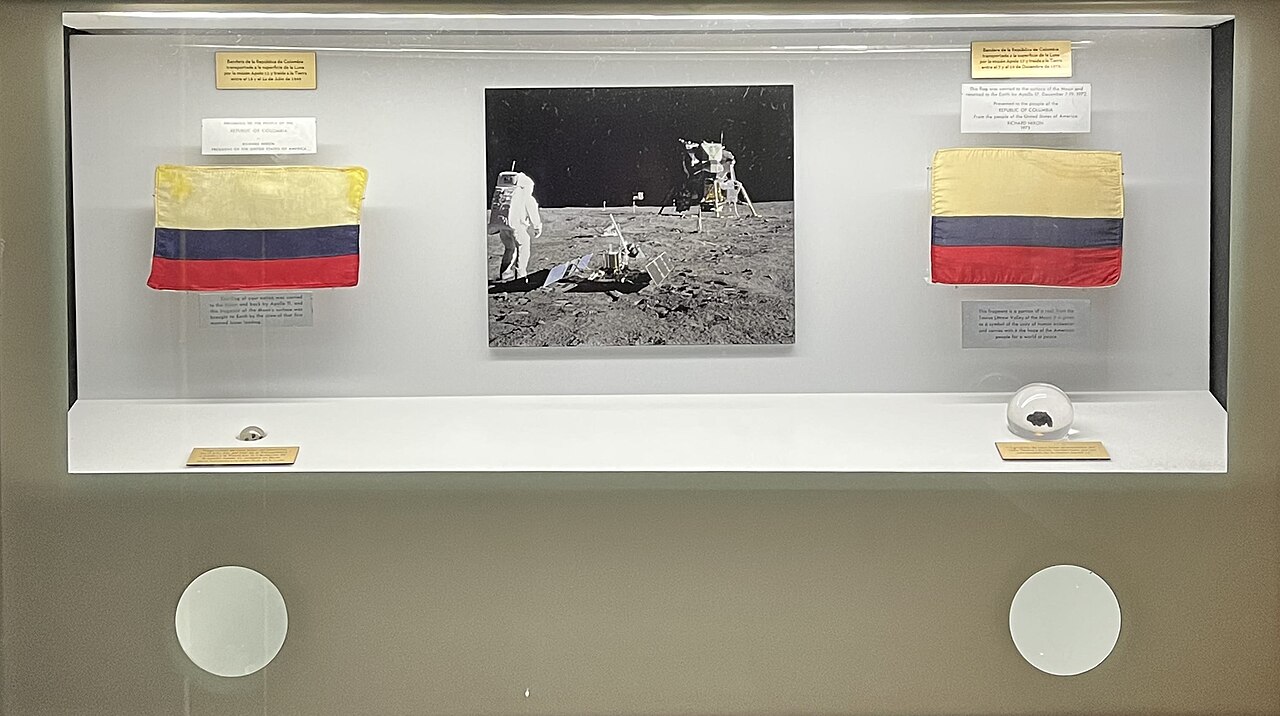
Moon rock plaques gifted to Colombia, later returned to public display.
Last updated

Anfecaro · CC0
President Misael Pastrana Borrero held onto the displays for years, mistakenly thinking they were a personal gift to him rather than to the people of the nation.[1][2]
Quick Facts
- Type
- Lunar sample displays
- Missions
- Apollo 11 and Apollo 17
- Recipient
- Colombia
- Presented by
- President Richard Nixon (Apollo 11 and Apollo 17)
- Current location
- Bogotá Planetarium
- Material
- Moon dust (Apollo 11, ~50 mg); lunar basalt 70017 (Apollo 17, ~1.14 g)
Facts from the source article.
What the cited sources add
The same source states that once gifted, the displays became the property of the recipient entity and were no longer tracked by NASA.[3] The El País article reports that Armstrong's third visit to Colombia included a parade and the presentation of the lunar rocks.[4] El Espectador recounts that Samper's 1985 article prompted the return of the stone, which was not at the Planetario Distrital at that time.[5] Blu Radio reports that the U.S. Embassy sent Samper a written confirmation that the gifts were a donation to the people of the nation.[2]
Key facts and facts and history
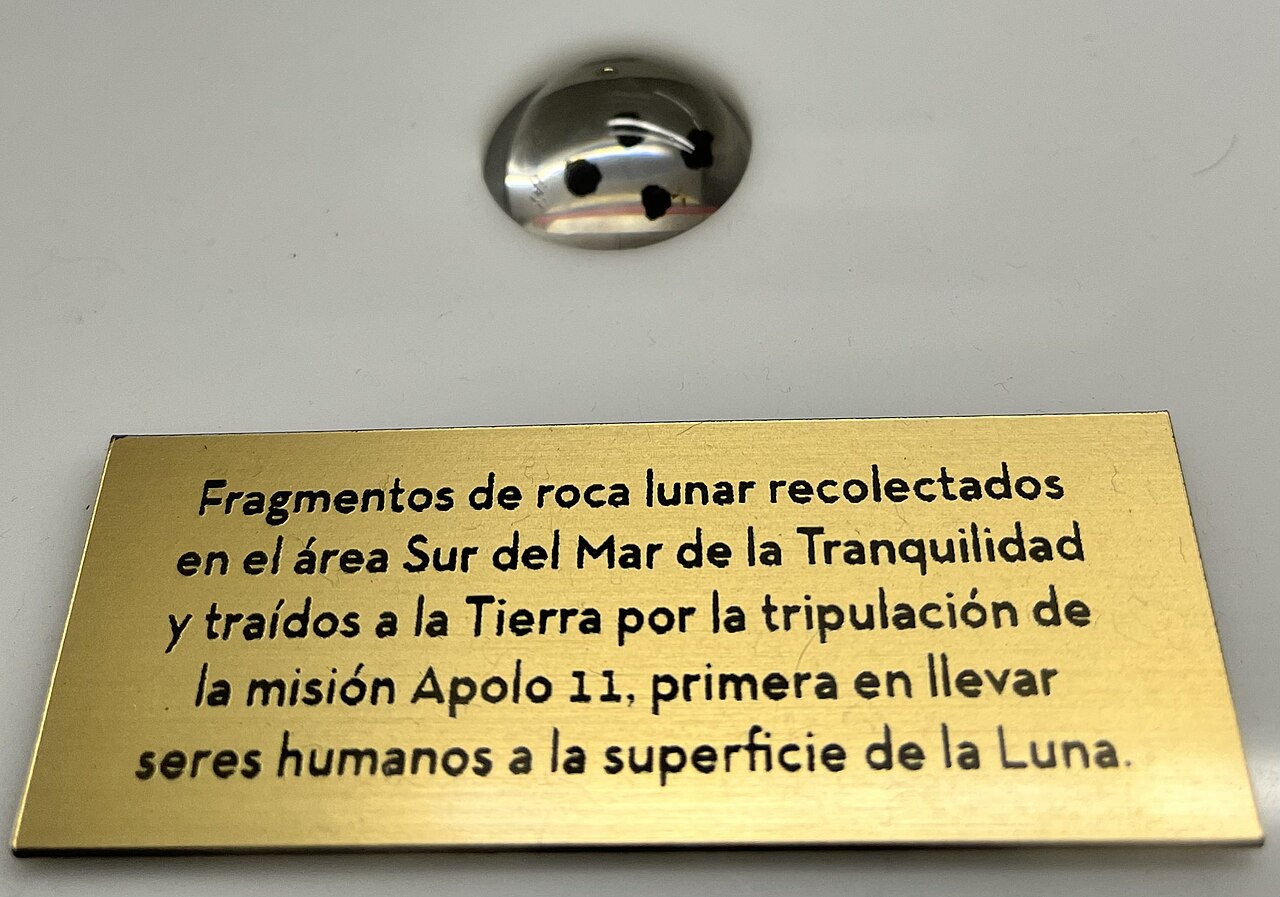
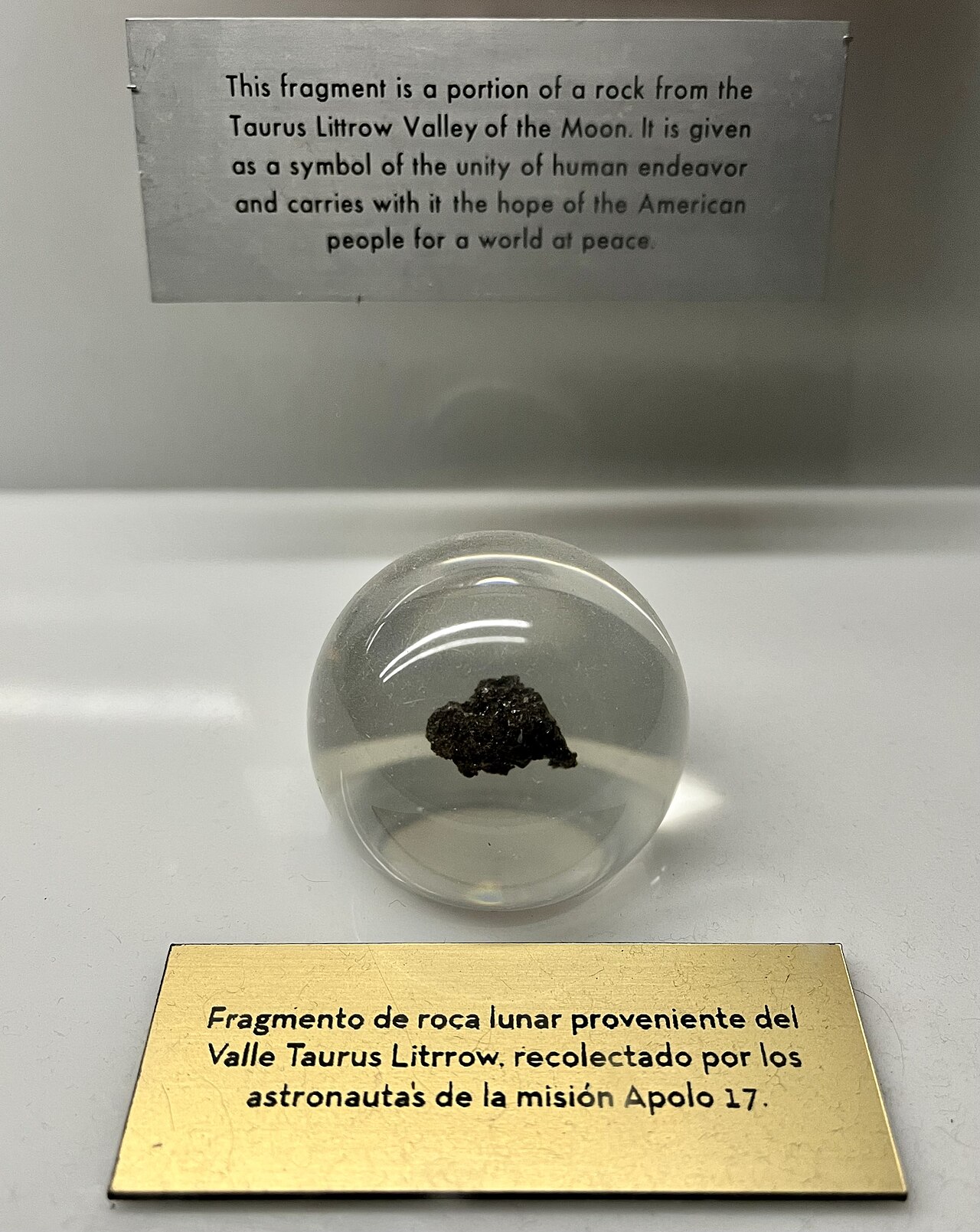
President Richard Nixon ordered about 250 Apollo 11 plaques in 1969, each containing about 50 mg of moon dust in an acrylic button with a recipient flag.[6][3] All 135 countries and the 50 U.S. states received an Apollo 11 display.[7] The Apollo 17 display contained a piece of lunar basalt 70017 weighing about 1.14 grams, mounted with a flag that flew on Apollo 17.[8] In 1973, Nixon sent Apollo 17 plaques to 135 countries, including Colombia.[9]
President Misael Pastrana Borrero kept the displays on his desk at the Casa de Nariño and later used them as decoration in his private home.[1][2] After Samper published an article alleging theft, Pastrana's son returned the displays to the Bogotá Planetarium.[10][5] In 1980, journalist Daniel Samper Pizano discovered through a written notification from the U.S. Embassy that the displays were a donation intended for the people of the country, not for Pastrana.[10][2] The displays were kept in secure storage at the Bogotá Planetarium until 2003, when they went on public view for the first time as part of that institution's permanent exhibition.[11][12]
References
- Wikipedia, "Colombia lunar sample displays" (CC BY-SA 4.0), which cites: "Las pisadas de Neil Armstrong por Colombia, anécdotas del paso del astronauta por el país", El País, 19 July 2019; Gómez, "Alrededor de la luna", Directo Bogotá, 21 August 2019 (we also read that source) en.wikipedia.org
- "La historia detrás de piedras lunares donadas a Colombia por gobierno de EE.UU.", Blu Radio, 18 July 2019. facts only, no text reused. bluradio.com
- Pearlman, "Where today are the Apollo 11 goodwill lunar sample displays?", CollectSPACE. facts only, no text reused. collectspace.com
- "Las pisadas de Neil Armstrong por Colombia, anécdotas del paso del astronauta por el país", El País, 19 July 2019. facts only, no text reused. elpais.com.co
- "El enigma de las rocas lunares desaparecidas", El Espectador, 19 February 2012. facts only, no text reused. semana.com
- Wikipedia, "Colombia lunar sample displays" (CC BY-SA 4.0), which cites: Pearlman, "Where today are the Apollo 11 goodwill lunar sample displays?", CollectSPACE; "Tales of lunar rocks through the years", The San Diego Union-Tribune, 2012-05-23 (we also read that source) en.wikipedia.org
- Wikipedia, "Colombia lunar sample displays" (CC BY-SA 4.0), which cites: Pearlman, "Where today are the Apollo 11 goodwill lunar sample displays?", CollectSPACE (we also read that source) en.wikipedia.org
- Wikipedia, "Colombia lunar sample displays" (CC BY-SA 4.0), which cites: "Tales of lunar rocks through the years", The San Diego Union-Tribune, 2012-05-23; Pearlman, "Where today are the Apollo 17 goodwill lunar sample displays", CollectSPACE (we also read that source) en.wikipedia.org
- Wikipedia, "Colombia lunar sample displays" (CC BY-SA 4.0), which cites: Pearlman, "Where today are the Apollo 17 goodwill lunar sample displays", CollectSPACE; "Las pisadas de Neil Armstrong por Colombia, anécdotas del paso del astronauta por el país", El País, 19 July 2019 (we also read that source) en.wikipedia.org
- Wikipedia, "Colombia lunar sample displays" (CC BY-SA 4.0), which cites: "La historia detrás de piedras lunares donadas a Colombia por gobierno de EE.UU.", Blu Radio, 18 July 2019; "El enigma de las rocas lunares desaparecidas", El Espectador, 19 February 2012 (we also read that source) en.wikipedia.org
- Wikipedia, "Colombia lunar sample displays" (CC BY-SA 4.0), which cites: "ROCAS LUNARES EN EL PLANETARIO", El Tiempo, 11 November 2003; Morales Burgos, "PIEDRAS LUNARES, EN EL PLANETARIO DISTRITAL", El Tiempo, 11 November 2003 (we also read that source) en.wikipedia.org
- "ROCAS LUNARES EN EL PLANETARIO", El Tiempo, 11 November 2003. facts only, no text reused. eltiempo.com
Each numbered sentence above was checked against the source it cites before publication. Sentences citing Wikipedia adapt text from the English Wikipedia article Colombia lunar sample displays (contributors), used under CC BY-SA 4.0; this entry is available under the same licence. Other sources were used for facts only; no text or images are copied from them.
More in Apollo 11
Sources
Compiled from Wikipedia and the sources listed below. Text from Wikipedia is available under CC BY-SA 4.0; this entry is adapted from it.
- Wikipedia: Colombia lunar sample displays (CC BY-SA 4.0).
Spotted an error? Know more?
Reader corrections go straight into our review queue. Suggest an edit · How this site is sourced