Paphos
Coastal Cypriot city linked to Aphrodite and a UNESCO World Heritage site.
Paphos, also known as Pafos, sits on the southwest coast of Cyprus and serves as the capital of its district. In ancient times, there were two settlements called Paphos: Old Paphos, today called Kouklia, and New Paphos. The modern city is on the Mediterranean, roughly 50 kilometers west of Limassol. Its ancient buildings, floor mosaics, and historical religious significance led to its inscription on the UNESCO World Heritage List in 1980.
Quick Facts
- Other name
- Pafos
- Leader
- Phedonas Phedonos (DISY)
- Area (km²)
- 16.95
- Elevation (m)
- 75
- Population
- 37297
- Population urban
- 55000
- Population demonym
- Paphian(s) (en); Pafitis (masc.), Pafitissa (fem.) (gr), Baflı (tr)
- Population rank
- 6th municipality, 4th urban in Cyprus
Facts from the source article.
Did You Know?
- Paphos is the most seismically active region in Cyprus, with strong earthquakes recorded in 76 AD, 1222, 1953, 1995, 1996, and 2022.
- Paphos has only one general hospital, located at Anavargos, 3 km northeast of the city centre.
History
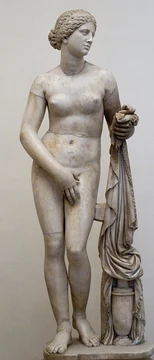
The city’s name comes from a myth tied to Aphrodite. Paphos was the child of Pygmalion—either a son or, as Ovid wrote, a daughter. Pygmalion carved an ivory statue of Aphrodite, which the goddess brought to life as Galatea. According to the Bibliotheke, Pygmalion was so devoted to Aphrodite that he kept the statue in his palace on his couch. The goddess’s spirit entered it, and the living Galatea gave birth to a son, Paphos, and a daughter, Metharme. The city was then founded by Cinyras—either Paphos’s son or Metharme’s suitor—under Aphrodite’s protection, and he built her great temple there. Another story, from Strabo, credits Agapenor, a Trojan War hero. Pausanias says a storm drove Agapenor and his Arcadian fleet to Cyprus, where he founded Paphos and set up Aphrodite’s sanctuary at Palaepaphos.
Old Paphos, now called Kouklia, sits on a hill east of the modern city. It had a road running a few miles to the sea, near the Zephyrium promontory and the Bocarus stream’s mouth. Archaeology shows it has been inhabited since the Neolithic period. It was a center for Aphrodite’s worship, and its founding myth is so tied to the goddess that it became the most important site for her cult in the ancient world. Two ancient kings, Etevandros and Akestor, are recorded in Cypriot syllabary on 7th-century BC objects found at Kourion.
The Greeks believed Aphrodite landed at Paphos when she rose from the sea. Pausanias says her worship came from Syria, but it was likely Phoenician in origin. Before archaeology confirmed it, scholars thought her cult was established before Homer’s time (around 700 BC), since the Odyssey mentions the grove and altar of Aphrodite at Paphos. Excavations later showed that Cypriots venerated a fertility goddess in a cult blending Aegean and eastern mainland traits before mainland Greeks arrived. Female figurines and charms from the area date to the early third millennium BC. The temenos was well established before any structures were built in the Late Bronze Age.
Landmarks
Paphos Castle, located at the harbor, began as a Byzantine fort meant to guard the port. The Lusignans rebuilt it in the 13th century, but the Venetians took it apart in 1570 because they could not hold it against the Ottomans. After capturing Cyprus, the Ottomans fixed it up and made it stronger. Another fortress, Saranta Kolones, sits near the harbor. It was built early in Lusignan rule, around the start of the 12th century, possibly on the ruins of an older Byzantine castle, but an earthquake in 1222 destroyed it. Digs around Paphos have uncovered remarkable finds: the mosaics in the Houses of Dionysos, Theseus, and Aion, which stayed buried for 1,600 years; vaults and caves; the Tombs of the Kings; a pillar where Saint Paul was supposedly tied and flogged; and the ancient Odeon Theatre. Visitors can also see the Byzantine Museum and the District Archaeological Museum, which holds Cypriot artifacts from the Paphos area spanning the Neolithic Age to 1700 AD. Next to the Odeon lie the old city walls, the Roman agora, and a building dedicated to Asclepius. The mosaic floors in these wealthy villas, from the 3rd to 5th centuries, rank among the best in the Eastern Mediterranean and mostly show scenes from Greek myths. The city has many early Christian catacombs, the most famous being Saint Solomoni Church, originally a catacomb that still has some 12th-century frescoes. A sacred tree at its entrance is thought to heal the sick if they hang a personal offering on its branches. A few kilometers outside town, the rock Petra tou Romiou rises from the sea. Legend says Aphrodite emerged from the waves there. The name also ties to Digenis Acritas, a Byzantine border guard who supposedly threw a huge rock at raiding Saracens to stop them. Recently, the Aphrodite Hills resort was built on that site, featuring a five-star hotel, an 18-hole golf course, tennis courts, fitness facilities, holiday villas, apartments, townhouses, and the Retreat Spa.
Transport
Paphos was once the only town in Cyprus without traffic, but that changed in under a decade as the population grew and urbanisation took hold. The town centre's roads have stayed the same and cannot handle the increased traffic. Several planned road links have not been built, including the second part of the northern ring road, the western ring road, the airport road, and the upgrade to the Paphos–Coral Bay road. Local buses are run by Osypa. For travel between cities, Intercity Buses provides daily services to all southern Cypriot cities. The main bus station is Karavella, which handles all intercity routes and many local ones. The other major station is Kato Paphos Harbor, near the harbour and the Archaeological Park. Paphos got its first motorway link in 2001, the A6 connecting it to Limassol. The A7 motorway to Polis was supposed to be finished by 2013, but the financial crisis in Cyprus delayed it; work was underway as of August 2023. Since 1982, Paphos International Airport has handled the city's air traffic. It is 10 km southeast of the city, near Timi, and serves about 1.75 million passengers each year. A new terminal opened next to the old one in late 2008. The port can hold 300 boats and functions as a small marina and a shelter for fishermen.
Arts
Paphos draws visitors for its ancient sites like the Tombs of the Kings, its mosaics, a castle, and many churches, as well as for its festivals. Each September, the harbor hosts the Aphrodite Festival, an opera performed with the castle as its stage and backdrop. In October, Open Studios Cyprus invites the public into artists’ workspaces on selected weekends. Privately owned galleries and exhibition spaces are also scattered around town. The municipality runs Palia Ilektriki, a converted building in the city center that holds conferences and exhibitions all year. In 2012, Paphos was named European Capital of Culture for 2017, with Ektor Tsatsoulis as executive director and Spyros Pisinos as artistic director. After the 2013 financial crisis, Marios Joannou Elia took over as artistic director of Pafos 2017 and completely reworked the program.
More in Aphrodite
Spotted an error? Know more?
Reader corrections go straight into our review queue. Suggest an edit · How this site is sourced